
Abstract: The Makkah Joint Defence Agreement, signed by Türkiye, Saudi Arabia, and Pakistan in August 2026, establishes a new framework for collective defence and regional security cooperation. This article examines whether the agreement can develop from a political commitment into a durable security mechanism. It focuses on the three members’ complementary military, technological, economic, and geographical capabilities and assesses the conditions required for effective cooperation. Particular attention is given to interoperability, defence-industrial cooperation, institutional coordination, and potential expansion of membership. Its prospects are also shaped by the members’ different strategic alignments, external security relationships, and economic constraints.
Problem statement: Can the Makkah Joint Defence Agreement develop into a durable regional security mechanism, and how might key external and regional actors, including the United States, China, and Iran, respond to this trilateral alignment?
So what?: Türkiye, Pakistan and Saudi Arabia must prioritise practical cooperation. Their immediate priorities should be regular joint exercises, interoperable communications and logistics, joint defence-industrial projects, and a standing mechanism for crisis consultation. The three governments should also establish measurable institutional milestones against which the agreement’s progress can be assessed.
Introduction
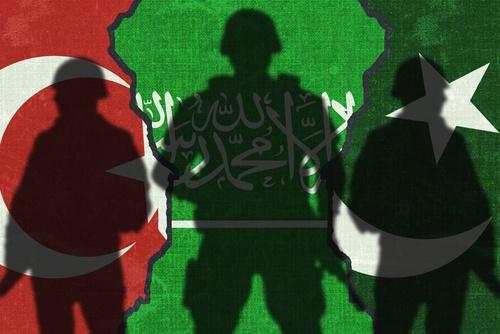
The Makkah Joint Defence Agreement brings together three states with different but potentially complementary sources of strategic strength. Türkiye contributes a growing defence-industrial base and extensive experience in multinational military cooperation; Pakistan brings a large military establishment and a strategic position linking the Middle East with South Asia; and Saudi Arabia contributes substantial financial resources and a central position in the Gulf and the Red Sea.[1] The significance of the pact, therefore, lies less in the similarity among its members than in whether these different strengths can be combined effectively.
The agreement has emerged in a changing regional security environment. At the same time, the three governments have presented it as a defensive arrangement rather than an alliance directed at a single adversary.[2], [3] This makes it important to separate political commitment from operational capability. Complementary resources can create opportunities for cooperation, but they do not, by themselves, produce forces that can plan, communicate, and respond together.
The real test is whether political commitment can be converted into usable collective capability. That requires more than defence spending or procurement. It depends on common procedures, increasingly demanding exercises, interoperable communications, logistical arrangements, crisis consultation and defence-industrial cooperation that goes beyond simple arms purchases. The geographic distance between the members, their different military systems and their existing relationships with outside powers make this a demanding test.
This paper treats the Makkah Agreement as an evolving security mechanism rather than a finished alliance. It assesses progress through five indicators: military interoperability, institutional coordination, defence-industrial cooperation, strategic autonomy and regional response. These indicators also help distinguish between two possible trajectories. The pact may develop into a more institutionalised form of military cooperation, or it may remain primarily a vehicle for strategic signalling and partnership diversification.
That distinction also matters for the agreement’s wider regional effects. If cooperation deepens, the United States, China and Iran may each have to adjust to a more coordinated relationship among Türkiye, Saudi Arabia and Pakistan. Their responses, however, should be analysed separately from the members’ intentions and should not be treated as predetermined. The purpose of the article is therefore to identify evidence showing whether the agreement is moving from declaration towards durable capability.
Analytical Framework and Methodology
Because the Makkah Joint Defence Agreement is still evolving, the analysis focuses less on why the three states chose to cooperate than on what they are able to build from that commitment. Three theoretical perspectives help structure that assessment. Walt’s balance-of-threat approach is useful for understanding why states may seek additional security partnerships when they perceive changing regional risks or uncertainty in existing arrangements.[4] Snyder’s work on alliances helps distinguish a formal commitment from credible collective defence: a treaty matters more when members have the capacity, procedures, and political will to act together.[5] Buzan and Wæver’s regional security framework provides a wider test, asking whether repeated cooperation begins to alter patterns of security interdependence across the Gulf, the Middle East and South Asia.[6]
Taken together, these approaches point to one practical expectation: the agreement becomes strategically more significant only when cooperation produces observable changes in how the three states plan, train, coordinate and build capability together. This also helps avoid treating the pact as inherently directed against a single adversary. Its development may reflect security diversification, a search for greater strategic autonomy, or a combination of both. Strategic autonomy is understood here in a limited sense: the ability to widen security options and reduce reliance on any single external provider without abandoning existing partnerships.[7]
The study uses a qualitative case-study approach supported by process tracing.[8] Official statements and documents from Türkiye, Saudi Arabia and Pakistan are used to establish what the members have formally agreed to, while academic research, defence analysis and selected data are used to assess implementation and constraints. Because the agreement is recent, the analysis remains conditional. It distinguishes between formal commitments, measures that have begun to appear in practice, and developments that remain possible but unconfirmed.
Five indicators are used to assess progress. First, military interoperability would be visible in increasingly demanding exercises, compatible communications, common procedures and the ability to operate selected systems together. Second, institutional coordination would require regular consultation mechanisms, clearer crisis procedures and some degree of continuity beyond leader-level meetings. Third, defence-industrial cooperation would move beyond procurement towards co-production, joint development, shared maintenance or other projects that create sustained dependence and common capability. Fourth, strategic autonomy would be reflected in a broader range of security and defence options, without members necessarily withdrawing from NATO, U.S. partnerships, or other established relationships. Fifth, regional response would be visible in documented adjustments by outside actors, including changes in diplomatic signalling, defence cooperation or security planning.
These indicators also allow the paper to test an alternative explanation. The agreement may prove to be primarily a vehicle for strategic signalling and partnership diversification rather than the beginning of deeper military integration. If implementation remains limited to ministerial meetings, procurement announcements and occasional exercises, that interpretation becomes more plausible. If the members establish permanent mechanisms, increasingly complex exercises, common procedures and sustained trilateral industrial projects, there would be stronger evidence that the pact is becoming institutionalised. The analysis therefore focuses on what the members build after the agreement, not on the political symbolism of the signing itself.
Complementary Capabilities and Constraints
The three members enter the Makkah Agreement with different forms of strategic capacity. Saudi Arabia contributes financial resources, Türkiye brings an expanding defence-industrial base and experience in multinational military cooperation, while Pakistan adds a large military establishment, operational experience and a strategic position linking the Middle East with South Asia. In 2025, Saudi Arabia spent an estimated $83.2 billion on its military, compared with $30.0 billion for Türkiye and $11.9 billion for Pakistan.[9] These figures indicate the scale of available resources, but they do not by themselves amount to collective capability. The analytical task is therefore to distinguish possession of resources from the institutional ability to combine them under operational conditions.
What matters more is whether the members can make these different strengths work together. Saudi Arabia’s financial capacity could support procurement, production and long-term industrial investment. Türkiye has developed significant capabilities in areas such as aviation, unmanned systems and advanced defence manufacturing, and Turkish and Pakistani representatives have already discussed joint ventures, technology transfer and manufacturing cooperation.[10] Pakistan contributes military experience, an established defence sector, and geographic reach to the Arabian Sea and the Indian Ocean. In principle, these strengths could support a division of labour in which finance, industrial capacity and military experience reinforce one another.
Pakistan’s nuclear status adds a separate dimension, but it requires careful treatment. The agreement does not publicly establish an extended Pakistani nuclear guarantee to either Saudi Arabia or Türkiye, and the three governments have not clarified such a commitment. Pakistan’s nuclear capability may therefore affect perceptions of deterrence without constituting documented extended nuclear deterrence. The distinction matters because uncertainty itself can influence strategic calculations, but analytical inference should not be presented as a formal guarantee.[11]
The potential for industrial cooperation is more concrete. The strongest evidence of deeper integration would not be higher arms trade alone, but movement from procurement towards co-production, joint development, shared maintenance and common technical requirements. Türkiye could contribute industrial know-how, Saudi Arabia could provide financing and demand at scale, and Pakistan could add production experience and operational requirements. Yet such cooperation would also face limits. Different procurement systems, technical standards, intellectual property arrangements, and third-country technology restrictions could narrow the range of projects that are realistically available.
At the operational level, interoperability creates a different set of problems. Türkiye’s experience within NATO gives its armed forces familiarity with multinational procedures, common standards and interoperability requirements.[12], [13] That experience may be useful, but it cannot simply be transferred to partners with different command structures, equipment and operational traditions. The practical task would be to identify areas where common procedures can be developed without requiring the three militaries to standardise every platform or doctrine.
The members’ existing external relationships also limit how far integration can proceed. Türkiye remains embedded in NATO, Saudi Arabia maintains extensive security ties with the United States and other partners, and Pakistan has established defence relationships of its own. These connections may provide technology, training, and political support, but they may also impose restrictions on technology transfer, procurement, and interoperability. The Makkah framework will therefore have to develop alongside, rather than in place of, these relationships.
The central issue is not whether the three countries possess enough resources individually. The harder test is whether those resources can be connected through projects and procedures that create usable capability. If cooperation remains concentrated in procurement and political declarations, complementarity will remain largely theoretical. If it produces co-production, shared maintenance, common procedures, recurring training, and sustained institutional coordination, the agreement will provide stronger evidence of collective capacity. This distinction serves as a bridge to the next section, which examines whether political commitment is beginning to produce operational cooperation.
From Political Commitment to Operational Cooperation
A mutual defence agreement creates a political commitment, but it does not automatically confer the ability to operate together. For the Makkah Agreement, the most important evidence of progress will therefore come from what the three militaries are able to do in practice. The relevant tests are not symbolic meetings or the number of statements issued after the signing. They are whether the members can communicate, plan, move forces, share information and coordinate decisions under pressure.
The three armed forces begin from different institutional and operational traditions. Türkiye has long experience within NATO and is familiar with multinational procedures, interoperability requirements and joint planning. Pakistan and Saudi Arabia operate within different command structures and face different security priorities. These differences do not prevent cooperation, but they make interoperability a practical problem rather than an assumption. The objective should not be to make the three militaries identical. It should identify the areas where common procedures are necessary for them to operate together.
Joint exercises provide the clearest early test. The three governments have already indicated that exercises across land, sea and air domains are envisaged, alongside cooperation in unmanned systems, electronic warfare and artificial intelligence.[14] Their analytical value, however, will depend on complexity. A ceremonial exercise may demonstrate political solidarity, but it reveals little about whether forces can coordinate during a real crisis. More demanding exercises would test communications, command procedures, intelligence sharing, logistics and decision-making under time pressure.
Progress will be easier to judge over time. Initial exercises could focus on basic communications, search and rescue, transport and logistical coordination. Later stages could test air defence, maritime security, cyber operations, unmanned systems and joint command procedures. If exercises become progressively more complex and reveal that the forces can correct technical or procedural weaknesses, this would provide stronger evidence of operational integration. If they remain occasional and largely symbolic, the agreement would still be more useful as a political signal than as a military mechanism.
Communications are particularly important because modern forces cannot coordinate effectively if their systems cannot exchange information. Full technical standardisation is unlikely to be realistic. The three countries use different equipment, procurement systems and technical standards, and some platforms may be connected to third-country suppliers. A more practical approach would be to establish compatible communication procedures, common data protocols where possible and agreed methods for coordinating selected systems. The key question is not whether every platform is interoperable, but whether commanders can share enough information to make timely decisions together.
Command arrangements are just as important. The agreement does not establish a NATO-style integrated command, nor does it need to do so immediately. A lighter structure could still provide operational value if responsibilities are clear. Regular military-to-military contact, designated coordination points, and agreed procedures for crisis consultation would reduce the risk of political commitments becoming uncertain when a rapid response is required. Institutional continuity matters because relationships that depend entirely on senior leaders can weaken when political attention shifts.
Logistics may prove an even harder test. Türkiye, Saudi Arabia and Pakistan are separated by considerable geographic distance, and forces cannot sustain operations through political commitment alone. Fuel, ammunition, spare parts, maintenance, medical support and transport all require prior planning. A joint operation would therefore depend not only on whether forces can deploy, but on whether they can remain supplied once deployed. Regular logistical exercises, access arrangements, and pre-agreed support procedures would provide stronger evidence of operational depth than procurement announcements alone.
Intelligence sharing brings political trust directly into the military relationship. Sharing sensitive information requires confidence that intelligence will be protected, interpreted through compatible procedures and used within agreed limits. Early cooperation may therefore remain selective. Even limited mechanisms for exchanging information on missile, drone, maritime or other agreed threats could be significant if they become regular and institutionalised. A permanent intelligence-sharing structure would represent a much deeper level of integration than occasional exchanges during exercises.
Deterrence also depends on how the three governments would consult during a crisis. The collective-defence commitment states that an attack on one member is to be treated as an attack on all three, but the practical meaning of that commitment depends on how decisions would be made during a crisis. The agreement does not publicly specify every condition under which military assistance would be provided, and some ambiguity may remain deliberate. What matters operationally is whether the members create procedures for rapid consultation, identify who has authority to communicate during a crisis and clarify the range of responses available. Without these mechanisms, even substantial military resources may not translate into a credible collective response.
Defence-industrial cooperation should be judged by the same standard. Arms purchases may deepen defence trade, but they do not necessarily create operational integration. Co-production represents a deeper level because it creates shared industrial responsibilities, while joint capability development goes further by linking requirements, design, production, maintenance and potentially training. The strongest evidence of integration would therefore be sustained trilateral projects that produce systems or support arrangements that the three members can use together, rather than separate bilateral purchases grouped under the pact’s political label.
The transition from commitment to capability is therefore cumulative rather than immediate. No single exercise, procurement agreement or institution will determine the pact’s future. The stronger test is whether cooperation becomes more demanding, more regular and more difficult to reverse over time. Operational depth will emerge only if the three members build habits and mechanisms that continue to function between political summits and outside periods of immediate crisis.
External Responses: United States, the PRC and Iran
The agreement’s regional significance cannot be assessed only through the intentions of its three members. The fifth indicator used in this paper—regional response—also requires attention to how important outside actors interpret and adapt to the arrangement. The evidence is not the same in every case. Iran provides a more direct example of a documented reaction, while the implications for the United States and China are better assessed through their existing security relationships with the three members. Possible future responses should therefore be kept separate from established policy.
United States
For Washington, the central question is whether the Makkah framework complements existing security relationships or gradually gives the three members greater room to act without U.S. support. Türkiye remains a NATO ally, Saudi Arabia retains extensive defence ties with the United States, and Pakistan continues to cooperate with Washington in selected security areas. The pact therefore does not begin from a position of separation from the U.S.-led security system. Its members have also presented it as an additional mechanism rather than a replacement for existing alliances.[15], [16]
The effect on U.S. interests would depend on what the agreement produces. Limited coordination, joint exercises and greater regional burden-sharing could complement existing American partnerships by giving regional states more capacity to manage security problems themselves. The calculation could change if the pact becomes a channel for reducing dependence on U.S. equipment, limiting American influence over defence choices or coordinating policies more independently of Washington. Strategic autonomy is therefore better treated as a matter of degree. The relevant evidence will be whether the members diversify suppliers and decision-making while maintaining their existing U.S. relationships, or begin to replace parts of those relationships with more autonomous mechanisms.
The PRC
China enters the picture mainly through Pakistan. Islamabad and Beijing already maintain extensive defence cooperation that includes military exchanges, structured security talks, joint exercises, training, defence production and defence trade. This relationship provides Pakistan with access to systems and industrial links beyond Western supply chains and could therefore broaden the technological options available to the Makkah framework.[17]
At the same time, Pakistan’s Chinese-origin capabilities could complicate trilateral integration. Türkiye operates in accordance with NATO standards and uses a mix of domestic and Western-origin technology, while Saudi Arabia continues to operate large quantities of U.S. and other Western equipment. Combining these systems raises questions about data security, technical compatibility, intellectual property and third-country restrictions. The key issue is therefore not whether China would support or oppose the pact in the abstract, but whether Chinese-linked technology is incorporated into trilateral projects. If it does, Beijing’s role could become more significant even without formal Chinese participation in the agreement.
Iran
Iran requires a different treatment because there has already been a documented reaction. Pakistani officials discussed the agreement with Iranian Foreign Minister Abbas Araghchi shortly after its signing, while Pakistan publicly stressed its defensive character and stated contribution to regional security.[18] Iranian public messaging did not initially treat the pact as inherently directed against Tehran. Iranian officials also linked the agreement to a wider debate about regional states relying less on external security guarantees.[19]
That position should not be taken to mean that future Iranian concerns are fixed. Tehran’s calculations would depend on what the pact becomes. Routine exercises or defence-industrial cooperation would not carry the same significance as integrated air and missile defence, permanent intelligence-sharing mechanisms, forward deployments or explicit contingency planning involving Iran. Those developments could alter the military balance perceived by Tehran and produce a stronger response. Conversely, if the pact remains focused on general deterrence, defence production and crisis consultation without identifying Iran as an adversary, the scope for accommodation would remain greater.
Each relationship raises a different question. For the United States, the issue is complementarity versus reduced dependence; for the PRC, technological access versus interoperability constraints; and for Iran, general regional cooperation versus capabilities that could be interpreted as directly affecting its security. These responses should be assessed through observable policy changes rather than assumed from the pact’s existence alone.
Risks, Constraints and Alternative Explanation
The main constraints on the Makkah Agreement do not come from a simple shortage of military resources. They arise from the difficulty of sustaining cooperation among three states with different strategic priorities, economic conditions, military institutions and external relationships. These differences do not make deeper cooperation impossible, but they raise the cost of turning a political commitment into a durable mechanism.
Strategic priorities are the first constraint. Türkiye, Saudi Arabia and Pakistan operate in different security environments and do not necessarily rank regional threats in the same way. Türkiye remains embedded in NATO, Saudi Arabia maintains extensive security ties with the United States and other partners, and Pakistan has established defence ties with China and other states.[20] The pact therefore has to function alongside existing relationships rather than replace them. Its durability may depend on keeping the common agenda narrow enough to sustain cooperation even when members disagree on other regional issues.
Economic capacity also matters. Large defence projects require predictable financing over several years, not only political approval at the moment of signing. Saudi Arabia has greater financial room to support large projects, while Türkiye and Pakistan face different domestic economic pressures. These asymmetries could produce a useful division of labour, but they could also create disagreements over costs, procurement priorities and the distribution of industrial benefits. A project that appears strategically attractive may still fail if the partners cannot agree on who finances, produces and maintains it.
Institutional capacity remains limited, but cooperation is no longer entirely dependent on leader-level diplomacy. On 31 August 2026, the three members convened the inaugural Strategic Political and Defence Committee and agreed to establish a Secretariat in Saudi Arabia.[21] These steps represent an early move towards institutionalisation, although they do not yet amount to the permanent planning and command structures associated with mature alliances. The next test is whether these mechanisms operate regularly, review exercises and capability gaps, and develop usable procedures for crisis coordination.
Defence-industrial cooperation faces a related constraint. Different technical standards, export restrictions, and relationships with external suppliers could slow the movement from procurement to co-production and joint capability development. They also leave room for a more limited interpretation of the pact. The Makkah Agreement may ultimately serve less as a path towards military integration than as a form of strategic signalling and diversification of partnerships. Under this interpretation, the pact establishes another diplomatic and defence relationship among the three governments, demonstrates that they have security options beyond their existing partners, and creates opportunities for procurement and political coordination without requiring deep institutional integration.
The two explanations can be distinguished through observable evidence. Ministerial meetings, procurement announcements and occasional exercises would be consistent with diversification and signalling. Permanent consultation mechanisms, increasingly demanding exercises, common operational procedures, sustained co-production and joint capability projects would provide stronger evidence of institutionalisation. The question is therefore not whether the agreement succeeds or fails in absolute terms, but which form of cooperation it gradually comes to resemble.
Assessment and Implications
At this stage, the Makkah Agreement is best assessed through the gap between what has been declared and what has been implemented. The agreement establishes a collective-defence commitment.[22] The three governments have also announced political and military coordination, joint exercises and deeper defence-industrial cooperation.[23] These steps provide a basis for future integration, but they do not yet show how reliably the three states could operate together in a crisis.
The five indicators provide a practical way to assess whether the agreement is moving beyond political commitment. Progress in military interoperability would be visible in increasingly complex exercises, compatible communications and workable joint command procedures. Institutional coordination would require regular consultation mechanisms, clearer crisis procedures and continuity beyond summit-level diplomacy. Deeper defence-industrial cooperation would involve a shift from procurement towards co-production, joint development, shared maintenance, and common requirements. Strategic autonomy would be reflected in a broader range of defence and security options without necessarily abandoning existing partnerships. Regional response, finally, would be visible in documented changes in the diplomacy, defence cooperation or security planning of external actors.
The sequence of future developments will matter as much as their number. A large set of announcements could create political visibility without producing much operational change. By contrast, a smaller number of repeated exercises, consultation mechanisms and industrial projects could be more significant if they generate common procedures and institutional continuity. The same distinction applies to defence-industrial cooperation. Procurement can deepen defence ties, but co-production and joint capability development would provide stronger evidence that the members are beginning to depend on shared systems and processes.
Expansion is another useful test. Additional members could increase the pact’s political reach, but enlargement before the founding members demonstrates that their own mechanisms work, making it harder to judge whether the original arrangement has developed operational depth. Consolidation and expansion should therefore be analysed as separate stages rather than treated as evidence of the same process.
The most informative evidence to watch is consequently straightforward: whether exercises become more demanding, whether consultation becomes routine, whether industrial cooperation moves beyond purchases, and whether procedures developed in peacetime are capable of supporting decisions during a crisis. If those patterns emerge and persist, the institutionalisation explanation gains support. If activity remains concentrated in meetings, announcements and occasional exercises, the signalling and diversification explanation remains more consistent with the observable evidence.
Conclusion
The Makkah Joint Defence Agreement has the potential to become a durable regional security mechanism, but the evidence does not yet indicate that this outcome is assured. Türkiye, Saudi Arabia and Pakistan bring complementary resources to the arrangement, yet financial capacity, defence-industrial strength, military experience and geographic reach become strategically significant only when they can be used together. The central question is therefore not what the three states possess individually, but whether they can convert those resources into collective capability. Across the five indicators, progress would be visible in more demanding exercises, regular consultation, deeper industrial cooperation, wider security options and observable responses from external actors.
A more limited outcome is still possible. The agreement may develop primarily as a mechanism for strategic signalling, partnership diversification, and defence cooperation, without producing substantial military integration. That interpretation would become more convincing if implementation remains centred on ministerial meetings, procurement announcements and occasional exercises.
Over time, the difference between these two paths should become clearer. Permanent coordination mechanisms, increasingly complex exercises, shared procedures, sustained industrial projects and functioning crisis arrangements would indicate movement towards a durable security mechanism. If these remain limited or largely declaratory, the pact’s significance will remain primarily political. The Makkah Agreement should therefore be judged less by the ambition of its announcement than by the depth and persistence of its implementation.
[1] Ministry of Foreign Affairs of Pakistan, “Makkah Al-Mukarramah Summit for Joint Defence,” August 7, 2026.
[2] Republic of Türkiye Directorate of Communications, “President Erdoğan’s Message on ‘Mecca Joint Defence Agreement,’” August 8, 2026.
[3] Ministry of Foreign Affairs of Pakistan, “Message to the Nation by the Deputy Prime Minister/Foreign Minister on the Signing of the Makkah Joint Defence Agreement,” August 2026.
[4] Stephen M. Walt, The Origins of Alliances (Ithaca, NY: Cornell University Press, 1987).
[5] Glenn H. Snyder, Alliance Politics (Ithaca, NY: Cornell University Press, 1997).
[6] Barry Buzan and Ole Wæver, Regions and Powers: The Structure of International Security (Cambridge: Cambridge University Press, 2003).
[7] Barbara Lippert, Nicolai von Ondarza, and Volker Perthes, eds., European Strategic Autonomy: Actors, Issues, Conflicts of Interests, SWP Research Paper 2019/RP 04 (Berlin: Stiftung Wissenschaft und Politik, 2019).
[8] David Collier, “Understanding Process Tracing,” Political Science and Politics 44, no. 4 (2011).
[9] Stockholm International Peace Research Institute (SIPRI), “Trends in World Military Expenditure, 2025,” SIPRI Fact Sheet (April 2026).
[10] Government of Pakistan, “Pakistan and Türkiye Explore Enhanced Cooperation in Aviation, Defence Manufacturing, and High-Tech Industries,” Press Information Department, December 11, 2025.
[11] Hasan Alhasan and Asna Wajid, “Pakistan, Saudi Arabia and Türkiye: A New Defence Pact,” International Institute for Strategic Studies (IISS), August 14, 2026.
[12] NATO, “Türkiye and NATO,” NATO, accessed September 26, 2026.
[13] NATO, “Interoperability: Connecting Forces,” NATO, updated April 11, 2023.
[14] Reuters, “Turkey Lays Out Plans for Defence Pact with Pakistan and Saudi Arabia,” August 13, 2026.
[15] Hasan Alhasan and Asna Wajid, “Pakistan, Saudi Arabia and Türkiye: A New Defence Pact,” International Institute for Strategic Studies (IISS), August 14, 2026.
[16] Reuters, “Turkey Lays Out Plans for Defence Pact with Pakistan and Saudi Arabia,” August 13, 2026.
[17] Ministry of Foreign Affairs of Pakistan, “China,” section “Defence Cooperation,” accessed September 26, 2026.
[18] Ministry of Foreign Affairs of Pakistan, “Transcript of the Press Briefing by the Spokesperson on Wednesday 12th August 2026,” August 12, 2026.
[19] Reuters, “Iran Says No Reason to Fear Pakistan-Turkey-Saudi Security Pact,” August 10, 2026.
[20] Ministry of Foreign Affairs of Pakistan, “China,” section “Defence Cooperation,” accessed September 26, 2026.
[21] Ministry of Foreign Affairs of Pakistan, “Strategic Political and Defence Committee of the Makkah Agreement for Joint Defence – Joint Statement,” August 31, 2026.
[22] Ministry of Foreign Affairs of Pakistan, “Makkah Al-Mukarramah Summit for Joint Defence,” August 7, 2026.
[23] Reuters, “Turkey Lays Out Plans for Defence Pact with Pakistan and Saudi Arabia,” August 13, 2026.


