-

Article
Abstract: The People’s Republic of China’s cybersecurity industry is underpinned by a deeply embedded mindset: to defend, one must first know how to attack (未知攻,焉知防). Popularised in the 1990s by Taiwanese hacker Lin Zhenglong (“Coolfire”), this defence-through-offence philosophy has shaped generations of self-taught hackers, patriotic hacktivist groups, and eventually a new class of Capture the… Read more →
-
Article
Abstract: This article examines how emerging disruptive technologies during 1989–1993 affected the execution and doctrinal understanding of mission command principles in the U.S. Armed Forces. The analysis builds on an event-based cumulative coding process in which a selection of specific doctrines, technological advancements, and named operations are treated as key events and coded on a… Read more →
-

Article
Abstract: As the world watches the war in Ukraine drag into its fifth year, two major events have already marked 2026: the swift capture of Venezuela’s leader and a large-scale military campaign against Iran by the U.S. Taken together, these military operations–both rapid, unilateral, and explicitly regime-focused–signal the re-emergence of unapologetic American hard-power projection. For… Read more →
-
Article
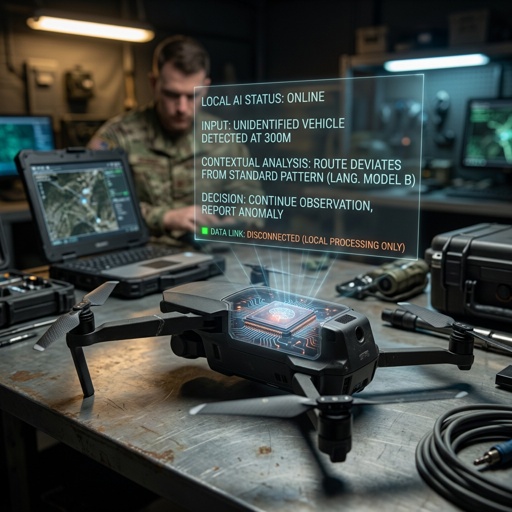
Abstract: The education of Portuguese lieutenants and captains remains overly transmissive and assessment-driven, with limited integration of emerging technologies such as AI, commercial drones and networked simulation, and insufficient emphasis on critical thinking, writing and lifelong learning. This study proposes a three-dimensional framework to realign officer education with this new reality: a tactical-operational dimension that… Read more →
-
Article
Abstract: Artificial intelligence is increasingly embedded in modern military operations, influencing how commanders interpret sensor data, assess threats, and make rapid decisions under pressure. While AI improves situational awareness and accelerates operational tempo, it also introduces vulnerabilities such as fabricated outputs, misclassifications, and opaque decision processes. Human factors—including stress, uncertainty, and organisational pressure—further complicate decision… Read more →
-

Article
Abstract: The accelerating pace of digitalisation and autonomous systems challenges traditional officer education. Future leaders must be prepared to operate in environments shaped by artificial intelligence, automation, and complex ethical dilemmas. This paper explores how AI‑driven simulation can enhance readiness and adaptability in officer training, ensuring that cadets develop both technical competence and strategic judgment.… Read more →
-
Article
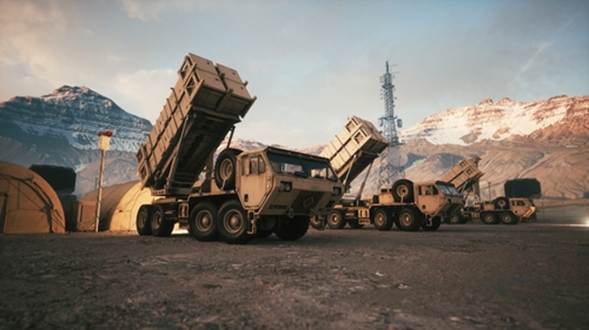
Abstract: Missile defence credibility is still judged largely through interceptor speed, range, accuracy, and probability of engagement. Those measures capture only the final action within a longer defensive pathway. Contemporary threats compress warning time, combine dissimilar trajectories, manipulate the information environment, and target networks connecting detection with command. This article develops a continuity-threshold framework for… Read more →
-
Article
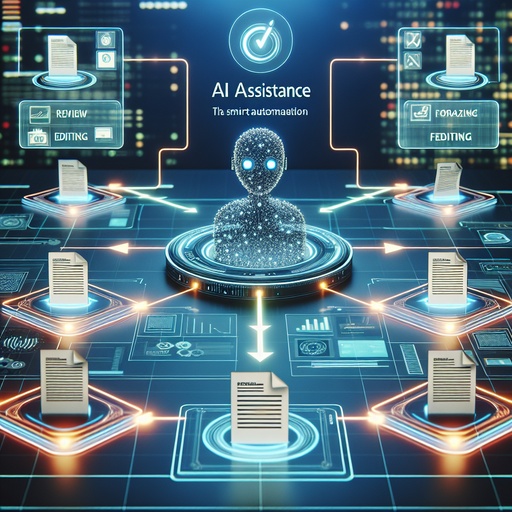
Abstract: Military documentation plays a central role in training and operational practice, yet its quality is rarely evaluated from the perspective of actual use. Documents tend to prioritise completeness and regulatory compliance over clarity. This results in materials that are information dense, cognitively demanding, and prone to misinterpretation, particularly under time pressure. This article proposes… Read more →
-

Article
Abstract: Artificial intelligence is an emerging technology that is predicted by many experts to arrive by the end of this decade. It will be transformative, changing how humans interact with each other, and will bring various benefits and drawbacks. While these benefits and drawbacks will be monumentally changing, the timeline of widespread implementation of AI… Read more →
-
Article
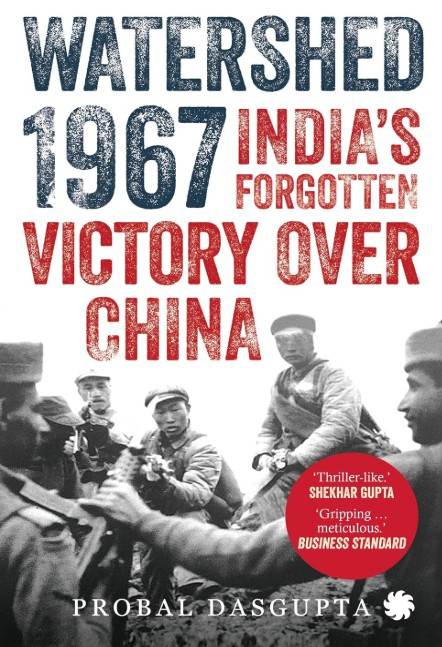
Probal DasGupta, (Juggernaut, 2020). pp. 296. Some victories fade not because they were small, but because they were inconvenient to remember. Probal DasGupta’s Watershed 1967: India’s Forgotten Victory Over China corrects one such omission, and does so with the pace of a thriller and the rigour of serious military history. The book resurrects the September… Read more →

Advancing Strategic Thought Through Independent Defence Scholarship
The Defence Horizon Journal is an independent international platform bringing together researchers, practitioners and military professionals to advance informed debate on security and defence.
TDHJ – Connecting defence scholarship, professional practice and strategic dialogue!
Categories

Institutions gain IP-authenticated and remote digital access to all issues of The Defence Horizon Journal’s Special Edition.
Digital access is:
- Fully-searchable;
- With intuitive display options;
- Accessible and VPAT-compliant (including read-aloud technology);
- Cross-platform compatible;
- Includes usage reports and MARC records.
Institutions can access a free 1-month trial and/or request pricing.


Languages


Sign Up For Our Newsletter
Get the content you need, just when you need it.
DONATE
Support our mission by making a donation.
Visit our Partner
