
India
-
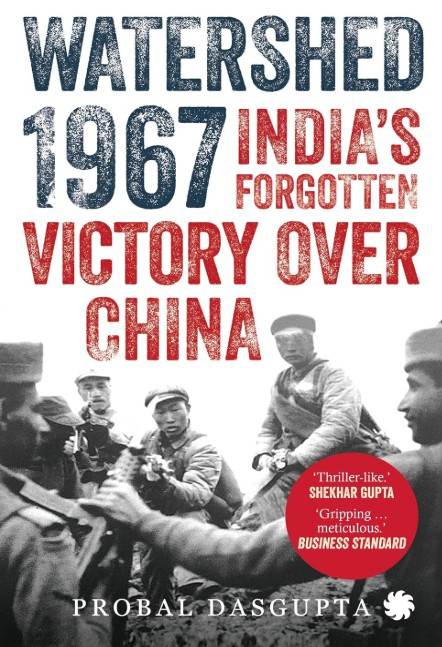
Book Review: Reclaiming a Forgotten Victory: Why Watershed 1967 Deserves a Place in India’s Strategic Memory.
Probal DasGupta, (Juggernaut, 2020). pp. 296. Some victories fade not because they were small, but because they were inconvenient to remember. Probal DasGupta’s Watershed 1967: India’s Forgotten Victory Over China corrects one such omission, and does so with the pace of a thriller and the rigour of serious military history. The book resurrects the September… Read More
Written by
-
Missile-Induced Systemic Compression And Crisis Stability In South Asia
Abstract: Technological acceleration is compressing decision-making timelines between nuclear-armed adversaries in ways classical deterrence theory did not anticipate. This essay introduces the concept of “missile-induced systemic compression” to explain how supersonic velocity and dual-capable ambiguity—the inability to distinguish conventional from nuclear warheads—systematically reduce crisis decision windows below the threshold required for deliberative management. Examining the… Read More
Written by

-
How Technology Is Breaking Crisis Management In Nuclear South Asia
Abstract: Technological acceleration is changing how crises unfold between nuclear-armed adversaries. In South Asia, India and Pakistan have fought an escalating series of confrontations—2016, 2019, and 2025—that move faster, involve more domains, and leave less room for diplomacy than classical deterrence theory predicts. This essay introduces the concept of systemic compression: a structural condition in… Read More
Written by

-
India-UAE, A Multi-Domain Alignment
Abstract: India and the UAE’s strategic partnership has quickly ascended from a diplomatic relationship to a strong alliance encompassing commerce, energy, military, and technology. Due to their common interests in the area and their long history together, the relationship has lately grown stronger thanks to high-level visits and important agreements, such as a significant LNG… Read More
Written by

-
India’s Strategic Leap In Rare Earths
Abstract: India is standing at a pivotal moment to unlock its vast Rare Earth Element (REE) reserves and challenge the People’s Republic of China’s (PRC) long-standing monopoly in this critical sector. Despite holding 5.3% of global REE reserves, India contributes only a fraction of global output due to regulatory bottlenecks, a lack of refining infrastructure,… Read More
Written by

-
India’s Rudra Brigades And The New Logic Of Warfighting
Abstract: This article examines how Rudra Brigades operationalise India’s evolving Dynamic Response Strategy by integrating speed, precision, and jointness at the brigade level. It situates these formations within India’s broader theatreisation and force-restructuring agenda, as validated through recent exercises and operations. The analysis highlights how this shift compresses warning times, expands conventional response options, and… Read More
Written by

-
Unrest In Iran And Its Possible Impacts On India, Pakistan, And Afghanistan
Abstract: Cornered by the U.S.-Israel airstrikes and left vulnerable by a mass uprising in early 2026, the Islamic regime in Iran will go through certain internal changes. These changes might weaken Tehran’s grip over the region. In this backdrop, its relation with neighbours, including India, Pakistan, and Afghanistan, will shift. While India will be hoping… Read More
Written by

-
Future Of Drone Warfare In South Asia
Abstract: The military confrontation between India and Pakistan that took place in May 2025 has demonstrated that in South Asian, the employment of Unmanned Aerial Vehicles (UAVs) in active combat roles has become a reality. This growing utility of UAVs stems from their cost-effectiveness, precision, flexibility, and the reduced risk associated with their unmanned nature.… Read More
Written by

-
Operation Sindoor, Strategic Restraint, And The Teachings Of The Mahabharata
Abstract: India launched Operation Sindoor on May 07, 2025, striking nine terrorist camps in Pakistan, following a horrific terrorist attack in Pahalgam, Jammu and Kashmir, on April 22. India’s strategic restraint in targeting only terror infrastructure in Pakistan in the initial stages of the operation is not evidence of its weakness, but rather a civilisational… Read More
Written by

-
India’s Neighbourhood Policy Conundrum: A Case of Nepal and Sri Lanka
Abstract: India faces numerous challenges in its neighbourhood, characterised by territorial disputes, geopolitical rivalries, and economic dependencies. Tensions with China and Pakistan are cornerstones of India’s troubled neighbourhood past; however, dwindling partnerships with countries like Nepal and Sri Lanka reflect poorly on India’s regional leadership. To regain influence, India must enhance regional cooperation by building… Read More
Written by
