
Abstract: Military ethics education is an important aspect of military training. As military personnel may face difficult ethical dilemmas, the competence to handle them correctly is crucial. Currently, there is a desired transition within the Dutch military from a rule-based ethics education (functional) to a more virtue-based approach (aspirational), placing greater emphasis on character building rather than rules and order. At the same time, ethics and ethics education are influenced by changing contexts, such as contemporary technological developments in warfare. However, currently it remains unclear what the effectiveness of ethics education is and to what extent it integrates both these developments. This empirical study investigated the individual experiences of the participants of a specific ethics course, the Trainer Course in Military Ethics (TCME), as a contribution to a larger study on the effectiveness of ethics education in the Dutch military.
Problem statement: To what extent does the current ethics education within the Dutch military adapt to the current technological changes, and is it successful in integrating virtue ethics?
So what?: Teachers in ethics education should integrate more practical lessons, such as case studies, into their instruction, as ethics is not merely cognitive but also a matter of skill. Next to this, ethics education should focus on the field of tension that the transition towards aspirational education, which aims at character building, brings about. Moreover, it should focus on ways to keep the education more up to date regarding new technologies and their influence on ethical behaviour. Further research into this topic should use a larger sample of participants and include pre- and post-measurements to map out the influence of ethics education on participants’ behaviour.
Introduction
Military personnel can face ethical dilemmas both in the workplace and during deployments. An ethical dilemma is a situation in which there is a conflict between different values.[1], [2], [3]Since the military is an organisation that has been entrusted with the use of force when needed, its handling of dilemmas may have far-reaching consequences. Therefore, many militaries train their personnel to become competent in making ethical decisions, especially when performing under pressure.[4], [5] In many situations, there is not always a ‘best’ choice, and often one has to weigh different alternatives in order to choose the ‘lesser evil.’ It is then especially important to be able to justify the decision and explain how it best serves the interests of all parties. To facilitate this, military ethics education plays a role in the fostering of ethical competence.[6]
This study focuses on the ethics education within the Dutch military. Traditionally, the Dutch military tended to see ethical dilemmas through the lens of rules and regulations. Rule-based ethics, also called deontology, is a strand of ethical theory based on duties that everyone should observe.[7] In this rule-based ethics, ethics depend on the action itself, not the outcome or the character of the actor. Strict and clear rules make it straightforward for military personnel to know what they can and cannot do.[8] An example is the prohibition of torture, a ban that is to be maintained regardless of how expedient it might be not to do so. Although some decisions are better not left to the discretion of individual military personnel, there are many instances in which military personnel need some leeway in their decision-making. An important drawback of a rule-based approach in a military context is that rules and codes tend to be too general for specific contexts, and thus, more flexibility is called for.[9], [10] Therefore, the Dutch military has come to see virtue ethics as an important complement to rules and codes imposed from above. In virtue ethics, the focus lies on character development rather than following rules. Virtues are stable character traits, such as courage, with the function of correcting and resisting one’s personal desires. Virtue ethics assumes that character can be developed: virtues can be acquired through training and practice.[11] It appeals to many military trainers and educators because it aligns with how most militaries perceive themselves, namely as supporting character-building, especially that of their (future) leaders. This development illustrates the desired transition in Dutch ethics education from a largely functional approach, primarily oriented towards military effectiveness and ensuring military personnel perform their work, to a more aspirational approach that focuses on character traits and building virtuous character.[12]
This transition was seen as necessary as previous examples (My Lai, Abu Ghraib) demonstrate that, in practice, military personnel have violated their ethical responsibility.[13] According to Olsthoorn,[14] this could partly be explained by the idea that in stressful situations, it becomes harder to reflect and make the right decision. For ethics education, this means that more attention would need to be paid to discussing ethical dilemmas in dialogue, critical reflection and the development of a moral compass.[15] While the functional approach operates within the bounds of the law, the aspirational approach focuses on building character. This loosely corresponds to two main schools of ethics, namely rule-based ethics and virtue ethics.
The third school in ethics, consequentialism, focuses more on the outcome of behaviour rather than on whether the behaviour itself is right or wrong. This school states that judgment about whether an act is ethically right or wrong should be based on the foreseeable consequences. In practice, most authors on professional military ethics find it hard to grasp how consequentialism could serve as a basis for the ethics education of military personnel, as it is likely to be misused in self-serving ways.[16], [17]
While ethics education benefits the outsiders to the organisation when military personnel act ethically, it can also benefit the military personnel themselves. Current research shows that military personnel may be harmed by how they handle ethical dilemmas that arise in their work, a phenomenon known as moral injury. According to Koenig & Al Zaben,[18] moral injury arises when an individual is faced with an ethical dilemma, knowing what the right decision is, while not being able to choose this. Moral injury can also occur when an individual regrets a choice made earlier. Ethics education is seen as vital to minimise the impact of moral injury, as it could positively affect the identification of ethical dilemmas and their reflection.[19]
The Changing Ethical Landscape
This study identifies three reasons which make the ethical landscape of battlefields complex, making it important to constantly reflect on the extent to which the current ethics education in the military is adapted to this complexity.
First, there have always been changes in the geopolitical landscape. Contemporary changes include, for example, conflicts on the European continent (Russia-Ukraine) and strategic misalignments between long-standing allies, such as the U.S. and Denmark, over the case of Greenland.[20] This means that teaching methods such as historical cases and examples of ethical dilemmas on the battlefield may constantly need to be revised.
A second reason is the changing societal attitudes towards the use of military force, with some becoming more permissive and others less so.[21] Historically, countries that were involved in wars that lost societal support at some point in time had to deal with military personnel who struggled in society upon their return, such as the KNIL (Royal Netherlands East Indies Army) soldiers and Dutchbatters (Peacekeeping operation during the Bosnian War) in the Netherlands and Vietnam War military soldiers in the U.S.[22] Societal attitudes towards the means and methods of warfare may influence ethical decision-making in war, for better or worse.
The third reason is the increase in technology-mediated warfighting. In current conflicts, there is increased use of AI and drones, with no signs of wavering in investments in military technologies, including space, quantum, and electromagnetics. While many technologies promise strategic opportunities, much of their ethical impact remains unclear. Authors, such as Strawser,[23] claim that the usage of technology could make war more ‘ethical’, as accuracy and precision increase, making it imperative to use new technologies. On the other hand, there are studies, such as the empirical study done by Phelps,[24] that show an increase in moral injury suffered by drone operators. Furthermore, there might be an ethical dimension to the design specifications of technology, as implementation can have far-reaching consequences for who lives and who dies. An example of the intricacy of design specifications and ethical dilemmas is the suite of AI-enabled systems used by the IDF after the October 07, 2023, Hamas attacks.[25] As new technology could influence ethical behaviour, it brings forward the responsibility to critically reflect on it and to design and implement it ethically. To embrace new technologies in contemporary warfare, it is crucial to understand how they shape individual ethical judgement, and to examine the role ethics education could play in this. The results of this research can contribute to the incorporation of the ethical dimension of technological changes in warfare into ethics education. Especially relevant is the question of whether the move towards an aspirational virtue-ethics approach remains the right one, given these developments. Schulzke[26] and Renic,[27] for instance, have argued that, in the case of drone operators, more emphasis is placed on rule-based approaches, rather than a virtue ethics approach.
Military Ethics Education within the Netherlands Armed Forces
Within the Netherlands Armed Forces, military ethics education is taught in multiple contexts. For example, it is taught in the initial education curriculum for military personnel, in voluntary courses, and in individual sessions with a chaplain. Previous research by Van Loon [28] shows that the current way ethics education is taught is neither consistent nor coherent, meaning that there is no shared goal within ethics education, and there is a wide variety in how it is taught.
Every department within the Netherlands Armed Forces shapes ethics education in its own way, creating differences in how military personnel are educated, thus making it hard to state its effectiveness. Currently, the Netherlands Defence Academy is conducting a two-year research project to measure the effectiveness of the ethics education. As a contribution to this research, the current study has investigated a specific ethics course within the Netherlands Armed Forces, namely the Trainer Course Military Ethics (TCME), by looking at the experiences of its participants regarding ethics and ethics education. The TCME is a five-day, voluntary course aimed at trainers, teachers and instructors of military ethics.
For this study, the following research question was formulated:
- What experiences do the participants of the TCME have regarding ethics and ethics education?
- To what extent do these experiences align with the goals of the TCME and the ideology in ethics education?
- To what extent has this experience on ethics and ethics education changed before and after following the TCME?
- To what extent does/should the TCME address the changing ethical landscape, especially regarding technological developments?
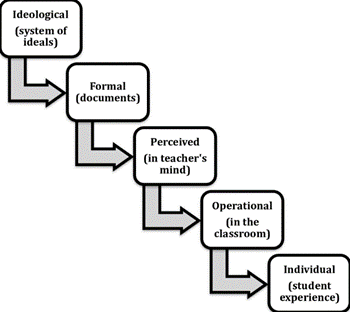
For this study, the Goodlad[29] framework was used. This framework illustrates the trickling-down system of ideology towards the individual experiences, stating that if an ideology is successful, it is eventually integrated by the individual. Conducting research into the experiences of the TCME participants is therefore relevant, as it maps whether the desired ideological transition within the Dutch military ethics education is being perceived by the participants and how it might have influenced the current military personnel’s perspectives on ethics and ethics education. The findings of this research could then be used to formulate recommendations to improve the current ethics education and provide directions for the described larger study on the effectiveness of the ethics education. Moreover, it could provide insight into whether the participants regard technological changes as influencing their work and to what extent ethics education integrates this.
In Goodlad’s[30] original framework, the ideological starting point is often determined by university education boards. Since, in the context of this research, ethics education is offered inside a military organisation rather than through public or private universities, there is a pre-given ideological context. This pre-given ideological context is partially anchored in the constitution of a country, the Netherlands in this case, which states the tasks of the military (such as protection of territory), and partially based upon philosophical presuppositions about the reason for the existence (‘raison d’être’) of the military organisation (such as the promotion of justice and security). In this study, the framework has been used to understand the extent to which individuals experience the desired ideological transition in Dutch ethics education.
Methodology
Type of Research
This study is part of a larger study at the Netherlands Defence Academy (NLDA) to investigate the effectiveness of ethics education in the Netherlands Armed Forces. Since ethics education within the forces is diffuse, this study focused on a specific ethics course, namely the Trainer Course Military Ethics (TCME). This qualitative research was conducted between October 2025 and June 2026. The study was an exploratory research, with the goal of generating advice for future research. The results from this study consisted of non-quantifiable concepts. This was partly due to the scope of the study, which included six interviewed participants who had completed the first or second term of the TCME. Furthermore, this was an inductive study, meaning no hypotheses were formulated prior to the study; instead, the specific data shaped the theory.
Data Collection
For the execution of this research, multiple ways of data collection were used, which followed each other in chronological order:
- Literature Study
First, a literature review was conducted, drawing on both national and international sources. This literature study was used as input for the questionnaires. For the selection of resources, the following criteria were considered: peer review, the authors’ expertise and background, and publication date.
- Questionnaire
Prior to their participation, a qualitative questionnaire was sent to the participants of the second term of the TCME, which took place in November/December 2025. It consisted of both open ended and closed ended questions and its purpose was to serve as a pre-test. The goal was to investigate participants’ views on ethics and ethics education before participating in the course.
Given the sensitivity of the information and the NLDA’s preferred privacy rules, the questionnaires were printed and completed on paper. Additionally, participants were asked to sign the attached consent form. Since the participants in the first term of the TCME had already completed the course, it was not possible to administer a pre-test to them via the questionnaire.
- In-Depth Interview
After the TCME course, individual in-depth interviews were conducted with participants from both course terms. In total, six people were interviewed. The added value of an in-depth interview is that it gives an opportunity to map out someone’s perspective within a certain context.[32]The interviews were semi-structured, meaning that prior to the interview, a topic list was developed, which provided some direction for the interview. However, given the inductive purpose of this study, this topic list was not leading, and deviations from the questions were made where necessary to ensure the participant’s experiences were sufficiently addressed.
For the first TCME term, the questions were the same for all participants. For the second term, the questions for each participant were adjusted to the answers they had given on the questionnaire prior to the course. This was an attempt to gain more insight into the differences between the pre- and post-test and the possible effects of the course.
The interviews were recorded, with the participants’ permission, via a secure system.
Sample
Participants in the first and second terms of the TCME were approached via email. The TCME is a five-day advanced ethics course aimed at officers, both civil employees and military staff members, from different departments and ranks, making it a heterogeneous group. Participation in the course is voluntary, meaning it is not part of a mandatory curriculum. Participants are mostly employees involved in teaching or designing ethics education. A total of six interviews have been conducted, of which three were from the first term of the TCME, and three were from the second term of the TCME.
Researching this group of people gives an opportunity to gain insights into several organisational branches and perspectives. Furthermore, this sample contains military educators. Given that these people are at the basis of ethics education within the Netherlands Armed Forces, this sample is relevant to investigate. Lastly, the choice of this sample is based on practical considerations. This diverse sample gives an opportunity to gather data from a relatively large and diverse set of perspectives.
Analysis
To analyse the data from the interviews, the recordings were transcribed with a Netherlands Armed Forces AI tool, after which they were manually checked and, where needed, adjusted. Next, the transcriptions were coded. This was done via open coding, meaning the transcription itself determined the direction of the code. All open codes from all interviews were gathered to identify overlapping themes. This was done via axial and selective coding, resulting in a hierarchical code tree. The coding process was conducted independently by two researchers and subsequently compared using grant triangulation. Minor differences in the coding were discussed and adjusted.
Storing of the Data
The data gathered for this study were stored on computers with secure software and at the researchers’ offices.
Results
Demographics
The participants who filled out the questionnaire (n=7) were mostly military personnel of varying ranks, with one civil employee at the Ministry of Defence. All of the military personnel were from the Royal Marechaussee (military police). Approximately half of the participants mentioned having experience with military deployment.
Ethical Orientation
Respondents stated that ethics concerns ‘doing the right thing’ and values. Other aspects mentioned were moral compass, context, systematic thinking about what it means to do the right thing, dilemmas, and different perspectives on acting.
When asked to rank different sources of ethical reasoning (1 being most important, 7 being least important), personal value scored highest (1.57), followed by camaraderie (3.42). Meanwhile, following orders scored the lowest (6.14), followed by virtuous character and consequences, both at 4.14.
Motivation to Participate in the TCME Course
Reasons for participants to sign up for the TCME were mostly out of their own interests or to find ways to improve their current ethical education lessons. Different expectations prior to the course were named, ranging from gaining insights into themselves to getting more depth in ethics. Others hoped to improve their own ethical skills to teach others, find content for their own ethics education, and transfer their knowledge to others.
Earlier Experience with Military Ethics Education
When asked about the relevance of ethics education in the military, different answers were given: for personal development, to prevent individual harm such as moral injury, and for the military as an organisation. Earlier experiences with ethics education varied, from formal education during the initial military training to civil ethics education and conversations with chaplains. Multiple participants reported not remembering anything from their previous military ethics education. However, it was also stated that certain aspects are remembered: Socratic conversations, the relevance of ethical development to personal and team development, and group cohesion and the group atmosphere.
Answers to the question of the extent to which previous experiences with military ethics education contribute to personal development scored a 3.6 on a 5-point scale (1 being not at all, 5 being very much). A similar score, 3.5, was found when asked to what extent ethics education fits in the vision of the Netherlands Defence Force.
Experience with Ethical Dilemmas
Almost all participants reported experiencing ethical dilemmas in their work. Most of these dilemmas were at their workplace, some during deployment and one during combat. When asked to what extent they were content with how they handled the dilemma, most participants reported a mix of positive and negative feelings about their own behaviour.
In-Depth Interviews
Sources Used for Ethical Reasoning
During the interviews, it was once again asked which sources the participants deemed most important for their behaviour. According to some, duty is the basis of ethical conduct, and behaviour should be adjusted to orders and rules. Others argued that ethical behaviour is context-dependent. Additionally, it was noted that personal factors such as age, self-knowledge, values, and prior experiences played a major role, emphasising that views on what is deemed ethical are flexible and change over time. Interestingly, some participants stressed that personal factors are important but will remain subordinate to duty.
Ethics in Civil and Military Context
When comparing ethics in the civil and military context, the participants stated that they differed from each other, as within the military, it is more likely that an individual has to make a choice that goes against their own ethical values, meaning that an individual could behave differently as military personnel compared to being a civilian. While some participants said wearing their uniform could influence certain decisions, most did not feel they were another person when wearing it. One stated that wearing a uniform makes someone fulfil another role, but does not change the person or moral compass.
Aim and Positioning of Ethics Education
All interviewed respondents stressed the importance of ethics education in the military and stated that its relevance ought not to change as international threats increase. According to the participants, Ethics education contributes to both their individual development, making more conscious decisions and to performing their tasks as military personnel. Furthermore, education should not only consist of theory but also be accompanied by practical examples, such as case studies, as ethical reasoning is primarily formulated in practice and concerns skills. Additionally, it was noted that repeated ethics education is needed, as it takes time for the lessons learned to integrate into their reasoning. Lastly, some participants found that ethics education too often consists of ‘interesting’ topics without the content being adjusted to what ought to be achieved in the end.
Moral Injury
When asked about experiences with moral injury, most participants reported not having experienced it. However, one participant mentioned experiencing moral injury. Opinions on the available opportunities to talk about moral injury and ethical dilemmas differed. Some mentioned that they do not experience ethical dilemmas in their work anyway. Others said they have enough opportunities to talk about them at work, but they do not think this is true for others. Lastly, it was mentioned that a lot of time and energy have already been invested in creating a safe environment, but that it still varies widely by subculture.
Perception of the TCME
As indicated above, the main reason participants attended the course was personal interest. Almost all participants regard the TCME in a positive light. A good division between practical and theoretical assignments was mentioned, the teachers were enthusiastic, and the course enriched interpersonal contacts within the Netherlands Defence Force. Another positive aspect was a safe atmosphere in which participants felt free to discuss personal dilemmas without judgment. Additionally, the various ranks within the group were perceived positively, as participants were able to hear different perspectives. Compared with other ethics courses offered by the Netherlands Defence Force, this course was regarded as highly useful and memorable. Regarding the course’s influence, some participants noted that it did not necessarily change their thinking about ethics. However, one participant said she became more aware of norm erosion in her private life as a result of the course, and others noted that gaining insight into the three schools of ethics was helpful in approaching certain situations. Moreover, the course’s teaching techniques were seen as inspiring for the participants’ own curricula.
When asked whether there were any improvements for the TCME, different answers were given. One participant mentioned that he hoped to learn more concrete decision-making tools, and the course remained too theoretical for this. Furthermore, one of the participants found the course quite intense, and because it was brief, there was insufficient time to truly master the material, which requires repetition.
Regarding whether the course was relevant to ethics education within the Netherlands Defence Force, it was noted that there is a gap between the course and ethics education. While the course level was advanced, appropriate for the intended audience, adjustments are needed to align it with other educational settings.
Geopolitical Tensions and Ethics
Geopolitical tensions affect ethics. Participants mentioned that it is most noticeable in the increase in norm erosion, noting that, on a geopolitical scale, more things are now considered acceptable than before. When the military forces disregard ethics, norm erosion can worsen. Participants mentioned that, in current ethics education, the norm of erosion is considered, with a primary focus on the fact that one always remains accountable for one’s own choices, irrespective of others’ behaviour.
Within the Netherlands Defence Force, specific changes are also noticeable. For example, ethics education is often scrapped in military personnel training when tensions arise, as other skills are considered more important. While some participants agreed with this line of thinking, stating that it can be shortened without losing its essence, others disagreed, arguing that its relevance ought not to change in a different context. Another result of geopolitical tensions is that the focus is shifting more toward ‘main task 1’ of the Netherlands Defence Force: protecting and defending Dutch territory. Lastly, another change noticed by the participants is a shift in society’s attitude towards the military, with attitudes becoming more positive.
Technology and Ethics
Technological developments have a great impact on contemporary warfare and ethics. According to the participants, killing someone from a distance with a drone is seen as easier compared to killing someone with a weapon, which influences someone’s decision-making. Ethics education should address technological developments by examining how individuals act differently with new technologies, as well as the long-term effects that follow. However, the participants also stated that current ethics education is not well aligned with contemporary technological developments. One reason identified was that technology develops too fast to keep up with.
Besides these possible challenges to ethics education, technology could also offer opportunities. If applied correctly, work can be made easier. Robots would never be able to take over ethics education as a whole, since they lack feelings or experience, but technology could, for example, help by approaching situations from several perspectives or applying theories. One of the participants mentioned that this shift also already happens outside of ethics education. The focus in education, in general, lies more on how to apply information than on learning where to find it.
Discussion and Conclusion
This qualitative research sought to gain insight into the participants’ experiences in the TCME regarding ethics and ethics education. Specifically, the study focused on the extent to which the experiences align with the goals of the course and the desired ideological transition of ethics education; the extent to which their perception of ethics has changed before and after the course; and the extent to which the TCME addresses the changing ethical landscape and technological developments. No clear, common answer to these questions was found. However, the study has yielded some findings that may give direction for future research and ethics education.
Firstly, there was an overall positive attitude towards the course. Positive aspects included the division between theoretical and practical skills, as well as a mixed group of ranks and departments within the military. However, it was also noted that the course was too short to truly master the material and that adjustments are needed to make the content useful in participants’ other contexts and other educational settings. This suggests that the TCME could be improved by offering participants the opportunity to return and discuss lessons learned, as well as by providing additional tools to help them apply the content in other educational settings.
Furthermore, there was consensus that ethics education helps navigate the decision-making process, especially under pressure, and that its relevance does not diminish when tensions arise. However, for it to be successful, theoretical knowledge should be supplemented by practical skills, such as case studies tailored to contemporary battlefield situations. In addition, given that current ethics education in the Dutch military aims to integrate a virtue ethics approach, the studied TCME could be deemed successful in this, as participants have noticed this change. However, this study also demonstrates that this ideological transition creates a field of tension in which participants must weigh their personal values against organisational values and duty. One recommendation for future ethics education is to consider this field of tension and provide guidance on navigating it.
Regarding the extent to which the experiences changed before and after the course, participants differed. Some mentioned that the course did not influence their way of thinking. Others mentioned that it made them more aware of certain situations and gave them tools to analyse ethical issues. However, no firm conclusions can be drawn from this, as it is based solely on individual experiences. Future research could include a standardised pre- and post-test to compare the ethical reasoning before and after attending the ethics education. Lastly, regarding whether the course addressed the changing ethical landscape and technological changes, it was noted that these factors influence ethical decision-making and that ethics education should address them. However, participants felt that current ethics education does not adequately equip them to navigate this changing context. Thus, within ethics education, more attention ought to be paid to the influence of technology on ethical behaviour. For example, by exposing military personnel in training to make decisions while using new technology on the battlefield.
While this current research has yielded insights and recommendations for future research, it has some limitations. First, the sample size was relatively small. This made it difficult to make representative statements or to differentiate the answers of the different participants. To gain better insight into the experiences, future research ought to increase the sample size by studying more TCME courses over a longer period and to approach participants personally rather than solely via email. A second limitation is that in this current research, a pre- and post-test comparison was not possible, as the questions asked before and after the TCME course were too different to compare. This could be improved by using the same standardised questionnaire before and after the course.
In conclusion, this research showed that while certain adjustments are needed to ensure the TCME fully aligns with the requirements of ethics education and remains up to date, participants overall shared a positive attitude towards the course. Future research should focus on larger samples, more concrete pre- and post-tests, and ways to make ethics education more practical in contemporary contexts. This research sought to provide qualitative insights into the lived dimension of ethics education and to identify new directions for future research in ethics education.
[1] Peter Olsthoorn, Military Ethics and Leadership, International Studies on Military Ethics, vol. 3 (Leiden: Brill Nijhoff, 2017).
[2] Christine Boshuijzen-van Burken, M. de Vries, J. Allen, S. Spruit, N. Mounter, and A. Munyasya, “Autonomous Military Systems beyond Human Control: Putting an Empirical Perspective on Value Trade-Offs for Autonomous Systems Design in the Military,” AI & Society 40, no. 4 (2025): 2507–23, https://doi.org/10.1007/s00146-024-02000-3.
[3] J. Bosch and E. M. Wortel, “Versterking van de Morele Competentie: Ethiekonderwijs kan Militairen Leren hoe zij hun Morele Competentie Kunnen Versterken en in hun Werk Morele Dilemma’s Tegemoet Kunnen Treden,” Militaire Spectator 178, no. 9 (2009): 471–86.
[4] J. Bosch and E. M. Wortel, “Versterking van de Morele Competentie,” 471–72.
[5] Peter Olsthoorn, “Military Leadership and Ethics,” in Handbook of Military Sciences (Cham: Springer, 2023), 1–14, https://doi.org/10.1007/978-3-030-02866-4_65-1.
[6] Peter Olsthoorn, “Military Leadership and Ethics,” 3–7
[7] Peter Olsthoorn, “Military Leadership and Ethics,” 1–14.
[8] Peter Olsthoorn, “Military Leadership and Ethics,” 1–14.
[9] J. Bosch and E. M. Wortel, “Versterking van de Morele Competentie,” 471–86.
[10] Peter Olsthoorn, “Military Leadership and Ethics,” p. 5
[11] Peter Olsthoorn, “Educating for Restraint,” in Violence in Extreme Conditions (Cham: Springer, 2023), 119–30, https://doi.org/10.1007/978-3-031-16119-3_9.
[12] Jessica Wolfendale, “What Is the Point of Teaching Ethics in the Military?” in Ethics Education in the Military, ed. Paul Robinson, Nigel de Lee, and Don Carrick (London: Routledge, 2008). P.169
[13]Jessica Wolfendale, “What Is the Point of Teaching Ethics in the Military?” 168-169
[14] Peter Olsthoorn, “Educating for Restraint,” 119–30.
[15 ]J. Bosch and E. M. Wortel, “Versterking van de Morele Competentie,” 471–86.
[16] Stephen Deakin, “Education in an Ethos at the Royal Military Academy Sandhurst,” in Ethics Education in the Military, ed. Paul Robinson, Nigel de Lee, and Don Carrick (London: Routledge, 2008), 15–30.
[17] Nancy E. Snow, “How Ethical Theory Can Improve Practice: Lessons from Abu Ghraib,” Ethical Theory and Moral Practice 12, no. 5 (2009): 555–68, https://doi.org/10.1007/s10677-009-9180-8.
[18] Harold G. Koenig and Fawaz Al Zaben, “Moral Injury: An Increasingly Recognized and Widespread Syndrome,” Journal of Religion and Health 60, no. 5 (2021): 2989–3011, https://doi.org/10.1007/s10943-021-01328-0.
[19] J. Bosch and E. M. Wortel, “Versterking van de Morele Competentie,” 472–73.
[20] Victor Jack, “NATO Deploys to Greenland to Keep Trump Onside,” Politico Europe, February 12, 2026, https://www.politico.eu/article/nato-launches-symbolic-arctic-sentry-mission-to-placate-us-donald-trump-on-greenland/.
[21] K. Arai and M. Matsumoto, “How Public Attitudes toward LAWS Changed with Russia’s Invasion of Ukraine,” Journal of Military Ethics 24, nos. 3–4 (2025): 247–60, https://doi.org/10.1080/15027570.2025.2598089.
[22] M. van der Giessen, P. H. Kamphuis, E. R. Muller, U. Rosenthal, G. Valk, and H. J. G. M. Vermetten, Veteranen, Handboeken Veiligheid (Deventer: Wolters Kluwer, 2019).
[23] Bradley J. Strawser, “Moral Predators: The Duty to Employ Uninhabited Aerial Vehicles,” Journal of Military Ethics 9, no. 4 (2010): 342–68.
[24] Wayne Phelps, On Killing Remotely: The Psychology of Killing with Drones (London: Hachette, 2021).
[25] Hugh Gusterson, “It’s All Lavender in Gaza,” Anthropology Today 40, no. 6 (2024): 1–2. See also https://www.972mag.com/lavender-ai-israeli-army-gaza/.
[26] Marcus Schulzke, “Rethinking Military Virtue Ethics in an Age of Unmanned Weapons,” Journal of Military Ethics 15, no. 3 (2016): 187–204.
[27] Neil C. Renic, “UAVs and the End of Heroism? Historicising the Ethical Challenge of Asymmetric Violence,” Journal of Military Ethics 17, no. 4 (2018): 188–97.
[28] K. J. C. M. van Loon, “Military Ethics Education for Royal Netherlands Army (Candidate) Officers: A Continuous Curriculum?” Master’s thesis, Netherlands Defence Academy, 2020.
[29] John Goodlad, Curriculum Inquiry: The Study of Curriculum Practice (New York: McGraw-Hill Book Company, 1979).
[30] John Goodlad, Curriculum Inquiry: The Study of Curriculum Practice (New York: McGraw-Hill Book Company, 1979).
[31] John Goodlad, Curriculum Inquiry: The Study of Curriculum Practice (New York: McGraw-Hill Book Company, 1979).
[32] Jane Ritchie and Jane Lewis, Qualitative Research Practice: A Guide for Social Science Students and Researchers (London: Sage Publications, 2003).


