
Military
-
Emerging Disruptive Technologies And Mission Command Principles
Abstract: This article examines how emerging disruptive technologies during 1989–1993 affected the execution and doctrinal understanding of mission command principles in the U.S. Armed Forces. The analysis builds on an event-based cumulative coding process in which a selection of specific doctrines, technological advancements, and named operations are treated as key events and coded on a… Read More
Written by
-
Emerging Technologies In Military Training
Abstract: The education of Portuguese lieutenants and captains remains overly transmissive and assessment-driven, with limited integration of emerging technologies such as AI, commercial drones and networked simulation, and insufficient emphasis on critical thinking, writing and lifelong learning. This study proposes a three-dimensional framework to realign officer education with this new reality: a tactical-operational dimension that… Read More
Written by
-
AI, Human Judgment, And Decision Reliability In High‑Tempo Military Operations
Abstract: Artificial intelligence is increasingly embedded in modern military operations, influencing how commanders interpret sensor data, assess threats, and make rapid decisions under pressure. While AI improves situational awareness and accelerates operational tempo, it also introduces vulnerabilities such as fabricated outputs, misclassifications, and opaque decision processes. Human factors—including stress, uncertainty, and organisational pressure—further complicate decision… Read More
Written by
-
AI‑Driven Simulation For Officer Training: Bridging Theory And Practice
Abstract: The accelerating pace of digitalisation and autonomous systems challenges traditional officer education. Future leaders must be prepared to operate in environments shaped by artificial intelligence, automation, and complex ethical dilemmas. This paper explores how AI‑driven simulation can enhance readiness and adaptability in officer training, ensuring that cadets develop both technical competence and strategic judgment.… Read More
Written by

-
Why Missile Defence Now Depends On Resilient Sensors And Command Networks
Abstract: Missile defence credibility is still judged largely through interceptor speed, range, accuracy, and probability of engagement. Those measures capture only the final action within a longer defensive pathway. Contemporary threats compress warning time, combine dissimilar trajectories, manipulate the information environment, and target networks connecting detection with command. This article develops a continuity-threshold framework for… Read More
Written by
-
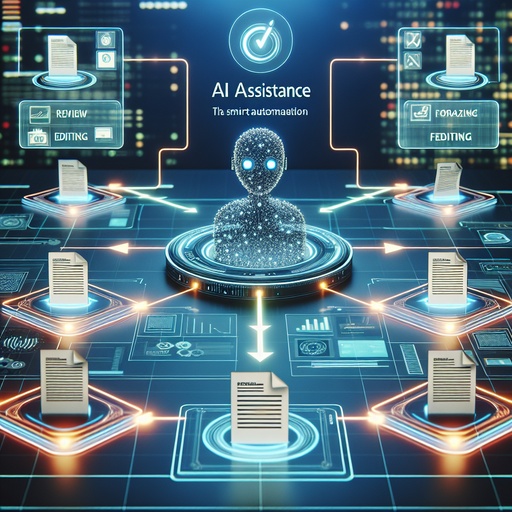
AI-Driven Support For Military Training Documentation Design
Abstract: Military documentation plays a central role in training and operational practice, yet its quality is rarely evaluated from the perspective of actual use. Documents tend to prioritise completeness and regulatory compliance over clarity. This results in materials that are information dense, cognitively demanding, and prone to misinterpretation, particularly under time pressure. This article proposes… Read More
Written by
-
Seabed Warfare And The Transformation Of Maritime Order
Abstract: Seabed warfare is transforming maritime strategy by shifting competition from platforms and manoeuvre toward infrastructure, connectivity, and persistent monitoring, influence and selective control over the benthic domain. Growing dependence on critical undersea infrastructure, combined with advances in autonomous systems and distributed sensing, is turning the seabed into an active and contested battlespace. This article… Read More
Written by

-
The Governance Of AI-Driven Systems For The Military
Abstract: The integration of artificial intelligence (AI) into military domains, particularly in Lethal Autonomous Weapons, raises significant ethical and legal concerns in a contested and incomplete normative framework. This paper critically examines these challenges to assess the adequacy of existing legal norms and ethical frameworks governing the deployment of autonomous and semi-autonomous systems. The paper… Read More
Written by
-
Integration Of Generative Artificial Intelligence In Military Training
Abstract: The integration of generative artificial intelligence into officer education represents a significant innovation that challenges doctrines, practices, and pedagogical strategies. At the same time, it demands a balance between the potential of generative artificial intelligence and the cadets’ autonomy to critically analyse and correlate the knowledge transmitted. In this exploratory-descriptive study, a questionnaire was… Read More
Written by

-
Operational Art In The Digital Age
Abstract: Beyond their socio-economic implications, disruptive technologies influence all instruments of state power, especially the military. Artificial intelligence (AI), Machine Learning (ML), and autonomous systems are transforming traditional ways of thinking, leadership concepts, and processes, necessitating new approaches to prepare military decision-makers at all levels of command for a complex, technology-driven environment. This article explores… Read More
Written by
