
Abstract: India’s Bhairav Light Commando Battalions give the Army a battalion-level formation capable of rapid, surprise, cross-border tactical action, while keeping it entirely within Army command rather than in the tri-service Special Forces structure now forming under AFSOD. This piece examines how that institutional choice affects the speed of military execution, tactical autonomy, and the pace of political decision-making, and sets out how Pakistan should calibrate its warning, local reserves, and command authority in response.
Problem statement: Does the creation of India’s Bhairav battalions accelerate cross-border military action or merely its execution following political authorisation?
So what?: A formation built for speed and institutional independence is likely to shorten the military execution phase of a cross-border action, the mobilisation and coordination that used to need attached support or cross-service approval. Once the political decision to act is taken, which still sits at the centre of the timeline, Bhairav may also widen the Indian government’s choices, since a limited ground action no longer requires committing Para SF or visibly mobilising conventional units. A more readily available tactical option could influence the range of military choices presented to political decision-makers, without necessarily lowering the threshold for authorising force. For Pakistan, what matters in practice is warning time, how ready local reserves are, and having clear rules that separate a defensive response from a retaliatory one, whatever pace India’s military execution eventually reaches.
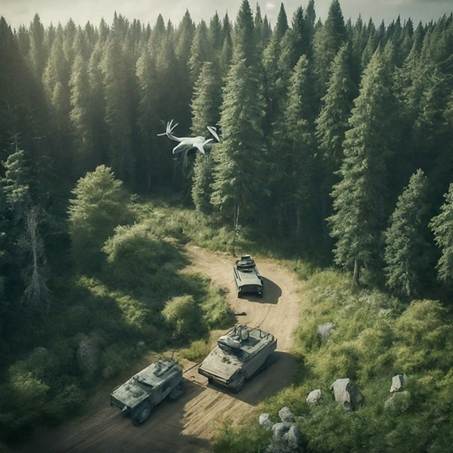
Striking with Speed and Surprise
On 26 July 2025, then Army Chief General Upendra Dwivedi announced at Kargil Vijay Diwas that the Indian Army would raise Bhairav Light Commando Battalions to strike at the border with speed and surprise.[1] Each battalion has about 250 soldiers drawn from infantry, artillery, air defence and Signals, and carries its own support.[2] By January 2026, the Army had raised some 15 of a planned 25 battalions, assigning them to formations along the borders with Pakistan and the People’s Republic of China (PRC).[3] Bhairav sits between two existing options: the infantry battalion’s Ghatak platoon, too small and short-ranged to sustain action on its own, and the Para Special Forces, held back for strategic missions and released only through a slower, tri-service approval process. Bhairav is built to close that gap, a unit that can act independently at the tactical level without drawing on either.
Pakistan already fields Light Commando Battalions, so the concept is familiar in South Asia. India’s version differs in scale, with some 25 battalions planned, each with drones and electronic warfare built in.[4] Bhairav’s significance lies in institutional changes: it performs tasks similar to Special Forces, rapid, surprise, cross-border-capable raids, while remaining governed entirely by the Army’s own command, not by the tri-service Special Forces structure now forming around Para SF, MARCOS and Garud.[5]
That arrangement addresses two frictions specific to how the Indian Army previously organised for this kind of action: line units waiting for artillery, air defence or signals support to be attached for a given operation, and a joint special-forces structure that, as it matures, could draw more of the Army’s own Para SF tasking under tri-service control. Integrating supporting capabilities within Bhairav battalions could reduce certain coordination requirements and shorten aspects of military execution, although the extent of any improvement remains unverified.
What is Bhairav?
Bhairav follows Operation Sindoor in May 2025 and has been part of the Army’s wider restructuring since then, which has also produced the Rudra Brigades and Ashni drone platoons.[6] The Army has raised it on a “save and raise” basis, drawing on existing units without adding to its overall strength. The Army deployed the first five battalions on October 31, 2025, under Corps at Dimapur, Jodhpur, Leh, Srinagar and Nagrota, spreading them across the Chinese and Pakistani fronts.[7] In November, XII Corps tested its battalion alongside a Rudra Brigade in the Akhand Prahar drill in the Jaisalmer sector, part of Exercise Trishul.[8]
A battalion is roughly a third the size of an infantry battalion, with seven to eight officers and dedicated Ashni platoons for drones.[9] Footage the Army has released, and reporting based on it, points to AK-203 rifles, light machine guns, sniper rifles, anti-tank guided missiles, loitering munitions and electronic warfare systems among its equipment.[10] On that basis, Bhairav can be expected to conduct independent raids, reconnaissance, and limited tactical strikes at ranges beyond what a Ghatak platoon can sustain, using its own drones and electronic warfare systems rather than attached assets. Its limitations are those of any light, battalion-sized force: it lacks the firepower to hold ground against a conventional counterattack, depends on division or corps for logistics beyond the first days of action, and has not yet been tested in actual combat. The Ghatak platoon, comprising about 20 soldiers in each infantry battalion, operates within reach of its parent unit, while the Army reserves the Para Special Forces for strategic missions. Bhairav appears designed to occupy an intermediate role between Ghatak platoons and Para SF.[11]
Pakistan’s Light Commando Battalions offer a partial match: raised at brigade level, between infantry and special forces, though public information on their exact capabilities and performance record is limited.[12] Bhairav differs in echelon as well as scale; it is raised at corps level, and in design, since every Bhairav battalion carries its own drones and electronic-warfare systems built in rather than attached as needed. The PRC’s People’s Liberation Army (PLA) special operations brigades sit at group army level and, per a reference on PLA tactics, function closer to Ranger-type light infantry and long-range reconnaissance units than to traditional special forces;[13] the PLA’s post-2017 combined-arms reorganisation at battalion level resembles Bhairav’s mixed composition more than the brigades themselves do. Britain’s Ranger Regiment, formed in 2021, fills a comparable niche between line infantry and special forces, but its role is to train, advise and accompany partner forces rather than conduct direct strikes itself. The U.S. 75th Ranger Regiment is a different kind of comparison: a direct-action light infantry raiding force with its own combat record, closer to Bhairav’s raiding function, though it operates within the U.S. special operations command chain rather than as a standalone Army formation, and it lacks the integral artillery, air defence and signals support that makes Bhairav self-contained.[14] Each comparison holds on one or two dimensions, echelon, or mission type, not as a match for the formation as a whole.
Special Forces and Joint Control
Bhairav fits the shift in Indian planning that senior officers call Cold Strike. In November 2025, Lt Gen Dhiraj Seth, now Army Chief, said the Army must move from Cold Start to Cold Strike: forces held at readiness with their supporting arms built in.[15] Bhairav applies that logic at battalion scale.
The special forces framework shows what the battalions offer the Army. The Armed Forces Special Operations Division brings together the Army’s Para SF, the Navy’s MARCOS and the Air Force’s Garud, some 3,000 personnel in all, under the August 2025 Joint Doctrine for Special Forces Operations.[16] The doctrine defines Special Forces as comprising only these three service formations. AFSOD’s own role is to coordinate targets and advise; operational command of a Special Forces Joint Operation, one needing the combined skills of more than one service’s SF, sits with the Chiefs of Staff Committee.[17] A single-service Para SF task can still run through the Army’s own command today; multi-service tasking goes through the joint chain, and AFSOD’s coordinating reach could widen as the structure matures. Either way, political approval for a cross-border strike is a separate requirement that neither track removes. Bhairav’s position outside the formal joint Special Forces framework may give the Army greater flexibility in assigning tactical missions, although the implications for operational approval remain uncertain.
Way Forward for Pakistan
Pakistan’s aim is to preserve warning time and keep a small incident from widening. Three measures serve that aim.
First, Pakistan should build warning around gaps, not blanket coverage. Commanders should identify the sectors of the Line of Control (LoC) and the Working Boundary where terrain would allow a small team to approach undetected, and cover them with ground sensors, patrols, and local intelligence, supported by radar and drone detection. Forward posts in those sectors need counter-drone and electronic warfare protection at battalion level.
Second, Pakistan should build its response around forces it already has. Light Commando Battalions can serve as quick-reaction forces if commanders assign them to specific sectors, set defined movement times, and equip them with drone reconnaissance and electronic support. Commanders should issue rules for committing them in advance, so local units can act quickly. Regularly rehearsing a small-team incursion would test both the warning grid and response times.
Third, Pakistan should formalise control by distinguishing two kinds of decisions a border incident may require. A local commander facing an incursion needs standing authority to act immediately in defence of their own territory and to repel or contain it. Any response that crosses the border in return is a different category of decision and should require sign-off above the local command, given its own escalation implications. Written guidance should draw that line clearly, alongside rules on when to refer upward. Pakistan should also maintain a standing procedure for documenting incidents through sensor records, imagery and physical evidence, so it can distinguish a local clash from a deliberate operation and present its account credibly. This is consistent with deterrence under provocation, which rests on proportionate response, restraint and political control.
Four things will show how far Bhairav goes: how many battalions are raised and where, what drones and electronic warfare capabilities it carries, any evidence of cross-border use, and whether official doctrine or guidance assigns Bhairav an explicit strike or cross-border role beyond its current defensive framing. None will settle the question alone, but together they will reveal whether Bhairav stays a tactical tool for the LoC or becomes the leading edge of a wider shift in how India applies force below the threshold of open war. Pakistan’s response cannot wait for that picture to form. Tighter warning coverage, forces held ready in the right sectors, and a formalised chain for verifying and responding to incidents are worth building regardless of how the formation develops. A force built for speed and institutional autonomy rewards whichever side detects and decides faster. Preparing for that is the more urgent task.
Keep TDHJ Independent. Keep Knowledge Accessible.
You have just read research made freely available through The Defence Horizon Journal.
TDHJ is committed to independent scholarship in military history, defence and strategic studies. We believe that serious research should remain accessible to readers around the world, without paywalls.
If you value this work, please consider becoming a supporter on Patreon.
A recurring contribution of just €3 or €5 per month helps sustain the journal and its open-access mission.
All articles remain freely accessible, whether you contribute or not.
[1] India Today, “Bhairav Battalion: The Indian Army’s ‘Fight Tonight’ Unit Takes Shape,” January 6, 2026.
[2] Swarajya Magazine, “Indian Army’s New Bhairav Commando Battalions to Debut at Republic Day Parade with Drone Warfare Capabilities,” January 11, 2026.
[3] Swarajya Magazine, “Indian Army’s New Bhairav Commando Battalions.”
[4] Swarajya Magazine, “Indian Army’s New Bhairav Commando Battalions.”
[5] Headquarters Integrated Defence Staff, Joint Doctrine for Special Forces Operations, JP 2.05 (New Delhi: Headquarters Integrated Defence Staff, August 2025), chap. 3.
[6] India Sentinels, “Indian Army to Deploy Shaktibaan Artillery and Bhairav Commando Units by October,” 2025.
[7] India Sentinels, “Indian Army to Deploy Shaktibaan Artillery and Bhairav Commando Units by October”; P. C. Katoch, “Bhairav Commando Units,” SP’s Land Forces, September 14, 2025.
[8] The Defence Horizon Journal, “India’s Rudra Brigades and the New Logic of Warfighting.”
[9] Rau’s IAS Study Circle, “India’s Bhairav Battalions.”
[10] Swarajya Magazine, “Indian Army’s New Bhairav Commando Battalions.”
[11] Swarajya Magazine, “Indian Army’s New Bhairav Commando Battalions”; Katoch, “Bhairav Commando Units.”
[12] “Trained for the Impossible: Pakistan’s Light Commando Battalion,” YouTube video, https://www.youtube.com/watch?v=U3EgCSKdJgk.
[13] Chinese Tactics, “PLAA Tactical-Level Organizations”; GlobalSecurity.org, “People’s Liberation Army—Special Forces.”
[14] British Army, “The Ranger Regiment,” Ministry of Defence, https://www.army.mod.uk/learn-and-explore/about-the-army/corps-regiments-and-units/the-ranger-regiment/.
[15] India’s World, “Explainer: From JAI to VIJAY, What Gen Dhiraj Seth’s Vision Commits the Indian Army To”; The Print, “Indian Army Conducts Operation ‘Akhand Prahar’ in Jaisalmer,” November 13, 2025.
[16] Manish Kumar, “Jointness in India’s Special Forces: Assessing Structural and Doctrinal Readiness,” CAPSS Issue Brief, Centre for Aerospace Power and Strategic Studies, June 8, 2026.
[17] Headquarters Integrated Defence Staff, Joint Doctrine for Special Forces Operations, JP 2.05, chap. 5, paras. 2–6.


