
Artificial Intelligence
-
AI‑Driven Simulation For Officer Training: Bridging Theory And Practice
Abstract: The accelerating pace of digitalisation and autonomous systems challenges traditional officer education. Future leaders must be prepared to operate in environments shaped by artificial intelligence, automation, and complex ethical dilemmas. This paper explores how AI‑driven simulation can enhance readiness and adaptability in officer training, ensuring that cadets develop both technical competence and strategic judgment.… Read More
Written by

-
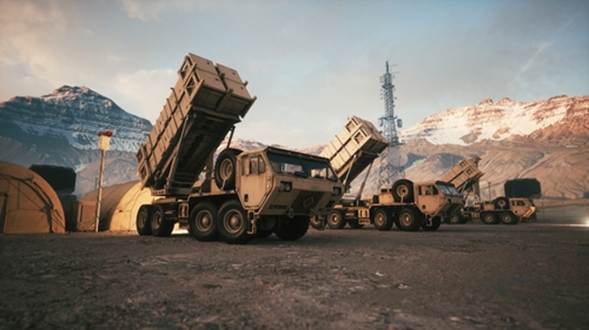
Why Missile Defence Now Depends On Resilient Sensors And Command Networks
Abstract: Missile defence credibility is still judged largely through interceptor speed, range, accuracy, and probability of engagement. Those measures capture only the final action within a longer defensive pathway. Contemporary threats compress warning time, combine dissimilar trajectories, manipulate the information environment, and target networks connecting detection with command. This article develops a continuity-threshold framework for… Read More
Written by
-
AI-Driven Support For Military Training Documentation Design
Abstract: Military documentation plays a central role in training and operational practice, yet its quality is rarely evaluated from the perspective of actual use. Documents tend to prioritise completeness and regulatory compliance over clarity. This results in materials that are information dense, cognitively demanding, and prone to misinterpretation, particularly under time pressure. This article proposes… Read More
Written by

-
Forecasting Factors That Will Either Hinder Or Accelerate AI Progress
Abstract: Artificial intelligence is an emerging technology that is predicted by many experts to arrive by the end of this decade. It will be transformative, changing how humans interact with each other, and will bring various benefits and drawbacks. While these benefits and drawbacks will be monumentally changing, the timeline of widespread implementation of AI… Read More
Written by

-
Artificial Intelligence In The English Language Education For Tomorrow’s Officers
Abstract: Artificial intelligence (AI) is becoming an unavoidable element of higher education, military training, and language learning. For future officers, however, English proficiency cannot be reduced to the efficient production of grammatically acceptable texts or rehearsed oral responses. Within the NATO environment, preparation for STANAG 6001 must remain anchored in independent, unrehearsed, general communicative ability… Read More
Written by

-
The Governance Of AI-Driven Systems For The Military
Abstract: The integration of artificial intelligence (AI) into military domains, particularly in Lethal Autonomous Weapons, raises significant ethical and legal concerns in a contested and incomplete normative framework. This paper critically examines these challenges to assess the adequacy of existing legal norms and ethical frameworks governing the deployment of autonomous and semi-autonomous systems. The paper… Read More
Written by

-
Integration Of Generative Artificial Intelligence In Military Training
Abstract: The integration of generative artificial intelligence into officer education represents a significant innovation that challenges doctrines, practices, and pedagogical strategies. At the same time, it demands a balance between the potential of generative artificial intelligence and the cadets’ autonomy to critically analyse and correlate the knowledge transmitted. In this exploratory-descriptive study, a questionnaire was… Read More
Written by

-
Operational Art In The Digital Age
Abstract: Beyond their socio-economic implications, disruptive technologies influence all instruments of state power, especially the military. Artificial intelligence (AI), Machine Learning (ML), and autonomous systems are transforming traditional ways of thinking, leadership concepts, and processes, necessitating new approaches to prepare military decision-makers at all levels of command for a complex, technology-driven environment. This article explores… Read More
Written by

-
The Alliance Has No Common Answer To A Machine-Speed Question
Abstract: NATO has spent three years building the technical scaffolding to field autonomous systems across its member states, and has largely succeeded at interoperability, defined as an engineering property: allied machines can operate as one. It has not resolved a harder property of authority. When an autonomous system proposes a lethal action faster than a… Read More
Written by

-
Lone-Actor Terrorism In The Age Of Relational Machines
Abstract: AI companion platforms are purpose-built to validate, affirm, and emotionally sustain their users. This article examines whether that structural logic poses a measurable radicalisation risk for individuals already predisposed to lone-actor terrorism. Drawing on a structured simulation conducted across seven ideological profiles and three AI companion personality types on Ourdream AI, the study finds… Read More
Written by
