
Europe
-
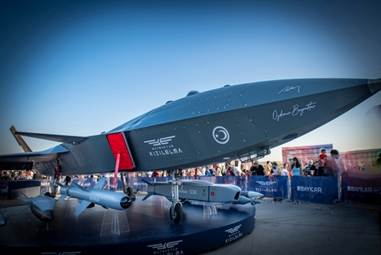
Türkiye’s Military Capacity And European Defence Integration
Abstract: As Europe confronts the return of high-intensity warfare and prolonged industrial attrition, longstanding assumptions about defence readiness are being reconsidered. This report examines Türkiye’s evolving role within the European security landscape, arguing that Ankara has emerged as a significant yet inherently limited contributor to addressing Europe’s structural shortfalls in manpower, munitions, and operational adaptability.… Read More
Written by
-
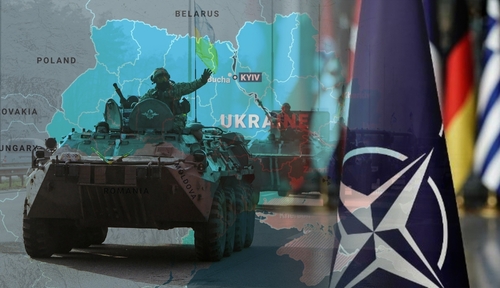
Putin’s Early NATO Discourse And The Myth Of Ignored Russian Security Interests
Abstract: This article challenges the post‑2014 Russian claim that NATO enlargement systematically ignored Russia’s legitimate security interests. Drawing on Vladimir Putin’s own speeches and interviews from 2000–2004, combined with primary documents such as the 1997 NATO–Russia Founding Act, it demonstrates that Moscow repeatedly accepted Alliance enlargement, deepened institutional cooperation, and even contemplated Russian membership. The… Read More
Written by
-
Social Cohesion, Collective Defence, And The Latent Power Of Democracy
Abstract: Collective security in democracies is unviable without public trust and a publicly cogent threat assessment. Thus, it follows that democratic security architects should promote an internally-focused threat perception and engage in realistic perception management. There needs to be a greater focus on what we have that is worth protecting, and why; moreover, threat perceptions… Read More
Written by

-
The Integration Of AI-Empowered Autonomous Weapon Systems In European Defence
Abstract: As AI technologies advance, they alter military strategies and raise critical issues, including legal adherence to international humanitarian law and ethical concerns such as accountability and the potential for dehumanised warfare. The integration of AI-enhanced Autonomous Weapon Systems (AWS) presents both strategic opportunities and profound legal and ethical challenges for European defence. Problem statement:… Read More
Written by

-
Peace Negotiations About The War In Ukraine As A Matter For The Global Community Of States
Abstract: Eighty years after the founding of the United Nations (UN), international conflicts—in particular those escalating into wars, such as in Ukraine and in the Middle East—became a matter of the international community consisting of 193 countries with the right to vote in the General Assembly. In this part of the newsletter series, different positions… Read More
Written by

-
Restoring The Strategic Balance In Europe Through A Manoeuvrist Approach
Abstract: A conventional force imbalance in Europe cannot be offset by increased capabilities in the near future, this will take time. Consequently, a limited military escalation remains possible or even probable as long as this situation endures. If NATO is unable to react to this, it will likely lose its cohesion and significantly reduce the… Read More
Written by

-
Keeping the Americans In: The Second Trump Administration Presents NATO With Challenges and Opportunities
Abstract: NATO members can ensure that the U.S. continues playing a leadership role in the transatlantic alliance during the second Trump Administration and beyond. The alliance must continue adapting to changing geopolitical dynamics marked by the emergence of an alternative axis comprising Russia, the People’s Republic of China, the Democratic People’s Republic of North Korea,… Read More
Written by

-
Unravelling Some Complexities Of The Western Balkans
Abstract: Despite the war ending in former Yugoslavia, which resulted in newly proclaimed nations, the drums never ceased. There have been endless initiatives to stabilise the region, such as the Thessaloniki Summit and the Berlin Process, which can now be considered attempts in vain. One of the biggest issues remains the spread of terrorism in… Read More
Written by

-
The Elusive European Nuclear Deterrence
Abstract: The decline of the US nuclear security guarantees is concerning. Since the 1960s, the US flexible response posture has been perceived as irrelevant and uncertain. However, a turning point emerged during the Georgian conflict of 2008, which exacerbated the destabilization of European security in the 2014 Crimean crisis. Too alarmed by a recurrence of… Read More
Written by

-
The Question Of A Strategic Security Partnership Between Europe And The Arab World
Abstract: This paper deals with the question of the extent to which a security partnership between European and the Arab states increases mutual security on the one hand, and on the other hand, how such cooperation affects the development of the Arab developing states. Finally, it asks whether a new relationship of trust can grow… Read More
Written by
