
Geoeconomics
-
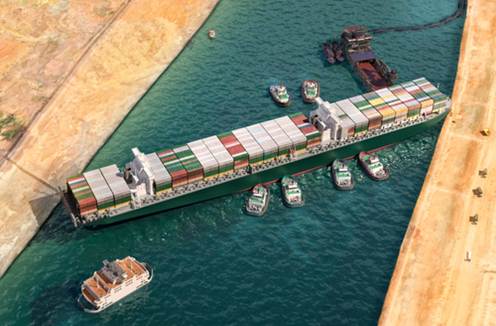
Rethinking Maritime Chokepoints İn The Contemporary Global Economy
Abstract: Maritime chokepoints are commonly portrayed as critical vulnerabilities capable of triggering systemic disruption across the global economy. The concentration of trade and energy flows through corridors such as the Suez Canal, the Strait of Hormuz, Bab el-Mandeb, the Strait of Malacca, and the Panama Canal has reinforced concerns regarding the fragility of contemporary globalisation.… Read More
Written by
-
Energy, Technology, And The Emerging Geopolitical Order
Abstract: The international system is undergoing a transformation that extends beyond conventional great-power rivalry. What is changing is not simply the distribution of power among states, but the mechanisms through which power is exercised, sustained, and constrained. Assumptions that shaped much of the post-Cold War era economic interdependence as a stabilising force, globalisation as a… Read More
Written by

-
China’s Expanding Footprint In The Middle East
Abstract: The Middle East, until recently under predominant U.S. influence, is witnessing the gradual expansion of the People’s Republic of China’s (PRC) strategic footprint. Beijing emphasises economic statecraft, infrastructure diplomacy, and energy interdependence, while increasingly engaging in regional mediation, most notably between Iran and Saudi Arabia. Through investments in ports, industrial zones, and strategic maritime… Read More
Written by

-
Building Energy Resilience Beyond The Strait Of Hormuz
Abstract: The effective closure of the Strait of Hormuz following joint U.S.-Israeli strikes on Iranian targets in late February 2026 has transformed a long-theorised energy security vulnerability into an energy redundancy gap. Maritime traffic through the Strait has declined by more than 90 per cent, removing approximately 17-20 million barrels of oil per day from… Read More
Written by

-
India’s Strategic Leap In Rare Earths
Abstract: India is standing at a pivotal moment to unlock its vast Rare Earth Element (REE) reserves and challenge the People’s Republic of China’s (PRC) long-standing monopoly in this critical sector. Despite holding 5.3% of global REE reserves, India contributes only a fraction of global output due to regulatory bottlenecks, a lack of refining infrastructure,… Read More
Written by

-
Navigating Contemporary Hydropolitics
Abstract: The vested economic interests of some riparian states have led them to usurp transboundary water resources at the expense of others, culminating in tensions and even hydro-wars. A multiplicity of strategies has been employed to manage these water disputes: International Water Agreements (IWAs), Integrated Water Management (IWM) and Alternate Dispute Resolution (ADR) mechanisms. Despite… Read More
Written by

-
India’s Neighbourhood Policy Conundrum: A Case of Nepal and Sri Lanka
Abstract: India faces numerous challenges in its neighbourhood, characterised by territorial disputes, geopolitical rivalries, and economic dependencies. Tensions with China and Pakistan are cornerstones of India’s troubled neighbourhood past; however, dwindling partnerships with countries like Nepal and Sri Lanka reflect poorly on India’s regional leadership. To regain influence, India must enhance regional cooperation by building… Read More
Written by

-
Geopolitics of Technology in Taiwan: A Key Factor in Strategic Competition
Abstract: Taiwan occupies a pivotal position in the realm of technological geopolitics due to its dominance in semiconductor manufacturing and strategic location in the Indo-Pacific region. As global powers increasingly depend on advanced technologies for economic and security imperatives, Taiwan has emerged as a critical player in the strategic calculus of nations like the United… Read More
Written by

-
Unlocking Economic Potential: The TAPI Pipeline’s Role In Regional Integration
Abstract: The revitalisation of the Turkmenistan-Afghanistan-Pakistan-India (TAPI) pipeline is vital for regional connectivity and economic growth in South and Central Asia. With Afghanistan’s part under construction, the pipeline will deliver 33 billion cubic meters of natural gas annually, creating jobs and boosting Afghanistan’s economy. It also promotes regional cooperation through enhanced energy infrastructure. However, its… Read More
Written by

-
The Necessity To Defend Against Manoeuvre Warfare In The Competition With China
Abstract: China’s weaponisation of economics is fully in line with China’s grand strategy. China relies mainly on using the indirect instead of the direct approach. Manoeuvre warfare as an indirect approach sees the opponent as an interconnected system, to which measures against identified vulnerabilities are applied. The goal is systemic destruction – the incapacitation or… Read More
Written by
