
Abstract: Traditional military training methods often reach their limits in complex deployment scenarios, particularly with respect to cost, the ability to realistically recreate high-risk situations, and the objective evaluation of performance. To optimise training effectiveness, integrating innovative technologies such as mixed reality (MR) is increasingly important. MR combines the real and virtual worlds, enabling new training approaches. This article addresses the key question of how MR’s transformative potential can be leveraged in military training to enhance trainees’ situational awareness (SA) and the effectiveness of instructor support. Situational awareness, defined as the perception, understanding, and anticipation of the environment, is essential for making quick, informed decisions in tactical contexts.
Problem statement: How to overcome the limitations of traditional military training regarding cost, safety, and realism, and effectively leverage Mixed Reality to enhance trainees’ situational awareness and instructor support?
So what?: Military training institutions should adopt the proposed didactic-technological framework to systematically integrate Mixed Reality into their curricula. This allows instructors to bridge the gap between theory and practice, significantly enhancing the situational awareness and decision-making skills of future leaders in safe yet realistic environments.

Situational Awareness in the Military Context
The increasing complexity of modern deployment scenarios exposes the limitations of traditional military training, particularly regarding logistical costs, safety risks, and the lack of objective performance evaluation. Mixed Reality (MR) offers a transformative solution by merging immersive simulations with physical reality.
Situational awareness (SA) is a crucial factor for effective decision-making in security-critical domains. Endsley’s model defines SA as a three-stage cognitive process, all of which are vital for soldiers to interpret tactical relevance and anticipate threats:[1] perception (Level 1), which involves the accurate detection of relevant cues in the environment; comprehension (Level 2), focussing on the integration of information to form a coherent mental picture of the tactical situation; and projection (Level 3), ensuring the anticipation of future developments to guide action. Deficits at any of these levels can lead to fatal consequences.[2]
Principles of Instructional Design for Technology-Supported Learning
Effective MR integration requires established instructional principles. In line with Cognitive Load Theory (CLT),[3] the framework minimises irrelevant stimuli to focus working memory on learning content. Simultaneously, experiential learning[4] is facilitated through immersive interactions in safe, authentic environments. To support complex tasks, scaffolding mechanisms[5]—such as context-sensitive visual cues and automated feedback loops[6] based on real-time data—are integrated to guide the learner.
Fundamentals and Characteristics of Mixed Reality
According to Milgram and Kishino, the term mixed reality (MR) refers to a continuum connecting the real and virtual worlds.[7] It ranges from augmented reality (AR) (enriching reality with digital information[8]) to virtual reality (VR) (complete immersion in a virtual environment[9]), and includes hybrid forms such as augmented virtuality.
MR technologies are characterised by several key features that make them particularly relevant for training applications. First, interactivity ensures that users can engage with the mixed environment in real time, and their actions directly impact the virtual or augmented component. Furthermore, immersion is crucial; while the degree of immersion varies depending on the MR system, the goal is to create a sense of presence and ‘being there’ in the simulated or augmented environment. Another key feature is contextualisation, as MR enables embedding virtual information or objects in real environments or simulating realistic contexts in virtual environments, thereby facilitating learning and the application of knowledge. Additionally, the flexibility and adaptability of MR scenarios can be relatively easily adapted and varied to address different training objectives and learning needs. Finally, through data integration, MR systems can integrate sensor data and other information into the training environment to create more realistic and informative experiences.
In military training, MR offers the potential to create highly realistic yet controllable scenarios that enable trainees to experience complex situations in a safe environment and improve their situational awareness and tactical skills. In addition, MR systems can provide valuable data for performance assessment and instructor feedback. This is supported by current research, as the use of MR technologies in education and training has become increasingly important in recent years. Studies in various fields, including medicine,[10] engineering[11] and civil emergency preparedness,[12] have demonstrated the potential of AR and VR to improve skills, increase motivation and reduce training costs.
Didactic Principles and Design Elements in the MR Context
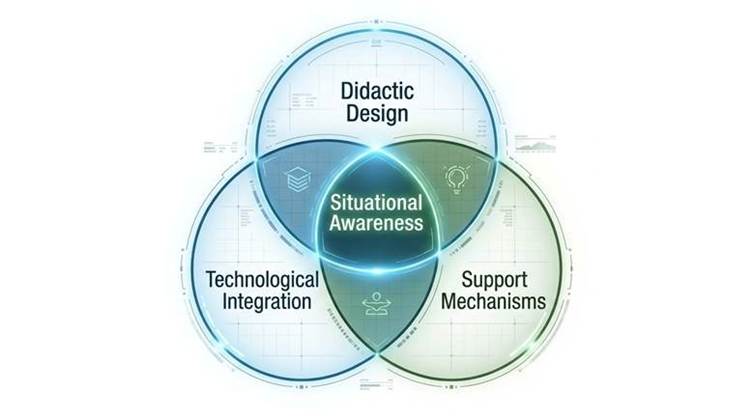
The proposed framework integrates didactic principles with MR capabilities to promote SA and instructor support. It consists of three interconnected components: didactic design, technological integration, and specific support mechanisms. Addressing the first of these components, applying the instructional design principles discussed in the first section is crucial to the effectiveness of MR-based training. The present framework integrates the following didactic elements. It begins with clear learning objectives, with each MR training scenario designed around specific, measurable, achievable, relevant, and time-bound (SMART) objectives geared towards the requirements of tactical skills and the development of situational awareness.[13] This is supported by realistic training scenarios grounded in authentic military contexts and challenges, ensuring a high probability of transfer.[14] MR enables the simulation of complex, dynamic situations that would be difficult to achieve with traditional methods.[15] Moreover, the framework emphasises effective interaction options, promoting active and meaningful interactions between training participants and the MR environment.[16] This includes manipulating virtual objects,[17] communicating with virtual agents or other training participants,[18] and performing tactical actions. To ensure continuous improvement, differentiated feedback mechanisms are incorporated; MR systems enable the collection of detailed performance data in real time. The framework provides for the integration of various forms of feedback, including immediate feedback on actions, summary feedback after training sessions, and individualised feedback from the trainer, supported by the data provided by the system.[19] Ultimately, this ensures adaptability, allowing the difficulty level of the training scenarios, the amount and type of information provided, and the support provided by virtual agents to be adapted to the progress and needs of individual training participants or teams.[20]
Technological Components and Integration Strategies
The technological implementation of the framework requires careful selection and integration of MR hardware and software, as well as the development of suitable integration strategies. This selection process must account for both the specific learning objectives and the physical constraints of the military training environment. Achieving a seamless blend of virtual and real-world elements requires a robust technical architecture that involves several key considerations. Initially, selecting MR hardware and software is critical, as the choice depends on the specific training requirements and objectives, balancing immersion, interaction, cost, and user-friendliness, as well as software capabilities for scenario design and data analysis.[21] Building on this, the integration of sensor data – such as tracking data, eye-tracking, and physiological data (e.g., stress) – increases the realism of the simulation and provides detailed information about the trainees’ behaviour, condition, and performance.[22] This data can be used both to improve learners’ SA (e.g., by visualising relevant biometric information) and to support trainers’ performance analysis.[23] Furthermore, a robust, low-latency network architecture is essential for enabling synchronous collaboration among multiple training participants in the same MR environment.[24] Finally, the implementation requires effective visualisation strategies to support SA and trainers; for trainees, this means contextual presentation of relevant tactical data,[25] the highlighting of important objects or events, and the ability to view information from different perspectives, while for instructors, it involves visualising performance metrics to enable informed assessment and intervention.[26]
Mechanisms for Promoting Situational Awareness and Instructor Support
The integration of didactic principles and technological components aims to implement specific mechanisms for promoting SA and trainer support:[27], [28] To promote situational awareness across its three levels, the framework utilises realistic sensory simulations and the overlays of relevant information in the real or virtual environment to help trainees to accurately perceive important clues and details (Perception, Level 1).[29] This leads to interactive exploration of the training environment[30] and contextual information, supporting the development of a coherent understanding of the situation (Understanding, Level 2). Ultimately, dynamic simulations enable learners to experience real-time consequences of their actions and anticipate future developments (Projection, Level 3).[31]
Equally important are the mechanisms to support trainers. MR systems enable them to follow the training process in real time from multiple perspectives, both from individual training participants and from a higher-level observer perspective.[32] This is complemented by automated performance analysis, which collects relevant data (e.g., reaction times, decision accuracy, compliance with procedures) in real time.[33] Additionally, instructors are equipped with intuitive controls to easily customise training scenarios, initiate events, place virtual objects, and provide ad hoc support. In collaborative settings, this even extends to telepresence and interaction, allowing instructors to immerse themselves in the MR environment to interact with trainees, give instructions, or provide assistance.[34]
The didactic-technological framework presented here thus offers a comprehensive and integrative approach for designing effective MR-based training interventions in a military-tactical context.
Identification of Use Cases and Implementation of the Derived Framework
Moving from theoretical design to practical application, this section illustrates how the framework is brought to life at the Theresan Military Academy. By examining specific high-stakes use cases in basic officer training, we demonstrate how these technologies directly impact the soldiers’ ability to survive and lead under pressure.
Use Cases in Basic Officer Training
Basic officer training in the Austrian Armed Forces is conducted at the Theresan Military Academy. Training is provided within the framework of a dual training system. In addition to troop officer training courses, this also includes completion of one of two bachelor’s degree programmes. As a military foundation, these programmes include training students in areas such as manoeuvre tactics as a ‘school of thought’ and ‘decision-making training’.
This training is essentially divided into four areas, which are carried out in conjunction with troop officer training: combat training from the rifleman to the platoon level, leadership training at the company level, basic tactical training at the battalion level and tactical decision-making training at the battalion level. The strong interconnection among these four areas is intended to convey a high degree of transparency regarding the systems and elements employed. However, this is not possible to a sufficient extent due to a variety of factors (available forces and resources, training areas, safety).
Specific MR Application Scenarios and Training Objectives
Close-Quarter Combat Training at the Rifleman to Platoon Level
Starting at the foundational tactical level, the aim of MR-supported training in close-quarter combat (CQC) is to develop resilient combat techniques that enable soldiers to act and make decisions at the rifleman, squad and platoon levels under highly dynamic and stressful conditions. The focus is on promoting situational awareness (SA) at all three levels (perception, understanding and projection) as a prerequisite for safe and rule-compliant action.[35] In addition, the training addresses communication and leadership skills, in particular coordination within small units and time-critical decision-making under uncertainty. Studies show that immersive training environments can support presence and decision-making performance in complex military scenarios, but at the same time place increased demands on workload and stress regulation.[36]
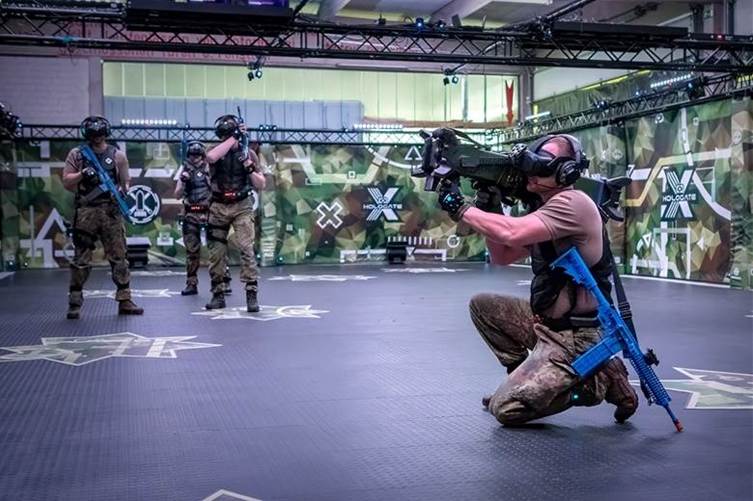
In Close Quarter Combat (CQC), trainees face extreme psychological and physical pressure. Within fractions of a second, they must perceive a chaotic environment, distinguish between lethal threats and civilians, and execute life-or-death decisions. The immersive MR environment replicates this intense cognitive load, confronting soldiers with the true chaos of combat. Dynamic CQC scenarios also pose a challenge for trainers, as actions and decision-making processes can hardly be evaluated objectively by observation alone. Aspects such as eye behaviour, focus, movement coordination or the use of weapons can only be assessed to a limited extent without technical support. Studies on complex military decision-making show that insufficient contextualisation and data significantly limit the quality of feedback and learning transfer.[37] In close combat, there is a risk that incorrect patterns of perception, decision-making or movement will become automated at an early stage and can only be corrected later with great effort. This increases the need for precise, early error detection, especially in highly dynamic scenarios with limited observability.[38], [39]
The MR-based implementation addresses these challenges by closely linking training, data collection and analysis. Head-mounted displays (HMDs) integrate virtual opponents, civilians, threats and dynamic changes in the situation into real training environments, achieving a high degree of presence and plausibility, a key mechanism of immersive training systems.[40] In addition, sensor and tracking systems record position data, movement patterns, eye behaviour, and equipment use. This data is used to generate digital twins of the training session, which reconstruct relevant positions, movements, and resource use. Rather than relying solely on subjective observation in chaotic scenarios, instructors are empowered with a ‘digital twin’ of the training session. This allows them to effectively see through the trainee’s eyes, tracking exactly where they looked, how they moved, and when their stress levels spiked.[41] MR thus functions not only as an immersive training medium for trainees but also as an analytical support system for trainers, supplementing subjective assessments, evaluating perception and decision-making processes, and thereby contributing to improved training quality.[42]
Presentation of Complex Deployment Scenarios as Part of Leadership Training
Moving from direct combat skills to the command of larger units, the leadership training enhances the skills necessary for successful leadership at the tactical level and beyond, based on the Theresan leadership model. The training objective is to develop, promote and enhance the leadership skills of military leaders.[43] Leadership skills can be seen as a component of leadership competence to be developed. This leadership competence is the product of people orientation, decisiveness and adaptability.[44] Leadership training aims to hone all three of these components of leadership competence. Leadership training uses two methods from the set of methods used in teaching tactics,[45] namely terrain briefing and leadership exercises. This exercise is not a classic military training setting with a full troop, but rather consists of various situation simulations based on an initial scenario – usually a brief situation that is transferred to the terrain.
To achieve these objectives, the primary challenge for students is to visualise the initial situation and the various scenarios in the terrain in their mind’s eye. However, this cognitive effort reduces the capacity available to solve the tasks in the leadership exercise. The situation scenarios are presented verbally by the trainers and must then be transferred. Consequently, the more complex the scenarios, the more difficult they are for students to grasp. Currently, the work is done exclusively in analogue form using hand-held maps. To arrive at realistic decision-making scenarios, it is necessary to visualise them.
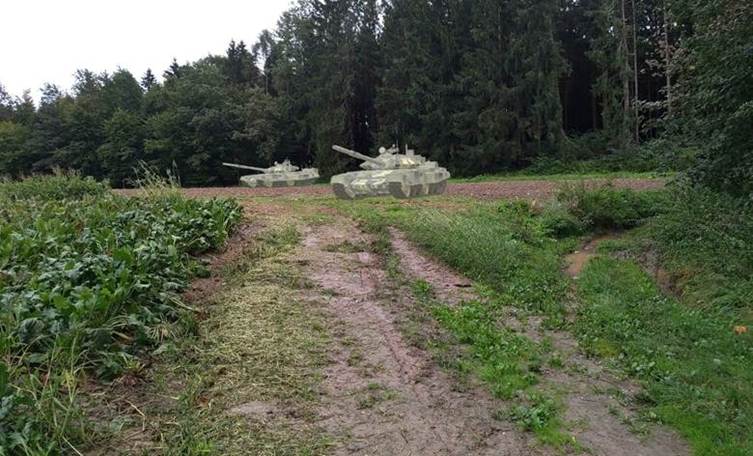
This is exactly where MR components become relevant. The use of MR is intended to transform the verbal triggers of leadership behaviour into visual stimuli. The optical triggers are displayed within the students’ field of vision and are shown in their correct positions relative to the terrain. This makes it possible to design scenarios freely or according to a script and to call them up depending on the behaviour of the individual students. The trainer does not need to correct the students’ behaviour directly, but can guide them towards correct behaviour by playing specific triggers. Within the framework of problem-based learning, MR support is used to consolidate the handling of the factors of force, space and time.[46] In addition, MR can also be used to evaluate the leadership exercise, thus providing important content for reflection.
Tactical Training on the Battalion Level
Scaling up the complexity to the battalion level, tactical training at the Theresan Military Academy faces the challenge of preparing students for increasingly complex military scenarios without access to a broad spectrum of real combat experience. Against this backdrop, the targeted use of modern technologies, especially MR, is becoming increasingly important as a supplementary training tool. The aim is to convey abstract tactical content in a clear, comprehensible and decision-relevant manner.
The training objective of tactical training is the process-oriented solution of a tactical problem at the level of reinforced or small units in the respective type of operation. The tactical planning process is applied in conjunction with operational support, combat support and command support. The focus is on structured information processing as the basis for military decision-making. As outlined in the Austrian Armed Forces’ manual on the tactical command process: ‘At its core, the information utilisation process must provide relevant information to the right place at the right time.’[47] This understanding shapes both the tactical command process and its didactic implementation in training.
This poses several challenges for students. These include, in particular, developing a clear understanding of the map and terrain, working with incomplete initial information, and applying tactical principles, rules, and guidelines in uncertain situations. In addition, combat scenarios that cannot be ‘experienced’ firsthand must be mentally translated into problem-solving. The use of modern information technology offers significant support here. According to the same manual, ‘the use of information technology reduces the effort and time required for recording, evaluating and, above all, displaying (e.g. electronic situation map, virtual terrain) the information and enables low-delay further processing.’[48]
The training is deliberately structured in stages. Initially, content is taught using analogue methods, such as maps and transparencies, before digital presentation tools, such as laptops or tablets, are introduced. In a stress-free learning environment with intensive teacher-student interaction, the complexity is gradually increased. MR complements this approach by structuring experiences and making them easier to communicate. The tactical command manual emphasises this by stating that ’experiences must be made accessible and distributed as organised knowledge within the framework of knowledge management’.[49]
In practical implementation, MR enables three-dimensional projection of the terrain, blending different terrain representation forms, and displaying the synchronisation of the elements used. This makes the interaction of the tactical factors of force, space and time comprehensible, taking into account the human factor. In line with the nature of tactics, which is to flexibly combine different elements, the following also applies to training. As Dieter Schadenböck explains in his foundational text on land forces tactics, ‘Tactics can always make use of several effective elements and procedures or place emphasis on one element or procedure. This gives the tactical level completely different possibilities in terms of mission fulfilment and freedom of action.’[50] MR is therefore an effective complementary element that provides lasting support for the decision-making abilities of future leaders.
Tactical Decision Making on the Battalion Level
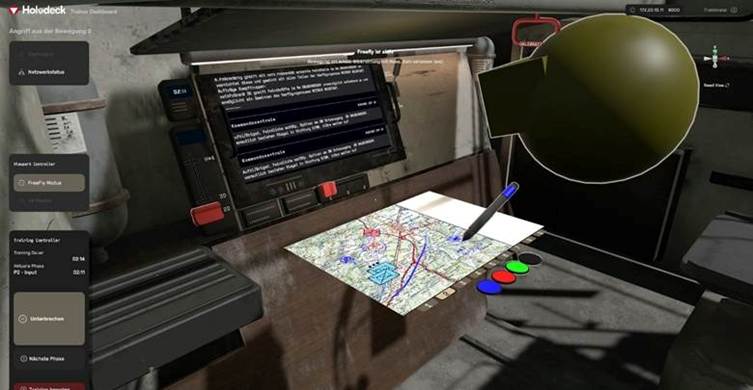
To apply this basic tactical knowledge practically under stress and time pressure, the Theresan Tactical Holodeck was developed as part of a research project by the Theresan Military Academy in collaboration with the Austrian Institute for Technology. Its aim is to place trainees in an immersive environment where they can independently solve a process-oriented tactical problem at the battalion level within a specific type of operation, using the tactical planning procedure in cooperation with combat support, combat service support, and command support, under time pressure.[51]
The challenge for students is that they have to work through a planning process based on incomplete initial information and integrate a transfer of combat scenarios (which cannot be ‘experienced’) into the problem-solving process. The aim is to maintain decision-making and leadership skills even under stress.
The didactic model is largely based on the independent application of what has been learned under additional stressors, such as time pressure or more complex tasks, to simulate a realistic, combat-like working environment. This is implemented in MR by depicting a combat-like work environment as a workspace within a mobile command post. Additional stressors, such as noise, withholding of information, or poor-quality information (e.g., radio), can also be depicted. In addition, the complexity of the task can be dynamically scaled, e.g. by adding additional tasks.
Conclusion
The integration of MR into military training offers a transformative solution to the limitations of traditional methods, including high logistical costs, safety risks, and the lack of objective performance evaluation. By applying the proposed didactic-technological framework, military institutions can bridge the gap between theoretical knowledge and practical application.
This framework successfully integrates established didactic principles—such as cognitive load theory and experiential learning—with MR’s technological capabilities, including interactivity and immersion. The core benefit lies in the significant enhancement of SA across the levels of perception, comprehension, and projection. Furthermore, the system provides critical support to instructors through data-supported real-time monitoring and automated performance analysis, enabling objective assessment and feedback. As demonstrated by the use cases—ranging from Close Quarter Combat to the Tactical Holodeck—MR creates safe, realistic, and controllable environments that prepare future leaders for complex deployment scenarios.
Way Ahead
Rather than presenting theoretical forecasts, the following points represent the concrete next steps and ongoing projects planned at the Theresan Military Academy. To ensure the best possible training for our soldiers, these initiatives are currently being implemented step by step in practical training environments. Moving forward, the focus will shift from theoretical development and initial testing to the operationalisation and refinement of these systems. A primary objective is to transition the “Theresan Tactical Holodeck” from its current research status to regular training operations, enabling the standardised application of immersive tactical decision-making training at the battalion level. Furthermore, future developments will deepen the integration of sensor data, with a specific focus on stress measurement (physiological data) to gauge trainees’ resilience and dynamically adapt scenario difficulty and complexity. Ultimately, leveraging this collected performance and biometric data will enable the individualisation of the training environment, ensuring that training interventions are tailored to each soldier’s specific strengths and weaknesses, thereby optimising learning transfer and the development of leadership competence.
[1] Mica R. Endsley, “Design and Evaluation for Situation Awareness Enhancement,” in Proceedings of the Human Factors Society 32nd Annual Meeting (Santa Monica, CA: Human Factors Society, 1988), 97–101.
[2] Pamela L. McLeod et al., “Situation Awareness and Workload in Air Traffic Control,” Ergonomics 42, no. 11 (November 1999): 1411–31.
[3] John Sweller, “Cognitive Load during Problem Solving: Effects on Learning,” Cognitive Science 12, no. 2 (April 1988): 257–85.
[4] David A. Kolb, Experiential Learning: Experience as the Source of Learning and Development (Englewood Cliffs, NJ: Prentice Hall, 1984).
[5] Lev S. Vygotsky, Mind in Society: The Development of Higher Psychological Processes (Cambridge, MA: Harvard University Press, 1978).
[6] John Hattie and Helen Timperley, “The Power of Feedback,” Review of Educational Research 77, no. 1 (March 2007): 81–112.
[7] Paul Milgram and Fumio Kishino, “A Taxonomy of Mixed Reality Visual Displays,” IEICE Transactions on Information and Systems E77-D, no. 12 (December 1994): 1321–29.
[8] Ronald T. Azuma, “A Survey of Augmented Reality,” Presence: Teleoperators & Virtual Environments 6, no. 4 (August 1997): 355–85.
[9] Mel Slater and Martin Usoh, “Presence in Immersive Virtual Environments,” Presence: Teleoperators & Virtual Environments 2, no. 3 (Summer 1993): 205–21.
[10] Neal E. Seymour et al., “Virtual Reality Training Improves Operating Room Performance: Results of a Randomized, Double-Blinded Study,” Annals of Surgery 236, no. 4 (October 2002): 469–76.
[11] Louis B. Rosenberg, “Virtual Fixtures: Perceptual Tools for Telerobotic Manipulation,” in Proceedings of IEEE Virtual Reality Annual International Symposium (New York: IEEE, 1993), 76–82.
[12] Jan Morguet and Robert Hößler, “Virtual Reality Training for Emergency Response: A Conceptual Framework and Case Study,” International Journal of Emergency Management 5, no. 1 (January 2008): 56–73.
[13] Endsley, “Design and Evaluation for Situation Awareness Enhancement,” 97–101.
[14] Eduardo Salas, Jessica L. Wildman, and Ronald F. Piccolo, “Using Simulation-Based Training to Enhance Team Effectiveness: Considerations for Design and Implementation,” in Team Effectiveness in Complex Organizations: Cross-Disciplinary Perspectives, ed. Michael M. Beyerlein, Susan T. Beyerlein, and Federico P. C. De Jong (New York: Routledge, 2012), 289–313.
[15] James E. Driskell and Elizabeth Dwyer, “Training for Distributed and Virtual Teams,” Human Factors 59, no. 1 (February 2017): 179–94.
[16] John Seely Brown, Allan Collins, and Paul Duguid, “Situated Cognition and the Culture of Learning,” Educational Researcher 18, no. 1 (January/February 1989): 32–42.
[17] Rosenberg, “Virtual Fixtures,” 76–82.
[18] Slater and Usoh, “Presence in Immersive Virtual Environments,” 205–21.
[19] Hattie and Timperley, “The Power of Feedback,” 81–112.
[20] Vygotsky, Mind in Society.
[21] Hattie and Timperley, “The Power of Feedback,” 81–112.
[22] Gavan Lintern, “Information Technology for Training Situation Awareness,” in Situation Awareness: Analysis and Measurement, ed. Mica R. Endsley et al. (Aldershot: Ashgate Publishing, 2007), 315–34.
[23] K. Anders Ericsson, “Deliberate Practice and the Acquisition of Expert Performance: A General Overview,” Academic Emergency Medicine 14, no. 11 (November 2007): 988–94.
[24] Michael Zyda, “From Visual Simulation to Virtual Reality to Games,” Computer 38, no. 9 (September 2005): 25–32.
[25] Endsley, “Design and Evaluation for Situation Awareness Enhancement,” 97–101.
[26] Jacques Marescaux et al., “Transatlantic Robot-Assisted Telesurgery,” Nature 413, no. 6854 (September 2001): 379–80.
[27] Endsley, “Design and Evaluation for Situation Awareness Enhancement,” 97–101.
[28] Ericsson, “Deliberate Practice and the Acquisition of Expert Performance,” 988–94.
[29] Lintern, “Information Technology for Training Situation Awareness,” 315–34.
[30] Kolb, Experiential Learning.
[31] Endsley, “Design and Evaluation for Situation Awareness Enhancement,” 97–101.
[32] Marescaux et al., “Transatlantic Robot-Assisted Telesurgery,” 379–80.
[33] Ericsson, “Deliberate Practice and the Acquisition of Expert Performance,” 988–94.
[34] Slater and Usoh, “Presence in Immersive Virtual Environments,” 205–21.
[35] A. Conges, L. Breard, W. Patruno et al., “Situational Awareness and Decision-Making in a Crisis Situation: A Crisis Management Cell in Virtual Reality,” International Journal of Disaster Risk Reduction 97 (2023): 104002.
[36] Fabio Ibrahim, Jonas Schumacher, Peter Hofer, and Monika Daseking, “Decision-Making in Virtual Reality: An Experimental Study on Virtual Reality’s Effect on Presence, Task Load and Decision-Making Performance within Operational Command,” Telematics and Informatics Reports 21 (2026): 100282, https://doi.org/10.1016/j.teler.2025.100282.
[37] T. Hanratty, E. Heilman, and J. Caylor, “Understanding the Contextualization of Information in Complex Military Decision Spaces” (paper presented at the IEEE Conference on Cognitive and Computational Aspects of Situation Management (CogSIMA), Victoria, BC, 2020).
[38] Alexander Aichernig, “Optimierung der Ausbilderwahrnehmung im Close Combat Training mittels XR-Technologie” (Bachelor’s thesis, Fachhochschule für militärische Informations- und Kommunikationstechnologische Führung, 2025).
[39] Markus Murtinger et al., “Assist the VR Trainer – Real-Time Dashboard and After-Action Review for Police VR Training,” in Proceedings of the 2022 IEEE International Conference on Metrology for Extended Reality, Artificial Intelligence and Neural Engineering (MetroXRAINE) (Rome: IEEE, 2022), 69–74.
[40] Mel Slater and Maria V. Sanchez-Vives, “Enhancing Our Lives with Immersive Virtual Reality,” Frontiers in Robotics and AI 3 (2016): 74, https://doi.org/10.3389/frobt.2016.00074.
[41] Markus Murtinger et al., “Sound of the Police—Virtual Reality Training for Police Communication for High-Stress Operations,” Multimodal Technologies and Interaction 8, no. 6 (2024): 46, https://doi.org/10.3390/mti8060046.
[42] Jakob C. Uhl et al., “Threat Assessment in Police VR Training: Multi-Sensory Cues for Situation Awareness,” in Proceedings of the 2022 IEEE International Conference on Metrology for Extended Reality, Artificial Intelligence and Neural Engineering (MetroXRAINE) (Rome: IEEE, 2022), 432–37.
[43] Josef Königshofer et al., “Unsere Verantwortung, Leistung fordern, Persönlichkeit fördern – Prinzipien, Methoden und Anforderungen im Führungstraining” (study material, Institut 1, Theresianische Militärakademie, Wiener Neustadt, n.d.), 10.
[44] Georg Kunovjanek and Georg Maier, Von der Führung – Das „neue“ Theresianische Führungsmodell: Denkanstöße zu einem reduzierten Führungsprozess in einer komplexen Umwelt (Berlin: Miles-Verlag, 2022), 76.
[45] Kunovjanek and Maier, Von der Führung, 43–56.
[46] Königshofer et al., “Unsere Verantwortung,” 21–22.
[47] Bundesministerium für Landesverteidigung, Taktisches Führungsverfahren: Dienstvorschrift für das Bundesheer (Vienna: BMLV, 2012), 39.
[48] Bundesministerium für Landesverteidigung, Taktisches Führungsverfahren, 38.
[49] Bundesministerium für Landesverteidigung, Taktisches Führungsverfahren, 125.
[50] Dieter Schadenböck, Grundlagen der Taktik der Landstreitkräfte: Lehrskriptum, 2nd ed. (Vienna: Theresianische Militärakademie, 2020), 18.
[51] “Akkreditierungsantrag FH-Bachelorstudiengang Militärische Führung” (internal document, Theresianische Militärakademie, 2022).


