
Doctrine
-
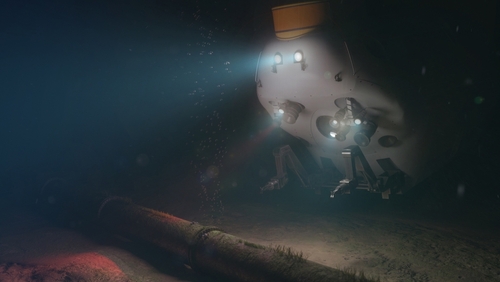
Seabed Warfare And The Transformation Of Maritime Order
Abstract: Seabed warfare is transforming maritime strategy by shifting competition from platforms and manoeuvre toward infrastructure, connectivity, and persistent monitoring, influence and selective control over the benthic domain. Growing dependence on critical undersea infrastructure, combined with advances in autonomous systems and distributed sensing, is turning the seabed into an active and contested battlespace. This article… Read More
Written by
-
Mosaic Warfare In Ukraine
Abstract: Mosaic Warfare is often seen as a far-future concept linked to further breakthroughs in emerging disruptive technologies. This article argues that the war in Ukraine challenges that view. Although Ukraine does not explicitly use the term, its battlefield adaptation reflects core mosaic principles, including distributed low-cost uncrewed systems, adaptive kill webs, decentralised decision-making, and… Read More
Written by

-
The Impact Of Artificial Intelligence On The Military Decision-Making Process And Mission Command
Abstract: The progressive integration of artificial intelligence (AI) transforms military command across doctrinal, procedural, and cultural dimensions. AI reshapes the balance between centralisation and decentralisation across command levels. Using Col. John Boyd’s OODA Loop as a generic model of the military decision-making process (MDMP), it is possible to see how AI influences each step of… Read More
Written by

-
The Illusion of Transparency: Data vs. Intelligence on the Battlefield
Abstract: Hybrid warfare integrates both military and non-military tactics, leveraging AI, cyberspace, and the information realm as force multipliers. Cyberspace and the information realm serve as a domain and battlefield, while AI accelerates decision-making and disinformation. Modern surveillance fosters a perception of a “transparent battlefield,” yet raw data is not actionable intelligence and understanding adversarial… Read More
Written by

-
Beyond The Horizon: Training Minds And Systems For Tomorrow’s Conflicts
Abstract: Technological advancements and evolving security policies increasingly shape military conflicts through AI, autonomous systems, and cyber capabilities. Future developments can be analysed from both military-technological and tactical perspectives, highlighting challenges in command structures, information processing, and execution. The vignettes address the aspects of capability, understanding, and will, i.e., the parts of combat power. Countermeasures… Read More
Written by

-
Is Manoeuvre Warfare The First Casualty Of The War In Ukraine?
Abstract: The Russo-Ukrainian War has revealed major technological and doctrinal implications. Among these, the big question that arises is whether the manoeuvrist approach, which is one of the cornerstones of current NATO doctrine, is still relevant and practicable in current and future conflicts. The most evident trend is how, for the most part, the ground… Read More
Written by

-
Manoeuvre And Attrition – Core Elements Of Naval Warfare
Abstract: In contrast to recent engagements at sea defined nearly exclusively by the logic of attrition, this paper argues that manoeuvre warfare is an essential component of naval warfare. The article shows that, depending on mission objectives, naval operations are characterised by manoeuvre warfare and thus contribute to minimising an adversary’s attempt to attrite one’s… Read More
Written by

-
Manoeuvre Warfare In The Modern Environment
Abstract: Modern combat presents many challenges to combat arms, particularly in relation to manoeuvre warfare. Many theorists claim that the manoeuvre as a fighting approach is obsolete, suggesting that other approaches, such as attrition, are more relevant to the modern battlefield. To support the thesis, they argue that a manoeuvre is less relevant in conflicts… Read More
Written by

-
Digging Into The Future: Or How I Learned To Love My Shovel
Abstract: This paper critically examines the Western military’s reliance on manoeuvrist warfare as defined by NATO, positing that this approach may prove myopic in the context of potentially unlimited warfare. It argues that expecting a single set of forces to achieve decisive results against a resilient adversary swiftly is a high-risk strategy. Furthermore, an excessive… Read More
Written by

-
Manoeuvre Warfare As A Challenge To The Former Strategic Concept Of Forward Defence
Abstract: NATO’s defence concept in the central region called for the Forward Defence close to the Iron Curtain during the Cold War. The aim was to achieve superiority through fire and movement through a manoeuvrist approach: manoeuvre combined with attritional effects. How this was to be achieved in battles of combined arms was assessed differently… Read More
Written by
