
Abstract: Missile defence credibility is still judged largely through interceptor speed, range, accuracy, and probability of engagement. Those measures capture only the final action within a longer defensive pathway. Contemporary threats compress warning time, combine dissimilar trajectories, manipulate the information environment, and target networks connecting detection with command. This article develops a continuity-threshold framework for judging missile defence under disruption. Credibility exists only while at least one trusted and authorised path remains available from observation and validation to decision, engagement coordination, and reconstitution. Missile defence has therefore shifted from a platform-performance problem to a continuity-of-decision problem. Future advantage will favour forces able to preserve that pathway despite deception, saturation, cyber intrusion, electromagnetic interference, organisational friction, and loss of individual nodes.
Problem statement: Can existing missile-defence architectures preserve an effective detection-to-engagement pathway when mixed threats compress decision time and simultaneous cyber, electromagnetic, organisational, and sustainment pressures weaken the network supporting that pathway?
So what?: Defence ministries and alliances should assess missile defence in terms of functional continuity rather than platform inventories. Procurement, doctrine, testing, training, and multinational coordination should be judged by the extent to which capability survives disruption, the speed at which authority and data can be rerouted, and the time required to restore degraded functions before temporary loss becomes operational paralysis.
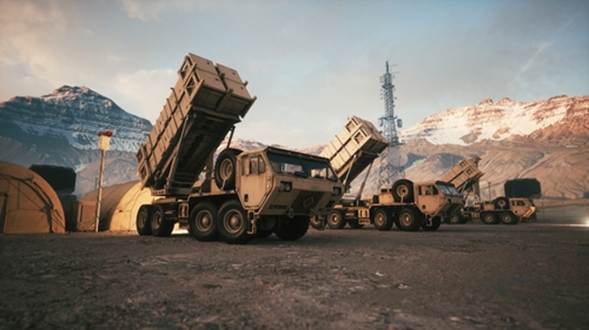
Missile Defence Begins Before Interceptor Launch
Modern missile defence begins before any interceptor leaves its launcher. Warning systems must detect an event; sensors must establish and sustain a track; data must be validated; command networks must classify the threat; decision authorities must select a response; and engagement systems must receive accurate information within a narrowing time window. Failure at one stage can neutralise strength elsewhere.
Missile defence has changed because the architecture supporting the interceptor has become part of the battlespace. Adversaries can seek advantage before physical engagement by creating ambiguity in sensor feeds, saturating data-processing capacity, disrupting communications, manipulating track confidence, or delaying command authority. Interceptor performance still matters, but its value depends on whether the surrounding architecture can continue to produce trusted and authorised decisions.
NATO’s 2025 policy describes integrated air and missile defence as coherent, resilient, adaptable, and capable of addressing threats arriving from different directions, at different speeds, at different altitudes, and from different platforms.[1] This integrated architecture combines weapons, fire-control systems, radars, command-and-control networks, and early-warning capabilities, reinforcing that no single platform determines overall defensive credibility.
Credibility is better measured through a continuity threshold; the minimum level of functional coherence required to preserve a valid path through five linked tasks:
- Observation: Detect the threat and sustain enough awareness to support further action;
- Validation: Convert multiple observations into a track with sufficient confidence for command use;
- Decision: Preserve informed judgement and recognised authority despite disruption;
- Coordination: Assign and execute an engagement without conflict, duplication, or avoidable delay; and
- Reconstitution: Restore, replace, or reroute degraded functions before cumulative failure breaks the pathway.
Recent missile operations provide a practical illustration of this pathway. During the June 2025 Israel–Iran conflict, defensive forces were required to sustain observation across multiple sensing domains before separate inputs could be validated into tracks suitable for command use. Those assessments informed engagement decisions and coordinated defensive action while repeated attacks continued to place pressure on communications, command arrangements, and supporting networks.[2]
As operations evolved, individual sensors, communication routes, and command functions were required to adapt without interrupting defensive activity. Information was rerouted where necessary, responsibilities shifted across available command structures, and degraded functions were restored while engagements remained underway. Such conditions reflect the practical challenge of preserving a continuous detection-to-engagement pathway during contested operations.
Architecture remaining above this threshold may lose nodes, bandwidth, personnel, or processing capacity, yet still generate a defensive effect. Architecture falling below it may retain technically capable interceptors but lose the ability to employ them coherently. Readiness, therefore, depends less on flawless operation than on the survival of this pathway under stress.
Advanced Interceptors Cannot Compensate for Network Weakness
Interceptor-centred assessments usually emphasise nominal capability: what a system can achieve under planned conditions with functioning communications, available personnel, reliable data, and intact command relationships. Operational conflict demands a second measure: residual capability— what the architecture can still achieve after losing a sensor, communication route, software service, command node, or support function.
Distinguishing nominal from residual capability exposes a central weakness in conventional readiness assessments. National forces may field capable radars, command applications, and effectors while lacking shared data standards, compatible communications, or common engagement procedures. Coalition operations magnify this problem because information must cross organisational and national boundaries without losing speed, security, meaning, or recognised authority.
Technical connectivity cannot resolve command ambiguity. Commanders must know how conflicting tracks will be adjudicated, which decisions may be delegated when higher headquarters become unreachable, and how engagement responsibility transfers if a designated unit is unavailable. Networks may remain electronically connected while becoming operationally paralysed because participating forces cannot interpret, trust, or act upon the same information.
Operational sustainment forms another threshold condition. The report of the United States Government Accountability Office on the planned Guam defensive system identified unresolved issues involving organisational responsibilities, personnel requirements, deployment schedules, infrastructure support, and coordination.[3]Those findings illustrate why staffing, maintenance, logistics, software support, and command responsibility cannot be treated as administrative matters outside the defensive architecture.
Persistent Tracking Requires an Integrated Sensor Architecture
Manoeuvring trajectories, lower flight paths, decoys, varied signatures, and shorter warning periods complicate continuous tracking. More sensors may widen observation, but expanded coverage does not automatically produce decision-grade awareness. Additional platforms can increase data volume, latency, software dependence, contradictory inputs, and fusion complexity. Contemporary integrated air and missile defence architectures therefore emphasise resilient, multi-domain sensing capable of maintaining continuous tracking despite degraded or contested operating environments.[4], [5] Integrated sensing must preserve three distinct forms of continuity:
- Coverage continuity: Ground-based, maritime, airborne, and space-based sensors should provide complementary observations so loss or obstruction of one node does not eliminate the operating picture;
- Track-confidence continuity: Separate observations must be correlated quickly while uncertainty, conflicting inputs, and possible deception remain visible to commanders; and
- Decision continuity: Automation may support classification and prioritisation, but operators require confidence indicators, override procedures, and workable alternatives when automated support becomes unreliable.
Sensor density and decision utility should not be treated as equivalent. Dense coverage may still fail to support engagement if data arrive too late, confidence cannot be established, or automated fusion conceals disagreement between sources. Effective integrated air and missile defence therefore depends not only on the number of available sensors but also on the ability to fuse multiple data streams into a coherent operational picture that commanders can trust under compressed decision timelines.[6] Continuity-threshold analysis changes the assessment question. Instead of asking how many sensors are deployed or how far they can observe, planners should ask which combinations of sensing assets can preserve a decision-grade track after one or more layers are disrupted. Such analysis reveals whether added capacity creates resilience or merely increases dependence on central processing, common software, or vulnerable communications. Persistent tracking, therefore, rests on confidence preservation rather than on observation volume alone. Missile defence remains above its threshold only when commanders can distinguish confirmed information from provisional, degraded, or manipulated inputs and still act within the available decision window. This reflects a broader shift in defence thinking from platform-centric performance towards resilient command-and-control architectures capable of sustaining operational effectiveness under disruption.[7]
Operational Resilience Must Be Built Across the Defensive System
Resilience cannot be added after deployment. System design, acquisition requirements, doctrine, training, and multinational coordination must establish continuity from the outset. Network-centric warfare theory argues that information superiority depends on robust networking, shared situational awareness, and collaborative decision-making across distributed forces.[8] Similarly, Joint Publication 3-01 by the U.S. Joint Chiefs of Staff emphasises integrated command-and-control, interoperability, and coordinated sensor-to-shooter operations as essential for effective air and missile defence.[9] The continuity-threshold framework builds on these established concepts. Still, it shifts the assessment from connectivity and engagement speed to whether at least one trusted detection-to-engagement pathway remains operational despite disruption. Four priorities translate the continuity-threshold framework into operational practice:
- Interoperable pathways: Sensors, command systems, and engagement elements must exchange information in forms that participating services and allied forces can interpret, validate, and act upon;
- Alternative command routes: Warning, authority, and engagement coordination must survive loss of primary networks, headquarters, software applications, or centralised decision nodes;
- Threshold-based testing: Exercises must identify which disruption, or combination of disruptions, causes the detection-to-engagement pathway to break; and
- Regenerative capacity: Personnel, maintenance, logistics, software support, repair teams, replacement components, and clearly assigned responsibilities must restore degraded functions before cumulative loss becomes paralysis.
Testing should move beyond whether a system completed an engagement under scripted conditions. More useful measures include how long a trusted track remained available, how many alternative command pathways survived, whether engagement authority transferred without unacceptable delay, and how quickly lost functions were reconstituted.
Threshold-based evaluation changes resilience from a broad aspiration into a readiness criterion. Defensive systems can then be compared according to the amount of functional continuity they preserve under degradation, rather than according to peak performance achieved under ideal conditions.
Future Credibility Depends on Continuity Under Attack
Distributed sensing, space-based tracking, secure data links, and automated decision support may strengthen coordination. Greater connectivity, however, also expands technical dependencies and exposure to cyber and electromagnetic disruption. Integration creates value only when local autonomy and alternative pathways prevent network damage from becoming a system-wide failure.
Future architectures should therefore be federated rather than merely connected. Connected architectures exchange information efficiently while preferred networks remain available. Federated architectures preserve mission functions through different combinations of sensors, command nodes, authorities, and engagement systems when the preferred configuration is damaged.
Federation supports controlled degradation. Units can share information when connectivity is available, retain limited local functionality when it is not, and recombine as conditions change. Such a design reduces the risk that the failure of a single central node, software service, or communication route will collapse the entire defensive sequence.
Human-command assurance must therefore function as a continuity requirement. Operators need visibility into confidence levels, known data gaps, delayed communications, and the basis of automated recommendations. Command arrangements must also specify how authority shifts when centralised coordination becomes impossible.
Missile Strength Lies in System Continuity
Future missile defence will not be determined solely by interceptor speed, range, accuracy, or engagement probability. Those characteristics remain indispensable, but their operational value depends on the architecture that detects, validates, authorises, coordinates, and restores their use. Existing scholarship on integrated air and missile defence, command-and-control resilience, and network-enabled operations has consistently demonstrated that operational success depends on the effective integration of sensors, decision authorities, communications, and engagement systems rather than on individual platforms alone. The continuity-threshold framework builds upon these established principles by providing an analytical lens for evaluating whether that architecture can continue generating authorised defensive action when subjected to disruption, degradation, or the loss of critical nodes.
Capability should not be considered improved merely because it extends detection range, shortens processing time, or raises interception probability. Improvement must also preserve the ability to sustain trusted decision-making, transfer authority, manage uncertainty, and recover degraded functions during contested operations. Assessing these attributes alongside conventional performance measures offers a more comprehensive understanding of operational readiness and defensive effectiveness.
Rather than replacing existing concepts of integrated air and missile defence, the continuity-threshold framework complements them by focusing on the survivability of the detection-to-engagement pathway under operational stress. Future work should test and refine this framework through operational case studies, exercises, simulations, and comparative analysis across different missile-defence architectures. Such evaluation would help establish its broader applicability while providing defence planners with a practical means of assessing resilience beyond platform-level capability.
[1] North Atlantic Treaty Organization, NATO Integrated Air and Missile Defence Policy, February 13, 2025, https://www.nato.int/en/about-us/official-texts-and-resources/official-texts/2025/02/13/nato-integrated-air-and-missile-defence-policy.
[2] International Institute for Strategic Studies (IISS), “Israel’s Attack and the Limits of Iran’s Missile Strategy,” June 2025, https://www.iiss.org/online-analysis/online-analysis/2025/06/israels-attack-and-the-limits-of-irans-missile-strategy/.
[3] United States Government Accountability Office, Missile Defense: DOD Faces Support Challenges for Defense of Guam, GAO-25-108187 (Washington, DC: U.S. Government Accountability Office, 2025), https://www.gao.gov/products/gao-25-108187.
[4] Center for Strategic and International Studies (CSIS), Mesh Sensing for Air and Missile Defense (Washington, DC: CSIS, 2025), https://www.csis.org/analysis/mesh-sensing-air-and-missile-defense.
[5] International Institute for Strategic Studies (IISS), The Military Balance 2025 (London: Routledge for the International Institute for Strategic Studies, 2025), https://www.iiss.org/publications/the-military-balance/.
[6] RAND Corporation, Leveraging Artificial Intelligence to Enhance Command and Control (Santa Monica, CA: RAND Corporation, 2024), https://www.rand.org/pubs/research_reports/RRA2655-1.html.
[7] Stockholm International Peace Research Institute (SIPRI), “Armament and Disarmament Research,” accessed August 10, 2026, https://www.sipri.org/research/armament-and-disarmament.
[8] David S. Alberts, John J. Garstka, and Frederick P. Stein, Network Centric Warfare: Developing and Leveraging Information Superiority, 2nd rev. ed. (Washington, DC: Department of Defense Command and Control Research Program, 2000), https://apps.dtic.mil/sti/tr/pdf/ADA406255.pdf.
[9] Joint Chiefs of Staff, Joint Publication 3-01: Countering Air and Missile Threats (Washington, DC: Joint Chiefs of Staff), https://www.jcs.mil/Doctrine/Joint-Doctrine-Pubs/.


