
Abstract: The education of Portuguese lieutenants and captains remains overly transmissive and assessment-driven, with limited integration of emerging technologies such as AI, commercial drones and networked simulation, and insufficient emphasis on critical thinking, writing and lifelong learning. This study proposes a three-dimensional framework to realign officer education with this new reality: a tactical-operational dimension that translates lessons from Ukraine into competencies such as dispersed manoeuvre, human–machine teaming and multidomain C2; a pedagogical dimension that replaces lecture-centric models with scenario-based learning, red teaming, Tactical Decision Games, AI-enabled simulations and reflective after-action reviews; and an ethical-intellectual dimension that develops “wider officer competence” through structured professional reading, writing and discussion of moral and political dilemmas.
Problem statement: How should the model of education for small unit commanders be reformulated to prepare them for a technologically saturated and transparent battlefield?
So what?: Military educational institutions and instructors must reformulate the education of small unit commanders in three dimensions, tactical, pedagogical, and ethical, that integrate lessons from Ukraine, new active methodologies, and the use of emerging technologies (AI, drones, simulations) to prepare them for the new battlefield.
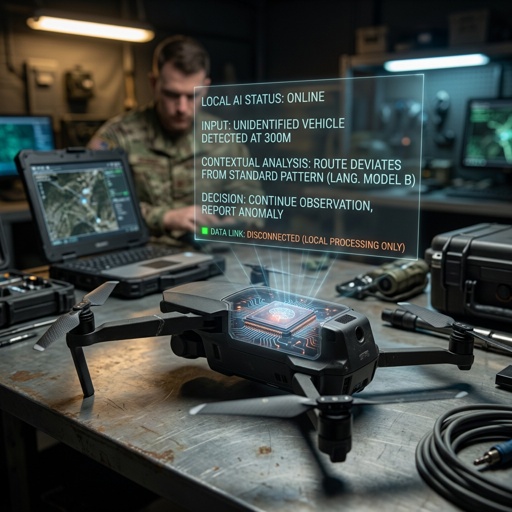
Introduction
At a time when the re-emergence of large-scale war in Europe, combined with the accelerated diffusion of emerging technologies, has become a matter of strategic concern, the need to reassess the education and training of military officers has acquired renewed urgency.
Within this context, this article examines the extent to which the training of junior officers and captains in the Portuguese Army should adapt to the operational, technological, and cognitive demands of the contemporary battlefield. The Russia–Ukraine war is adopted as a reference framework, not as a model to be replicated uncritically, but as an empirically relevant case through which key characteristics of contemporary warfare may be observed, including decentralised decision-making, technological integration, informational disruption, and the compression of tactical and operational time.
The analysis was confined to the training of captains for three reasons. First, these officers already possess the intellectual maturity and professional experience necessary to capitalise on the outcomes of the proposed methodologies and processes. Second, it is understood that, through the roles they may assume within companies, staff, and education and training, they can help catalyse the envisaged organisational evolutionary process. Third, any curricular adjustments—whether introduced immediately or in subsequent phases—require no approval beyond that of Army Command.
Three complementary dimensions were integrated. The tactical–operational dimension translated the tactical requirements observed in the war in Ukraine into practical competencies that junior officers and captains must master. The pedagogical dimension incorporated active learning approaches, emerging technologies (particularly artificial intelligence) and postmodern teaching and learning techniques. The ethical and intellectual dimension promoted critical thinking, creativity, and practical wisdom, drawing on the perspectives of Sookermany (2016) and Roennfeldt (2017) concerning education and military professional competence.
Brief Description of the Ukrainian Battlefield
The battlefield in Ukraine represents an epistemological break in the way war is waged. According to reports from the Royal United Services Institute and other military observers, it is a highly transparent, technologically saturated and high-attrition environment, where constant visibility and the integration of unmanned systems are redefining the options for tactical manoeuvring. The war in Ukraine has shown that, even in a context of high firepower and technology, manoeuvre remains decisive.[1]
The Ukrainian counteroffensive of 2022 showed the importance of integrating physical and mental manoeuvring, exploiting mobility, pace and disruption, with decentralised command and faster decision cycles, according to the Observe, Orient, Decide, Act (OODA) Loop, with information dominance, morale and tactical creativity being critical factors.[2] However, from the second year onwards, a prolonged, more static pattern of warfare took hold, with trenches and high-intensity battles, reinforcing the need to prepare forces for extended combat, with a strong focus on logistics, resilience, and decentralisation.[3]
The conflict also highlighted the growing relevance of non-state armed actors, including Russian private military formations such as the Wagner Group. It underscored the increasing importance of commercially enabled intelligence, artificial intelligence, and networked cyber defence, supported by cooperation with major technology companies such as Microsoft, SpaceX, Google, and Palantir Technologies.[4]
The proliferation of Unmanned Aerial Vehicles (UAVs), Intelligence Surveillance and Reconnaissance (ISR) sensors, and networked communications has created near-total transparency, reducing surprise and concealment and requiring less predictable tactics and greater adaptation from small units.[5] The predominance of indirect fire and guided munitions, including systems such as UMPK (Unifitsirovannyi Modul Planirovaniya i Korrektsii – Unified Gliding and Correction Module) glide bombs, has required dispersion, fortification, and mobility; precision artillery, smart munitions, and attack drones generate saturation effects even without large concentrations of troops, while First Person View (FPV) drones and loitering munitions are employed across tactical levels, down to platoon and company, making fire support more distributed and dynamic.[6] Engineering warfare has also intensified, with the extensive use of fortifications, trenches, decoys, and often manual fieldwork. At the same time, logistics and medical evacuation chains remain fragile and are constantly targeted by drones and precision fire. At the same time, a persistent electronic warfare environment disrupts communications, Global Positioning System (GPS), and drone control, requiring initiative and decentralised command.[7] This pattern of warfare, however, should not be treated as a universally applicable model of contemporary combat, but rather as the product of an interaction between broader technological trends and the specific operational conditions of the Russo-Ukrainian war. In particular, the prominence of trench systems, dispersed manoeuvre, heavy reliance on indirect fire, and limited freedom of movement reflects not only the diffusion of drones, sensors, and precision strike, but also the fact that both belligerents have largely fought as land-centric forces under conditions of contested air superiority and uneven cross-domain integration.[8] For that reason, the Ukrainian case is best understood not as a direct doctrinal template for Western militaries, but as a case study of the new tactical constraints resulting from emerging technologies. Even where Western doctrine differs, the conflict remains highly relevant in demonstrating the importance of tactical dispersion, battlefield adaptation, resilient command structures, and the ability of junior leaders to operate effectively under degraded and time-sensitive conditions.[9]
The Evolution of Military Action
Military action becomes fully integrated: units combine drones, electronic countermeasures, combined firepower, and increasingly robotic logistics, redefining combined-arms manoeuvres; in successful brigades, coordination depends on the quality of training and the adaptability of officers.[10] These characteristics make tactical decision-making less dependent on rigid hierarchy and more on the cognitive agility and improvisation of small-unit commanders, in which decentralisation and critical thinking (mission command, adaptive learning, real-time innovation) are decisive.[11] They reinforce the need for technical-tactical and socio-political skills to address hybrid forces, information warfare, and transparent environments, as well as for moral resilience and contextual leadership, which should be fostered through military education using postmodern methods and decision-making simulations under uncertainty.[12]
However, Biggs (2025) identifies several vulnerabilities associated with incorporating technology, including artificial intelligence, into professional military education: excessive dependence on technology, a shortage of junior officers capable of making decisions under uncertainty, and the need for leaders able to interpret the context of conflict. It is therefore essential to integrate these lessons to guide the training of Portuguese officers for similarly hybrid, technologically dense environments.[13]
The following competencies may be regarded as essential for contemporary junior officers and captains. First, adaptive and contextual reasoning is required to enable officers to analyse novel situations under imminent risk, improvise appropriate responses, rapidly challenge assumptions, and lead effectively under uncertainty, while preserving tactical cohesion and maintaining mission focus.[14] Second, technical versatility is necessary, extending beyond proficiency with conventional weapons to include knowledge of explosive devices, coordination in the employment of drones, “autonomous” logistics, the use of electronic warfare, and resilience in decentralised actions.[15] Third, decentralised management and leadership are increasingly important, as the intensity of operations often generates rapid staff turnover and therefore demands the continuous formation of cohesive teams; effective delegation must be combined with ethical sensitivity to the broader implications of tactical decisions.[16] Finally, moral and psychological resilience is critical, since exposure to unprecedented levels of casualties, injury, and destruction can accelerate psychological and moral attrition; the erosion of tacit knowledge—particularly as experienced leaders are killed or incapacitated—further increases the importance of psychosocial preparation and cohesion routines, which are as vital as technical or tactical expertise.[17]
Portugal’s Case
Throughout their history, the Portuguese Armed Forces have achieved several milestones in the education and training of military personnel, having a long-standing tradition of resourceful improvisation in times of crisis.
During the First World War, Portugal trained around 20,000 soldiers in the town of Tancos between April and July 1916, at a time when Portugal’s population was around 6 million. The soldiers trained during the so-called “Miracle of Tancos” were prepared for deployment to the Western Front. They subsequently served with the Portuguese Expeditionary Corps in Flanders, mainly in the northern French sector of the front, under British operational command.[18]
Later, between 1961 and 1974, Portugal trained and deployed a total of around 750,000 military personnel in its three former African colonies of Angola, Guinea and Mozambique to combat subversion, at a time when the population of Portugal in Europe was less than 9 million; in other words, almost 9% of the population was conscripted, demonstrating an exceptional ability to mobilise and train large military contingents. Training at the time focused on the technical and logistical response required to guarantee national sovereignty and the defence of overseas territories in the face of the challenges of subversive and conventional warfare[19].
However, times have changed, and this approach to training military personnel quickly, in an almost haphazard manner, ultimately hinders our progress towards more in-depth training that prepares them to operate in increasingly complex, technologically advanced environments. This tradition of improvisation is a foundation of agility that now needs to be formalised and enhanced by critical thinking.
The transition into the 21st century, in 2004, marked the end of conscription and the professionalisation of the Armed Forces, resulting in a model based exclusively on voluntary service. This paradigm shift required military training to become more specialised and to be integrated into the national education system through the Bologna Process and the National Qualifications Framework. The current focus is on Competence-Based Training, aimed at preparing highly qualified personnel who possess not only military knowledge but also academic and professional recognition in civilian life.[20], [21]
However, despite this technical specialisation, there remain significant gaps in military training relative to the demands of contemporary theatres of operations, as described above.[22] The following sections will examine the current state of modern military education and the changes required for Portugal to reach the required standard of preparation.
Reflections in the Literature
Reflections in the literature on military education suggest several avenues for transforming the traditional model. Sookermany (2016) argues for a shift from a modernist paradigm, centred on instruction and repetition, towards a postmodern approach grounded in critical thinking, autonomy, and plurality, and identifies six guiding principles: emancipation, deconstruction, vocabulary, dialogue, diversity, and aesthetics.[23] Roennfeldt (2017) maintains that an officer’s performance depends not only on military proficiency but also on a broader conception of officer competence, encompassing practical wisdom, political competence, and ethical judgement, together with an understanding of social, political, and moral implications and of the officer’s role as an intermediary between the Armed Forces and society.[24]
Biggs (2025)[25] and Holm (2024)[26] highlight AI and creative learning as catalysts for innovation: AI supports personalised feedback and simulation; methods such as Delta COA, red teaming, and perspective shifting stimulate tactical imagination and decision-making under pressure. Powell and Townley (2025) examine tensions within professional military education, particularly the friction between military culture, with its emphasis on training, execution, and hierarchy, and academic culture, which privileges critical thinking, reflection, and autonomy. However, professional military education seeks to produce officers capable of deciding under uncertainty; teaching is often constrained by insufficient study time, physical fatigue, and the devaluation of the educational dimension. Yet opportunities remain in small classes, active-learning approaches such as debates, wargaming, and role-play, and hybrid methodologies that reinforce analysis, communication, and collaboration for command functions.[27] Fortuna (2023), in assessing the Captains’ Career Course, draws on the Joint Chiefs of Staff’s (2020) vision of a system able to “assess, adapt and innovate” to generate “intellectual superiority”, and advocates modernising the course to develop critical, creative, and systemic thinking for multi-domain operations through a future learning ecosystem characterised by continuous, personalised, and collaborative learning within a blended model that strengthens autonomy, reflection, and analysis, while requiring decision-making, interpretation of complex scenarios, and the integration of multiple perspectives.[28]
Hinck et al. (2023) argue that complexity and ambiguity—whether emotional, organisational, or ethical—often exceed the limits of procedures and doctrine, making critical reflection, perspective-taking, and decision-making under pressure essential; in this view, effective leadership combines self-awareness, empathy, and critical thinking to understand both the “how” and the “why” of action, as well as its effects on people and missions, so that critical reasoning links technical competence to practical wisdom and thereby supports adaptation and ethical judgement.[29]
The war has demonstrated that operational success increasingly depends on leaders capable of exercising autonomy, making decentralised decisions, thinking critically, and mastering the technologies shaping the contemporary battlespace. Still, the current training doesn’t adequately develop those skills.[30]
Analysis of Training in Portugal
The Portuguese Army Command sought to understand what was going wrong in the training of young officers, particularly those deployed to theatres of operations, and how to improve it. To that end, interviews were conducted with the captains and lieutenants, as well as with their immediate superiors.
Semi-structured interviews were conducted with 20 specialists who had direct experience or in-depth knowledge of training. Participants were selected purposively, taking into account their professional and academic relevance to the object of study. The sample included five lecturers from the Military University Institute, five lecturers from the Military Academy, five instructors from the School of Arms, and five former students of the Senior Officer Promotion Course with training experience.
The interviews took place in person between November 17 and December 12, 2025, and averaged about 45 minutes each. A pre-defined interview guide was used, organised around three main dimensions: a tactical-operational dimension, a pedagogical dimension, and an ethical-intellectual dimension. Although the guide ensured a common structure, flexibility was maintained to explore emerging themes considered relevant by the interviewees.
All participants were informed about the aims of the research and gave their consent for the use of the data collected. The interviews were anonymised, with participants identified only by alphanumeric codes. Where authorised, the interviews were recorded and subsequently transcribed; in the remaining cases, detailed notes were taken during and immediately after the interview.
The data were analysed through thematic analysis, combining deductive categories derived from the literature review with inductive categories emerging from the empirical material. The interpretation of the results was triangulated with primary and secondary documentary sources to strengthen the study’s analytical consistency.
Preliminary Analysis and Key Evidence Identified in the Interviews
From the preliminary analysis, it was possible to identify the effects of gaps in the education and training of young officers across four areas.
- 1st – Learning profile and communication skills:
The findings indicate that most captains attending the Senior Officer Promotion Course experienced substantial difficulties in both written and oral communication. A limited predisposition for autonomous learning was also observed, extending only to what was necessary for formal assessment. In addition, there was a recurrent demand for tutoring to support coursework. Finally, it was reported that the knowledge acquired during the Captain’s Career Course was not consolidated owing to insufficient continued practice and was subsequently forgotten.
- 2nd – Discrepancy between operational requirements and training:
A gap has been identified between contemporary operational requirements (including lessons learned from recent conflicts) and the current training of subordinates and captains, both in terms of curriculum content and in methodologies tailored to students’ age and maturity.
- 3rd – Learning culture and pedagogical model:
The reduced willingness to engage with tactics and logistics appears to stem not only from individual factors but also from an educational system that offers limited stimulus for curiosity, reflection, and practical application. The prevailing pedagogical model tends to privilege execution and memorisation over critical analysis and problem-solving. Moreover, the absence of institutional mechanisms that promote technical reading and professional debate—such as reading groups, writing forums, and mentoring—constrains the development of a culture of sustained study and reflection. Finally, no programme or curricular unit was identified as being explicitly oriented towards the development of critical thinking.
- 4th – Resources and conditions of execution
The shortage of instructors/trainers, the overload of tasks, and the absence/shortage of simulation and technological tools limit realistic training and the development of more up-to-date tactical and logistical skills.
Results
The Russian invasion has shown that contemporary warfare is characterised by the close integration of civilian and military technologies, including systems such as Starlink, mapping applications, and commercially available drones, while electronic warfare and cyber warfare have become integral components of conventional combat through their effects on communications, GPS, and targeting systems.[31] However, interviews with Portuguese officers revealed that the Portuguese curriculum is outdated. It is therefore urgent to introduce the study of the latest lessons learned and training in new technologies. This process is hindered by the lack of instructors and modern training resources, such as simulation equipment.
Ukraine was able to offset its numerical inferiority through dispersion, mobility, decentralised command, and the extensive use of technologies drawn from the civilian market.[32] These developments underline the need to prioritise preparation for high-intensity conventional warfare, requiring armed forces to invest in sustained combat training, multi-domain integration across land, air, cyber, and information environments, and the cultivation of tactical initiative among junior officers.[33] The war has thus reaffirmed the operational value of well-trained soldiers and tactically autonomous leaders capable of making rapid decisions under pressure.[34] However, in Portugal, the teaching of tactics continues to rely heavily on operational manuals and standard operating procedures (SOPs), using similar teaching methodologies for both young cadets and experienced captains. This does not foster the mental agility required for rapid adaptation to modern operational contexts. There is also insufficient in-depth study of the legal, ethical and political foundations, because a young officer on the volatile modern battlefield may have to make rapid decisions with major political and strategic consequences, without time to consult the higher echelon.
Another aspect that reinforces this shortcoming is that Portuguese officers are not encouraged to study independently after their time as cadets. As a result, they do not develop the initiative to seek information and complementary readings to maintain up-to-date knowledge, and, above all, they do not develop the critical thinking required to analyse new situations and identify appropriate solutions.
Contemporary Battlefield Requirements
The modern battlefield evolves rapidly, and forces may need to shift between offensive and defensive roles with little warning, requiring commanders to develop sustained mental readiness for unpredictability.[35] Command structures, therefore, require systems and training that accelerate decision-making and information transfer, alongside mastery of command-and-control architecture, since high-performance systems offer limited operational value if commanders cannot consistently exploit information to address logistical and tactical problems and decide in time. Accordingly, commanders should recognise that command-and-control training and staff planning must employ decision-making processes that prioritise speed over exhaustive detail, as the tempo and timing of decisions assume greater importance than granular precision in fast-moving and fluid combat.[36]
The war in Ukraine indicates that contemporary forces must prepare commanders not only to lead but also to employ technology critically, ethically, and effectively. Curricular revision should therefore integrate classical tactical reasoning, technological literacy, and decision-making under uncertainty, which constitute the central pillars of the project.[37] The conditions for redefining the profile of small-unit commanders are thus present, and junior officers and captains should possess three interdependent skill sets, namely technical and tactical skills, including mastery of dispersed manoeuvre at small echelons, the integration of drones, combat engineering, and logistical support under precision fire, cognitive skills, including critical thinking, adaptive reasoning, and creativity to solve problems under uncertainty and degraded information, and ethical and social skills, including practical wisdom, political understanding, and the capacity to communicate effectively with civilians and allies.[38] These dimensions converge in what Roennfeldt (2017) describes as wider officer competence, which RUSI reports characterise as a defining feature of the most resilient units, namely leaders with decision-making autonomy and moral discernment.[39]
Recommendations
Military leadership increasingly requires reflective leaders who can interpret complex operational environments, exercise ethically grounded judgement, and sustain continuous learning throughout their professional development.[40] In this sense, critical thinking should be understood not as a supplementary attribute but as a core leadership competence, essential to the exercise of command in conditions marked by ambiguity, technological disruption, and moral complexity.[41] What is particularly innovative in this approach is the recognition that leadership education cannot remain confined to the transmission of doctrine or the rehearsal of prescribed responses. Instead, it must cultivate the intellectual and human capacities to question assumptions, engage with competing perspectives, and translate reflection into action.[42] Teaching leadership, therefore, necessarily entails teaching critical thinking, and leadership courses should evolve from a predominantly instructional model towards an experiential and reflective framework centred on dialogue, practical experience, ethical discernment, and the formation of adaptive, intellectually mature leaders.[43]
The teaching methodology should, wherever possible, move away from a predominantly expository format and adopt experiential and reflective models, in line with the approaches advanced by Sookermany (2016) and Holm (2024). This reorientation should include scenario-based learning through field simulations inspired by contemporary military operations, such as those observed in Ukraine. Those exercises should incorporate both ethical and technological variables, as well as collaborative and combined-arms learning, to encourage a diversity of perspectives and strengthen engagement with courses without distinction between specialities or branches. The use of red teaming and improvisation exercises is important for helping to normalise error as an inherent part of learning and for stimulating divergent thinking. The reflective after-action reviews, centred on critical self-assessment rather than on the mere correction of factual mistakes, are relevant to developing critical thinking.[44]
Critical Thinking
The promotion of critical thinking within education should constitute one of the central pillars of teaching and training. Hinck et al. (2023)[45] propose a teaching-and-learning model that replaces traditional pedagogy, characterised by expository and instructor-centred methods, with a collaborative and reflective approach structured around five interconnected pillars: connection, content, delivery, environment, and experience. In this model, connection precedes content, since the development of trusting relationships between instructors and students fosters a psychologically safe environment in which vulnerabilities may be expressed, ideas questioned, and experiences shared, all of which are fundamental conditions for critical thinking. Content must also be relevant, with topics anchored in authentic leadership dilemmas that encourage students to reflect on the practical application of knowledge and to engage with competing interpretations and solutions. The method of delivery should privilege inductive and participatory approaches, such as case discussions, storytelling, role play, improvisation, and journalling, which require students to analyse, argue, and reach conclusions independently rather than merely receive pre-formulated answers. The learning environment should likewise be shared, with classroom authority more evenly distributed so that instructors and students learn together within a dialogical space that promotes constructive criticism and peer learning. Finally, experience is central, as the integration of cognitive, affective, and behavioural dimensions transforms reflection into action and reinforces critical thinking through practice and introspection concerning the decisions taken.
Another technique that can foster critical thinking is using professional journals as a pedagogical tool in the teaching–learning process.[46] Their role should extend beyond that of supplementary reading and be incorporated through critical reading seminars devoted to the analysis and discussion of recent articles from professional journals; red team reading, in which teams are required both to defend and to challenge the authors’ arguments; applied article exercises, through which students adapt an article to the Portuguese context; and military writing workshops designed to develop professional and academic writing skills, including preparation for possible submission for publication.[47]
The practices outlined above promote active learning, technical writing, and a culture of intellectual exchange, thereby reinforcing the ideal of the “officer-scholar”. The maintenance of an individual Professional Reading Log further encourages continuous self-development and the habit of reflection, both of which are valued by Roennfeldt (2017) as elements of practical wisdom and of the connection between the military profession and society.[48]
Officer training should also incorporate emerging digital tools and artificial intelligence without displacing human judgement. According to Biggs (2025), artificial intelligence can be employed in three principal pedagogical domains: support for personalised learning, through the provision of feedback and simulations adapted to individual pace; support for teaching, by assisting instructors in the design of exercises and the monitoring of progress; and support for decision-making, by replicating complex tactical environments for the training of decision-making under stress. Its use, however, must be accompanied by ethical awareness and digital literacy to avoid cognitive dependence and information security risks. For this reason, education and training should include specific modules on “AI and military decision-making” that integrate both technical and ethical competencies.[49]
Focus on the “Tactical-Operational” Level
The interviews conducted led to the conclusion that officers trained at the Portuguese Military Academy arrive at their assigned units with a high level of knowledge of techniques and procedures, but an insufficiently developed higher-level tactical mindset. The hours devoted to the study of tactics are predominantly technical and do not foster advanced reasoning about integrating manoeuvre on the battlefield in light of contemporary characteristics.
Military education and training should develop cognitive and adaptive skills, not just technical ones. In the area of tactics, officers should be trained to apply manoeuvres in an integrated manner — that is, to learn to combine physical mobility with quick thinking and initiative under pressure. Teaching should promote autonomy, critical thinking and mastery of the OODA loop, preparing them for fluid and unpredictable environments. In logistics, manoeuvring entails maintaining operational tempo, ensuring rapid resupply, and sustaining the mobility of forces, all of which require flexible planning and coordination across echelons. Although the budget available for Defence does not allow field exercises to be conducted with the desired frequency, other, more economical solutions requiring less time commitment may be identified to address these gaps in the training of Portuguese Army officers. An adaptation of the Promotion to Captain course should focus on integrating technology, decision-making, and command; leveraging knowledge from historical cases; exploring all opportunities for simulation and decision-making exercises; using military domains (multidomain); solving logistical problems; and conducting reflection exercises, among others.
Command is far more decentralised than has traditionally been the case, requiring leaders capable of interpreting information flows in real time and making rapid decisions based on data generated by automated systems. The evidence highlights the need to train commanders to employ and integrate unmanned assets in both offensive and defensive operations, which implies training in human-machine coordination, decision-making under technological supervision, and AI-supported mission planning. The scenarios employed are no longer aligned with the contemporary operational environment. Although tactical exercises occasionally include specific references to modern capabilities, the manoeuvre practised still does not reflect the profound transformation required by this new reality.
Exercises should include realistic scenarios with ISR and FPV drones, simulated electronic warfare, and assessment based on reasoning and adaptation. The company commander should be trained to make autonomous decisions, command dispersed forces, and lead under constant surveillance.
Conclusions
The war in Ukraine has revealed that military success depends as much on technical competence as on the cognitive and ethical abilities of commanders at the tactical level. The operational environment is marked by transparency, intensive use of drones, electronic warfare, and the need for decentralised decision-making – factors that require intellectually prepared, technologically competent, and morally sound subordinates and captains.
The interviews conducted with specialists in teaching and training within the Portuguese Army made it possible to identify the main gaps: the teaching-learning methodology, still largely anchored in transmissive methods and focused on repetition, needs a structural transformation, combining pragmatism with the philosophy of postmodern military education, guiding towards teaching that trains creative, technologically integrated leaders, able to command in the complex and unpredictable environment of the 21st century.
This transformation may be structured around four pillars: technological modernisation, through the integration of artificial intelligence, digital simulations, drones, and electronic-warfare systems within the training process, thereby ensuring technological literacy and information security; active and reflective methodologies, including scenario-based learning, red teaming, after-action reviews, and applied creativity exercises; ethical and political education, grounded in Roennfeldt’s (2017) principles concerning practical wisdom and legitimacy, with the aim of developing leaders able to act with prudence and social awareness; and a culture of continuous learning, achieved through the institutionalisation of self-directed training and the systematic encouragement of professional writing and technical debate.
Declaration on AI Use
The author confirms that AI tools, including language models such as ChatGPT, Notebooklm and DeepL, were used solely to enhance the writing process, improve readability, and assist with grammar and formatting. All intellectual content, analysis, and critical arguments are the result of the author’s original work. The AI tools were not used to generate research findings or substitute independent scholarly work.
[1] Mykhaylo Zabrodskyi, Jack Watling, Oleksandr V. Danylyuk, and Nick Reynolds, Preliminary Lessons in Conventional Warfighting from Russia’s Invasion of Ukraine (London: Royal United Services Institute, 2022); Jack Watling and Nick Reynolds, Meatgrinder: Russian Tactics in the Second Year of Its Invasion of Ukraine (London: Royal United Services Institute, 2023); Jack Watling and Nick Reynolds, Tactical Developments in the Third Year of the Russo-Ukrainian War (London: Royal United Services Institute, 2024).
[2] Zabrodskyi et al., Preliminary Lessons in Conventional Warfighting from Russia’s Invasion of Ukraine.
[3] Jack Watling and Nick Reynolds, Meatgrinder: Russian Tactics in the Second Year of Its Invasion of Ukraine (London: Royal United Services Institute, 2023); Watling and Reynolds, Tactical Developments in the Third Year of the Russo-Ukrainian War.
[4] T. Hackett, M. T. Nagl, and J. A. Nagl, “A Long, Hard Year: Russia-Ukraine War Lessons Learned 2023,” Parameters 54, no. 3 (2024), https://doi.org/10.55540/0031-1723.3302; Jack Watling and Nick Reynolds, Tactical Developments in the Third Year of the Russo-Ukrainian War (London: Royal United Services Institute, 2024).
[5] Mykhaylo Zabrodskyi, Jack Watling, Oleksandr V. Danylyuk, and Nick Reynolds, Preliminary Lessons in Conventional Warfighting from Russia’s Invasion of Ukraine (London: Royal United Services Institute, 2022); Jack Watling and Nick Reynolds, Meatgrinder: Russian Tactics in the Second Year of Its Invasion of Ukraine (London: Royal United Services Institute, 2023); Watling and Reynolds, Tactical Developments in the Third Year of the Russo-Ukrainian War.
[6] Watling and Reynolds, Meatgrinder; Watling and Reynolds, Tactical Developments in the Third Year of the Russo-Ukrainian War; Nicholas Reynolds, Heavy Armoured Forces in Future Combined Arms Warfare (London: Royal United Services Institute, 2023).
[7] Zabrodskyi et al., Preliminary Lessons in Conventional Warfighting from Russia’s Invasion of Ukraine; Watling and Reynolds, Meatgrinder; Watling and Reynolds, Tactical Developments in the Third Year of the Russo-Ukrainian War.
[8] Zabrodskyi et al., Preliminary Lessons in Conventional Warfighting from Russia’s Invasion of Ukraine; Watling and Reynolds, Meatgrinder; Watling and Reynolds, Tactical Developments in the Third Year of the Russo-Ukrainian War.
[9] Nicholas Reynolds, Heavy Armoured Forces in Future Combined Arms Warfare (London: Royal United Services Institute, 2023); Barry Zweibelson, “Beyond the Pale: Military Design and the Problem of Change,” Military Review 98, no. 5 (2018): 50–59; Christian F. Roennfeldt, “Wider Officer Competence: The Importance of Politics and Practical Wisdom,” Armed Forces & Society 44, no. 1 (2017): 44–61, https://doi.org/10.1177/0095327X17737498
[10] Nicholas Reynolds, Heavy Armoured Forces in Future Combined Arms Warfare (London: Royal United Services Institute, 2023); Watling and Reynolds, Tactical Developments in the Third Year of the Russo-Ukrainian War; Mick Ryan, “The Battle of Kursk 2024,” Futura Doctrina, 2024, https://mickryan.substack.com.
[11] Barry Zweibelson, “Beyond the Pale: Military Design and the Problem of Change,” Military Review 98, no. 5 (2018): 50–59; Christian F. Roennfeldt, “Wider Officer Competence: The Importance of Politics and Practical Wisdom,” Armed Forces & Society 44, no. 1 (2017): 44–61, https://doi.org/10.1177/0095327X17737498; Anders Sookermany, “Military Education Reconsidered: A Postmodern Update,” Armed Forces & Society 42, no. 4 (2016): 574–595, https://doi.org/10.1177/0095327X15587925.
[12] Roennfeldt, “Wider Officer Competence”; Sookermany, “Military Education Reconsidered”; P. Biggs, “Enhancing Professional Military Education with AI,” Journal of Military Learning (April 2025); E. J. Fortuna, “Modernizing the U.S. Army’s Captains Career Course,” Journal of Military Learning (Conference Edition, 2023); Hinck et al., “Understanding Leadergogy: The Unique Teaching and Learning Methods in a Leader Development Course,” Journal of Military Learning (October 2023); M. Holm, Teaching Creative Problem Solving in Military Education (U.S. Army University Press, 2024); Powell and Townley, “The Challenges and Opportunities for Academics in Professional Military Education.”
[13] P. Biggs, “Enhancing Professional Military Education with AI,” Journal of Military Learning (April 2025).
[14] Barry Zweibelson, “Beyond the Pale: Military Design and the Problem of Change,” Military Review 98, no. 5 (2018): 50–59
[15] Jack Watling and Nick Reynolds, Tactical Developments in the Third Year of the Russo-Ukrainian War (London: Royal United Services Institute, 2024).
[16] Christian F. Roennfeldt, “Wider Officer Competence: The Importance of Politics and Practical Wisdom,” Armed Forces & Society 44, no. 1 (2017): 44–61, https://doi.org/10.1177/0095327X17737498.
[17] Watling and Reynolds, Meatgrinder; Watling and Reynolds, Tactical Developments in the Third Year of the Russo-Ukrainian War.
[18] H. P. Janeiro, “Norton de Matos e o Milagre de Tancos: Entre o Mito e a Realidade,” Ponte de Lima: Do Passado ao Presente, Rumo ao Futuro! 3 (2018): 57–69.
[19] N. F. S. Rosa, A Formação no Exército Português: Contributo para um Quadro de Referência Nacional e Internacional (master’s thesis, University of Évora, 2020).
[20] Rosa, A Formação no Exército Português.
[21] Luís A. B. Santos and M. M. S. S. S. Coelho, eds., Coleção Ares N.º 22: Prestação de Serviço Militar em Regime de Contrato nas Forças Armadas Portuguesas: Dificuldades e Desafios num Contexto em Transformação (Lisbon: Instituto Universitário Militar, 2018).
[22] N. A. R. S. Loureiro, Influência da Formação Militar de Carreira no Desenvolvimento de Competências dos Militares das Forças Armadas Portuguesas (master’s thesis, Military University Institute, 2023), http://hdl.handle.net/10400.26/51007.
[23] Anders Sookermany, “Military Education Reconsidered: A Postmodern Update,” Armed Forces & Society 42, no. 4 (2016): 574–95, https://doi.org/10.1177/0095327X15587925.
[24] Christian F. Roennfeldt, “Wider Officer Competence: The Importance of Politics and Practical Wisdom,” Armed Forces & Society 44, no. 1 (2017): 44–61, https://doi.org/10.1177/0095327X17737498.
[25] Biggs, “Enhancing Professional Military Education with AI.”
[26] M. Holm, Teaching Creative Problem Solving in Military Education (Fort Leavenworth, KS: U.S. Army University Press, 2024).
[27] Matthew Powell and Dafydd Townley, “The Challenges and Opportunities for Academics in Professional Military Education,” Defence Studies 25, no. 3 (2025): 644–61, https://doi.org/10.1080/14702436.2025.2467746.
[28] E. J. Fortuna, “Modernizing the U.S. Army’s Captains Career Course,” Journal of Military Learning (Conference Edition, 2023).
[29] [Insert first author’s full name] Hinck et al., “Understanding Leadergogy: The Unique Teaching and Learning Methods in a Leader Development Course,” Journal of Military Learning (October 2023).
[30] Jack Watling and Nick Reynolds, Tactical Developments in the Third Year of the Russo-Ukrainian War (London: Royal United Services Institute, 2024); Jack Watling and Nick Reynolds, Meatgrinder: Russian Tactics in the Second Year of Its Invasion of Ukraine (London: Royal United Services Institute, 2023); Mykhaylo Zabrodskyi, Jack Watling, Oleksandr V. Danylyuk, and Nick Reynolds, Preliminary Lessons in Conventional Warfighting from Russia’s Invasion of Ukraine (London: Royal United Services Institute, 2022).
[31] Jack Watling and Nick Reynolds, Meatgrinder: Russian Tactics in the Second Year of Its Invasion of Ukraine (London: Royal United Services Institute, 2023); Jack Watling and Nick Reynolds, Tactical Developments in the Third Year of the Russo-Ukrainian War (London: Royal United Services Institute, 2024); Zabrodskyi et al., Preliminary Lessons in Conventional Warfighting from Russia’s Invasion of Ukraine; Hackett, Nagl, and Nagl, “A Long, Hard Year.”
[32] Zabrodskyi et al., Preliminary Lessons in Conventional Warfighting from Russia’s Invasion of Ukraine.
[33] Nicholas Reynolds, Heavy Armoured Forces in Future Combined Arms Warfare.
[34] Anders Sookermany, “Military Education Reconsidered: A Postmodern Update,” Armed Forces & Society 42, no. 4 (2016): 574–595, https://doi.org/10.1177/0095327X15587925; Christian F. Roennfeldt, “Wider Officer Competence: The Importance of Politics and Practical Wisdom,” Armed Forces & Society 44, no. 1 (2017): 44–61, https://doi.org/10.1177/0095327X17737498.
[35] Jack Watling and Nick Reynolds, Tactical Developments in the Third Year of the Russo-Ukrainian War (London: Royal United Services Institute, 2024); Jack Watling and Nick Reynolds, Meatgrinder: Russian Tactics in the Second Year of Its Invasion of Ukraine (London: Royal United Services Institute, 2023).
[36] Mykhaylo Zabrodskyi, Jack Watling, Oleksandr V. Danylyuk, and Nick Reynolds, Preliminary Lessons in Conventional Warfighting from Russia’s Invasion of Ukraine (London: Royal United Services Institute, 2022); Watling and Reynolds, Meatgrinder; Watling and Reynolds, Tactical Developments in the Third Year of the Russo-Ukrainian War.
[37] P. Biggs, “Enhancing Professional Military Education with AI,” Journal of Military Learning (April 2025).
[38] Nicholas Reynolds, Heavy Armoured Forces in Future Combined Arms Warfare (London: Royal United Services Institute, 2023); Watling and Reynolds, Tactical Developments in the Third Year of the Russo-Ukrainian War; Christian F. Roennfeldt, “Wider Officer Competence: The Importance of Politics and Practical Wisdom,” Armed Forces & Society 44, no. 1 (2017): 44–61, https://doi.org/10.1177/0095327X17737498; Barry Zweibelson, “Beyond the Pale”; Holm, Teaching Creative Problem Solving in Military Education; Sookermany, “Military Education Reconsidered.”
[39] Roennfeldt, “Wider Officer Competence”; Zabrodskyi et al., Preliminary Lessons in Conventional Warfighting from Russia’s Invasion of Ukraine; Watling and Reynolds, Meatgrinder; Watling and Reynolds, Tactical Developments in the Third Year of the Russo-Ukrainian War.
[40] Christian F. Roennfeldt, “Wider Officer Competence: The Importance of Politics and Practical Wisdom,” Armed Forces & Society 44, no. 1 (2017): 44–61, https://doi.org/10.1177/0095327X17737498.
[41] Barry Zweibelson, “Beyond the Pale: Military Design and the Problem of Change,” Military Review 98, no. 5 (2018): 50–59.
[42] Hinck et al., “Understanding Leadergogy: The Unique Teaching and Learning Methods in a Leader Development Course,” Journal of Military Learning (October 2023).
[43] Hinck et al., “Understanding Leadergogy: The Unique Teaching and Learning Methods in a Leader Development Course,” Journal of Military Learning (October 2023).
[44] Anders Sookermany, “Military Education Reconsidered: A Postmodern Update,” Armed Forces & Society 42, no. 4 (2016): 574–595, https://doi.org/10.1177/0095327X15587925; M. Holm, Teaching Creative Problem Solving in Military Education (U.S. Army University Press, 2024).
[45] Hinck et al., “Understanding Leadergogy: The Unique Teaching and Learning Methods in a Leader Development Course,” Journal of Military Learning (October 2023).
[46] Matthew Powell and Dafydd Townley, “The Challenges and Opportunities for Academics in Professional Military Education,” Defence Studies 25, no. 3 (2025): 644–661, https://doi.org/10.1080/14702436.2025.2467746; Anders Sookermany, “Military Education Reconsidered: A Postmodern Update,” Armed Forces & Society 42, no. 4 (2016): 574–595, https://doi.org/10.1177/0095327X15587925.
[47] Hinck et al., “Understanding Leadergogy”; Holm, Teaching Creative Problem Solving in Military Education; E. J. Fortuna, “Modernizing the U.S. Army’s Captains Career Course,” Journal of Military Learning (Conference Edition, 2023); Powell and Townley, “The Challenges and Opportunities for Academics in Professional Military Education”; Christian F. Roennfeldt, “Wider Officer Competence: The Importance of Politics and Practical Wisdom,” Armed Forces & Society 44, no. 1 (2017): 44–61, https://doi.org/10.1177/0095327X17737498.
[48] Christian F. Roennfeldt, “Wider Officer Competence: The Importance of Politics and Practical Wisdom,” Armed Forces & Society 44, no. 1 (2017): 44–61, https://doi.org/10.1177/0095327X17737498.
[49] Biggs, “Enhancing Professional Military Education with AI.”


