
Abstract: The war in Ukraine demonstrates that drone warfare is a potential catalyst for profound transformation. Unmanned aerial systems have reshaped battlefield awareness, accelerated decision-making, and redistributed authority to lower tactical levels. This shift challenges traditional hierarchical command structures and exposes tensions between doctrine and operational reality within NATO and EU armed forces. Despite ongoing reforms, adaptation is constrained by doctrinal conservatism, interoperability requirements, and reliance on legacy training systems. At the same time, the conflict exposes vulnerabilities stemming from technological dependence, including susceptibility to electronic warfare and cognitive overload. Accelerated adaptation is required to close the gap between battlefield innovation and institutional learning in peacetime.
Problem statement: To what extent can lessons from Ukraine be practically applied to NATO officer training?
So what?: NATO and European armed forces’ military institutions must move from incremental reform to structural transformation of officer training systems. This includes empowering lower-level decision-making, integrating real-time battlefield lessons (e.g. via “reverse advising”) and rebalancing traditional military skills for a battlefield with severely degraded conditions. Training must evolve in speed, method, and content while maintaining cognitive resilience and leadership effectiveness.
Introduction
The war in Ukraine has become a central reference point for anyone analysing contemporary warfare.[1] At the same time, its direct applicability to NATO and EU armed forces[2] remains debated.[3] The conflict is often described as predominantly land-centric, lacking full joint and all-domain integration, and therefore not necessarily representative of how NATO would intend to fight.[4] These reservations are valid and should be acknowledged; however, the analytical relevance of the war lies less in its representativeness and more in the conditions it reveals. It demonstrates how a capable adversary can leverage comparatively low-cost technologies—particularly drones—to shape the battlefield. Under such conditions, assumptions about technological dominance, decision-making settings and operational control may be challenged in practice.
In this context, it appears plausible that Russia will continue to build on the experiences it is currently gathering, particularly in the field of drone warfare.[5] The ongoing adaptation of structures, units, and operational practices suggests that these lessons are not temporary but are likely to be institutionalised and applied in future conflicts—including a potential confrontation with NATO. Russia has created a separate military high school for UAV troops to centralise the preparation of officers for drone warfare.[6] The curriculum of Russian military high schools now includes lessons on counter-UAV tactics, including FPV attacks.[7] Additionally, Russia has also massively scaled up FPV-drone awareness for teenagers, as military drone techniques were introduced as a separate part of the curriculum at schools (grades 8 and 9)—including the purchase of 18,000 drones for 450 schools. By 2030, over 4,500 schools in Russia plan to include drone production and piloting in their curricula.[8] With this perspective, the key aspect is not whether NATO doctrine currently envisions a Ukraine-like war, but whether NATO will be confronted with this kind of warfare from the Russian side. If so, it remains uncertain whether NATO can impose its own doctrine on the war and thereby turn the conduct of warfare to its advantage. The point is not that NATO’s preferred way of war—centred on air superiority and joint operations—would not be employed. Rather, the question is whether it can be decisively effective under the specific conditions of a future conflict with Russia.
The war in Ukraine demonstrates that a capable, competent opponent can significantly constrain the practical application of its opponent’s doctrine—as Ukraine has done to Russia. Consequently, it is possible that NATO doctrine may be neutralised if Russia applies the lessons it has learned in conducting and countering drone warfare in Ukraine. If Russia master its approach to drone warfare, it is not evident that NATO can leverage its advantages and, moreover, achieve operational dominance. Superiority in any area can only prevail if it can sufficiently suppress, locate, or neutralise dispersed and adaptive forces. Past military engagements by NATO forces have shown that dominance in key doctrinal cornerstones and strategic—or even operational—success are not linear. That said, doctrinal adaptation within NATO and EU armed forces is still ongoing. Initial steps have been taken to analyse the conflict and distribute lessons learned.[9] A process to standardise and institutionalise adaptation has also been initiated.[10] However, a comprehensive integration of these experiences into doctrine—and, subsequently, into officer education—has not yet been fully achieved.[11] This gap has been exposed in a series of exercises in which NATO/EU forces invited Ukrainians.
Military Exercises and the Lessons of Ukraine
Military exercises in modern armed forces are not primarily designed to reproduce existing doctrine, but rather to identify capability gaps and generate new operational insights. Research shows that multinational exercises explicitly aim to identify “best practices” and feed them into the continuous development of doctrine.[12] Moreover, exercises are, by definition, simulations conducted under controlled conditions to test tactics and operational concepts, rather than to replicate the full complexity of real warfare.[13] Their outcomes should therefore be understood as analytical rather than predictive.
At the same time, exercises serve as systematic diagnostic tools for identifying structural weaknesses. This is especially true if we accept General Christian Freuding’s idea that a military must be able to “Fight Tonight” with the critical capabilities to “survive, fight, and win.”[14] Empirical analyses demonstrate that recurring deficiencies in command and control, planning, and execution are often revealed in training environments.[15] These insights remain valid regardless of whether participating forces strictly adhere to established doctrine. More fundamentally, military doctrine represents a normative ideal, whereas actual warfare is shaped by uncertainty, situational constraints, and adversary behaviour. Military practice cannot, therefore, be fully determined or transformed by doctrine alone. Accordingly, deviations from doctrine are not anomalies but expected features of military operations—and, from an analytical perspective, deviations are particularly valuable for deriving lessons and informing future adaptation.[16]
Against this conceptual background, repeated outcomes in which NATO forces are assessed as losing or underperforming in exercises involving Ukrainian participation can reasonably be interpreted as indicators of doctrinal and capability gaps, particularly in the domain of drone warfare.[17] Even if these exercises do not fully reflect NATO doctrinal procedures, this limitation does not invalidate their analytical value; rather, it reinforces it. If opposing forces employ drone-centric tactics that constrain or disrupt the execution of doctrinally intended operations, this reveals a critical insight: existing doctrine may not yet adequately account for the operational realities imposed by adaptive drone use. In other words, the inability to apply doctrine under contested conditions is itself evidence of a mismatch between doctrinal assumptions and battlefield dynamics shaped by drone-centric threats. Consistent adverse outcomes across multiple exercises, therefore, might point not merely to situational anomalies of non-doctrinal execution, but to a potential structural deficit. As such, these exercise results can and should be used as empirical indicators to inform doctrinal adaptation in the face of evolving forms of warfare.
The current period of relative peace offers a strategic opportunity. Ukraine’s experiences can be systematically analysed and, where appropriate, incorporated into doctrinal development and officer training. This does not imply adopting the Ukrainian way of war as a model, but rather using it as a source of empirically grounded insights.
This line of reasoning starts from the assumption that Russia will apply and further develop its lessons in drone warfare, while NATO and EU armed forces are still in the process of adapting their doctrinal and training frameworks. Based on the authors’ personal observations and experiences, they propose a set of possible adjustments to officer training.
Drone Warfare as Institutional Disruption
Drone employment can be understood as an ongoing process of adaptation that affects existing structures and practices. In this sense, it may be more useful to analyse it as a potential source of institutional friction and gradual transformation. Much analysis portrays drone warfare primarily as technological progress[18] as the “dominant wisdom”.[19] However, the war in Ukraine demonstrates that the greater impact lies in institutional disruption, with severe consequences for the human element in warfare.[20] While the technological perspective captures important aspects, the experience of the war in Ukraine also raises questions about how information is distributed, how decisions are made, and how authority is exercised within military organisations.
The extensive use of individually controlled drones—on land, in the air, and at sea—challenges established assumptions about battlefield control, centralised command, and officers’ role as primary decision-makers. Traditionally, officer authority has been grounded in information asymmetry: commanders possessed superior situational awareness and directed subordinate units accordingly. Drone warfare is eroding this asymmetry—not simply through the proliferation of sensors, but through the diffusion of direct, real-time access to actionable intelligence across lower echelons. When tactical units themselves can observe and interpret a much larger portion of the battlefield—compared to past scenarios—without mediation, they may attain a level of situational awareness comparable to, or even exceeding, that of higher command. This does not dissolve hierarchical military cultures, but it introduces a structural tension within them by redistributing informational advantage and reshaping authority relationships within military organisations.
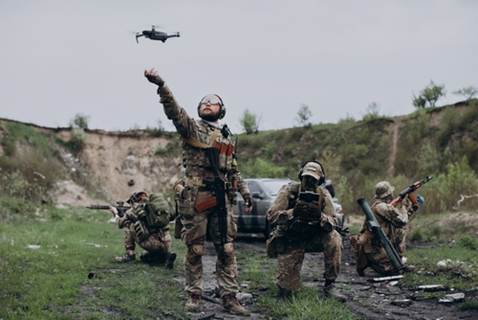
This shift is visible not only between units, but also within them. Battlefield analysis and decision-making increasingly extend beyond the traditional officer corps to include lower ranks such as sergeants or even privates. A modern Ukrainian squad leader, for example, observes today a territory of several square miles and may direct strikes at a depth of 10–15 km. The significance lies less in the formal act of authorisation—which remains embedded in hierarchical command structures—than in the qualitative expansion of what is being authorised at such low levels. The role of officers still includes observation, but it also requires an understanding of this shift and the personal strength to let subordinates do what was once an exclusive “officer’s job”.[21] The tactical concept underpinning that development towards this level of autonomy is often referred to as “Droneline”.[22] It involves dedicated drone units positioned directly behind front-line infantry, creating a layered “death zone”: up to 5 km in front of the troops nothing, up to 10–15 km no vehicles, and up to 50 km no enemy assets like artillery, command posts, logistics hubs, lines of communication, and assembly areas survive.[23] This level of autonomy, based on situational awareness derived from directly accessible, self-obtained real-time information, had previously been possessed only by a higher-ranking officer. Such distributed autonomy may alter how leadership, control, responsibility, and officers’ roles are exercised in practice.
Against this background, it is vital to explore how these developments could be interpreted in the context of NATO and EU armed forces.
Distributed Battlefield Cognition
Analyses of the war in Ukraine demonstrate that drones have fundamentally altered battlefield dynamics by enabling persistent surveillance, rapid targeting, and cost-effective precision strikes at scale.[24] These developments have significantly compressed decision cycles and increased the vulnerability of traditionally organised forces, especially those relying on centralised command-and-control structures and concentration of forces.
The Ukrainian case should not be read as a straightforward operationalisation of NATO mission command, but as a doctrinal stress test. NATO doctrine formally defines mission command as the combination of “centralised intent” and “decentralised execution”[25]; AJP-3 similarly states that decisions should be made by those “best placed to make them” and that subordinates should act independently within the commander’s intent.[26] This appears, at first sight, highly compatible with Ukrainian drone warfare.
However, the Ukrainian experience points to a more radical implication. The NATO DEEP “Russian War Against Ukraine Lessons Learned Curriculum Guide” treats tactical UAVs, FPV systems, and the incorporation of UAVs into situational-awareness systems such as DELTA and KROPYVA as central lesson areas; it explicitly asks how tactical drones facilitated Ukraine’s strike complex at the tactical level and how downloaded situational-awareness software increased the speed of this system.[27] This suggests that the decisive informational advantage is not necessarily produced by higher headquarters aggregating data, but by tactical units possessing immediately actionable, locally superior awareness.
The lesson for NATO, and by extension, EU countries, is therefore not that drone warfare simply requires higher-level oversight. Rather, Ukraine challenges an implicit residual hierarchy within NATO command practice: the assumption that operational coherence depends on superior information processing at higher echelons. NATO doctrine already provides the conceptual vocabulary for this shift, since AJP-3 emphasises that mission command is more than a C2 procedure and depends on empowered leadership, trust, initiative, and freedom of action. Yet Ukraine pushes this logic further: in a sensor-saturated battlespace, higher command may have to relinquish not only execution, but also parts of real-time interpretation and target prioritisation. While Ukrainian forces rely strongly on decentralised initiative enabled by widespread drone use, they do not consistently attempt to consolidate a comprehensive, higher-level operational picture in the way NATO doctrine would anticipate. Instead, situational awareness is often more detailed, timely, and actionable at the tactical edge, where drone operators and small units possess immediate access to real-time reconnaissance and strike capabilities. This inversion of the expected information hierarchy undermines a key implicit assumption within NATO command structures—namely, that higher echelons are better positioned to aggregate, process, and prioritise information. In Ukraine, the density, speed, and granularity of drone-generated data make such centralisation impractical—and in some cases counterproductive. Efforts to impose higher-level oversight risk introducing delays, information bottlenecks, and a loss of responsiveness at the tactical level.
This does not mean abandoning command or operational intent. However, officers will need to distinguish between centralised intent and centralised situational interpretation. NATO doctrine clearly requires the former, but the Ukrainian case casts doubt on the latter. The more relevant doctrinal lesson is therefore that mission command must be understood less as decentralised execution under a centrally maintained picture, and more as distributed battlefield cognition, in which tactical units generate, interpret, and exploit the most relevant situational awareness themselves. With that, it remains open how individual autonomy, adaptability, and independent judgment at the tactical level can be incorporated into decentralised operations and further into a more strategic view of the battlefield.
This also addresses the gap between doctrine and practice identified in recent work on NATO mission command. It is argued that NATO’s 2022 AJP-01 elevated mission command to the Alliance’s overarching command philosophy, but that implementation remains difficult because multinational forces often lack the human interoperability, shared trust, and common understanding required to practise it effectively.[28] Consequently, the Ukrainian case does not support the potential conclusion that emerging technologies increase the demand for centralised coordination. Rather, it suggests that effective operations may depend on accepting fragmented, locally optimised situational awareness and decision-making. This points to a more radical interpretation of mission command than currently reflected in NATO doctrine—one in which higher command echelons relinquish not only execution but also parts of situational interpretation and control. Ukraine thus might offer a concrete operational case in which adaptation of mission command is more than a renewed leadership preference, but better suited to respond to technological and organisational necessities.
Technological Dependence, Cognitive Strain, and the Enduring Relevance of Conventional Military Skills
Proficiency in drone warfare will create a technological dominance over adversaries lacking comparable electronic warfare capabilities, resilient communication infrastructures, or integrated air defence systems. This dominance, however, may be highly conditional as the war in Ukraine demonstrates—particularly in engagements against near-peer opponents. Russian and Ukrainian forces have extensively employed electronic warfare, signal jamming, and cyber operations to disrupt drone operations. These actions expose the fragility of network-dependent systems and contested electromagnetic environments.[29] In addition, an opponent that employs network-centric (rather than platform-centric) effectors and saturation tactics will gain a clear operational advantage on the battlefield.[30]
The belief that technological superiority ensures battlefield dominance may therefore constitute a dangerous assumption within NATO/EU doctrinal and/or training realities. Although drones increase the availability of information, they do not necessarily improve decision quality.[31] Drone warfare dramatically expands situational awareness by providing continuous real-time surveillance, and officers must interpret large volumes of data from aerial reconnaissance, sensors, and communication networks. These vast quantities of data must be processed under time pressure and, as soldiers are now fighting much more intensely across a larger, 3-dimensional territory, create risks of cognitive overload and operational error. Or as Benjamin Jensen puts it: “Combat power is increasingly defined by the ability to fuse intelligence, orchestrate synchronised actions, and generate affordable mass through dynamic kill webs.”[32] To counter this, many states use battlefield management systems such as “SitaWare”, or, in Ukraine’s case, DELTA.[33]
Alongside technical systems like those mentioned above, NATO doctrinal and analytical frameworks already acknowledge these vulnerabilities. For instance, NATO highlights the challenges of operating in degraded, disrupted, intermittent, and limited (DDIL) environments, where reliance on digital networks can become a critical weakness.[34] Similarly, assessments by the NATO Science and Technology Organisation emphasise the operational risks associated with overdependence on networked systems and the importance of resilience, redundancy, and human adaptability in technologically contested battlespaces.[35] In this context, overreliance on advanced systems introduces systemic risks: when communication links are degraded or denied, operational effectiveness can rapidly decline. Officers trained to operate primarily in digitally enabled environments may therefore face challenges in maintaining mission command under conditions of uncertainty and limited connectivity—potentially constituting a strategic liability rather than an unequivocal advantage.
At the same time, training programmes emphasising technological competence increasingly recognise the cognitive demands of data-intensive warfare. For instance, NATO explicitly addresses decision-making under conditions of information overload, complexity, and degraded communications in its education, training, and exercise frameworks.[36] Concepts developed by Allied Command Transformation already further stress cognitive resilience, mission command, and the ability to operate in contested electromagnetic environments.[37] Similarly, European defence initiatives—particularly within the European Defence Agency—highlight the need to prepare personnel for high-intensity, data-saturated operational environments and the integration of emerging and disruptive technologies.[38]
The war in Ukraine also highlights two other things: Technological systems are inherently vulnerable in contested environments to an unknown extent, regarding time, intensity and frequency. The principle itself is not a new theoretical insight, but the scale and persistence of technological disruption in Ukraine ask for a new reflection of its practical significance. Electronic warfare, cyber operations, and physical destruction of infrastructure regularly degrade or deny access to communications and navigation systems.[39] Dependence on external enablers—such as satellite-based communication—further increases systemic vulnerability. It is assumed, for example, that the shutdown of STARLINK’s use by the Russian Forces degraded their capabilities by 20–40 per cent, and that it will take 2— 5 years before a self-developed substitute system (Barrage-1) reaches comparable levels.[40]
Secondly, the war in Ukraine does not merely reaffirm a known vulnerability of technologically enabled forces; rather, it demonstrates a qualitative shift in the scale, persistence, and systemic integration of disruption. During the Cold War, NATO already anticipated that a technologically inferior adversary would seek to offset Western advantages through electronic warfare, deception, and the disruption of communications. Accordingly, operating under degraded conditions was embedded in doctrine and training. But the war in Ukraine indicates a fundamental shift: disruption is no longer episodic but enduring, and the battlespace is characterised by continuous degradation of communications, navigation, and command systems.[41]
But contemporary evidence suggests that this framework is no longer sufficient. Electronic warfare has evolved from a specialised capability into a pervasive condition of warfare, shaping operations across all echelons. As recent analysis notes, it has become “an all-arms activity” rather than a niche enabler. At the same time, modern forces must operate in environments where the electromagnetic spectrum is persistently contested, and where disruption of communications and navigation systems can be sustained over extended periods. [42] Seeing the increasing importance and reliance of information, resilience, and spectrum dominance as defining features of contemporary warfare, the operational damage in the case of interruption amplifies.[43] In this context, Western militaries risk confronting capable adversaries without sufficient mastery of what has become a critical operational domain.[44]
The implications of these developments are twofold. Firstly, while existing NATO documents and partly doctrines demonstrate a clear conceptual awareness of cognitive strain and human limitations, their practical implementation – as shown in exercises – varies across member states and training environments. This recognition remains largely normative as awareness does not necessarily translate into operational adequacy. The rapidly evolving battlefield practices deriving from drone-centred warfare create additional demands on continuous visual observation, pattern recognition, and real-time decision-making under stress.[45] This demand goes far beyond what NATO knows from current doctrine and training, as well as from past conflict experience.[46] These tasks require a new level of sustained attention, rapid target discrimination, and anticipatory judgement. The operational tempo is even more accelerated, due to a significantly compressed decision-action cycle in drone-dominated environments. In addition to the drastically shortened kill chain, traditional command and unit cohesion no longer exist.[47] Officers must respond quickly to real-time intelligence while coordinating distributed units in fragmented command structures.
This raises the question of whether current training implementation across NATO and EU member states consistently and sufficiently reflects these emerging operational requirements.[48] One might even conclude that there is a growing temporal mismatch between the pace of doctrinal adaptation and the speed of battlefield innovation.[49] NATO/EU officer education has historically emphasised centralised planning, procedural compliance, and structured decision-making processes. The Ukrainian experience suggests, by contrast, that confronting effective drone warfare requires even more improvisation, rapid adaptation, and decentralised initiative. The integration of autonomous and semi-autonomous systems to the degree observed today introduces more complex human-machine relationships than in earlier relationships of the same kind—a high degree of automation and technologically advanced weapons systems are not new to NATO.[50] But the tension between institutional hierarchy and battlefield decentralisation is one of the most significant challenges facing NATO/EU training reform. Without transformation, technological adaptation alone may prove insufficient.[51] How officers supervise automated systems while maintaining accountability for operational decisions remains a challenge. This is especially the case for those seeking to effectively counter an opponent proficient in automated warfare.[52] Existing doctrines recognise this challenge, yet they still need to provide better practical guidance on reconciling decentralised execution with institutional accountability.[53]
In addition, there is a need for traditional military skills that enable operations amid systemic technological degradation; however, the challenge is not their reintroduction but the level of proficiency required under conditions of persistent disruption.[54] Observations from Ukraine indicate that forces must be able to operate for prolonged periods without reliable digital enablers, requiring a depth of competence—e.g., in deception and camouflage—that routine training has typically failed to deliver. Now, they have to be elevated to a substantially higher level of proficiency, continuity and operational effectiveness in an environment where connectivity is nearly intermittent whilst exposure to surveillance and strike systems is continuous.[55] It also leads to an enhancement of force-wide responsibilities. The ability to counter aerial threats is no longer confined to specialised units, which can be considered just an occasional threat. Instead, the battlefield demands a shift toward a much broader distribution of air defence tasks, where individual soldiers and small units must contribute to short-range air defence.
However, the persistence of technological vulnerability, combined with rising cognitive demands and evolving tactical requirements, has led to the critical self-reflection of whether current NATO/EU training approaches sufficiently reflect the realities of contemporary warfare. While doctrinal frameworks acknowledge degraded operations and cognitive strain, their practical implementation often lacks the intensity and realism needed to prepare forces for sustained operations amid disruption. This points to a structural imbalance. Training systems that emphasise technological proficiency without equally strengthening the rigorous application of conventional military skills risk producing forces that are highly capable under optimal conditions but less resilient under contested ones. The challenge is therefore not to reintroduce traditional competencies, but to recalibrate their weight and integrate them more deeply into training practice.
From Battlefield to Classroom
The war in Ukraine demonstrates that contemporary warfare is evolving faster than the institutional frameworks designed to prepare for it. Drone warfare, in particular, has not only introduced new technologies but has fundamentally reshaped how information is generated, distributed, and acted upon across the battlefield. These developments challenge long-standing assumptions about command, control, and the role of officers. This operational reality is not adequately reflected in the doctrinal intent of NATO and EU armed forces.
At the core of this tension lies a structural mismatch: while battlefield adaptation occurs in near real time, institutional learning—especially in training systems—remains comparatively slow. Based on the assumption that a Russian threat towards NATO/ EU by 2029 “has shifted from a hypothetical to a planning assumption”[56] and that Russia will continue to use technology, organisational structure, and doctrine in future conflicts, then the key challenge lies in aligning training systems with not all, but quite a lot of the empirical realities of this war. Without such alignment, there is a risk of a widening gap between doctrinal ambition and operational capability—one that technological superiority alone cannot close.
The Ukrainian experience illustrates how rapidly adaptation can occur under existential pressure. Yet it also shows that such transformation is not solely the product of crisis-driven improvisation. Of course, organisational change is easier to do during crises than in peacetime. Ukraine’s military changed because it had no choice. But rash de-bureaucratisation under extreme circumstances is not the only way to change: “Success is a studious mix. You need flexibility, but you also need bureaucracy to roll out training and hence guarantee overall performance”.[57] For NATO and EU armed forces, the challenge is therefore to achieve a comparable level of adaptability without relying on wartime urgency and the sometimes suboptimal choices that follow.
A key implication concerns how drone warfare reshapes command, oversight, and decision-making. Much analysis portrays drone warfare primarily as technological progress as the “dominant wisdom.” However, the war in Ukraine demonstrates that the greater impact lies in institutional disruption, with severe consequences for the human element in warfare. Rather than reinforcing centralised control through improved information flows, the widespread use of drones has inverted traditional information hierarchies: tactical units often possess more immediate, granular, and actionable situational awareness than higher command levels. This challenges the assumption that operational coherence depends on superior data aggregation at higher echelons. Instead, effective operations increasingly rely on distributed battlefield cognition, in which local actors generate, interpret, and act on information in real time. For NATO, this suggests that mission command must evolve beyond decentralised execution under a centrally maintained picture, toward a model that accepts fragmented, locally optimised awareness and decision-making. Such an approach places greater emphasis on trust, initiative, and the integration of autonomous judgment at the tactical level, while redefining the role of higher command from direct oversight toward the articulation of intent and the coordination of effects across a more cognitively distributed battlespace.
Another key implication concerns the balance between technological proficiency and fundamental military competencies. While drone systems and digital networks expand situational awareness, they also introduce vulnerabilities—ranging from electronic warfare disruption to cognitive overload. Training institutions that focus too much on technological specialisation at the expense of fundamental military skills risk producing strategically vulnerable forces. As noted above, the Ukrainian battlefield underscores that success depends not only on technological capability but also on resilience: the ability to operate effectively under degraded, disrupted, and uncertain conditions.
However, adapting training systems accordingly is far from straightforward. NATO and EU training frameworks are inherently designed for multinational interoperability, standardisation, and procedural consistency. The adaptation of training systems, when confronted with additional constraints such as rapid, constant adaptation based on short-term feedback loops, will be challenging, and the nature of the training systems themselves will slow doctrinal reform.[58] This structural inertia, arising from incremental adaptation processes that originate mostly from within, contributes to a widening temporal gap between battlefield innovation and its integration into doctrine and education.
As current approaches to training adjustments often struggle to incorporate rapid battlefield adaptation and technological innovation, an additional element might help. It is quite clear that armed forces in peacetime can never match the adaptation cycles of armed forces in war. To reduce this institutional lag, “reverse advising” could be used. In this approach, current experiences are incorporated into training immediately, with support from those who experienced them on the front line.[59] Initial steps in this direction are already visible, as Ukrainian operational experience—particularly in drone warfare—is increasingly informing NATO and EU training efforts. This includes institutionalised cooperation[60] and the integration of frontline expertise into training design and exercises set-ups.
Yet even this approach must be broadened. Focusing exclusively on formal military structures risks overlooking a critical dimension of Ukrainian success: the integration of civil society into military innovation ecosystems. The scale of drone warfare extends far beyond active-duty personnel, the effective ecosystem encompassing reservists, volunteers, and civilian developers. Initiatives such as the “Army of Drones”[61] demonstrate how large-scale training and rapid iteration can generate both quantitative and qualitative advantages. Military academies have introduced long-term drone-piloting education for cadets in cooperation with private drone manufacturers.[62] Private foundations focused on military-technological solutions cooperate with private drone producers, establishing drone-piloting schools for military personnel.[63] These civilian networks—often organised through platforms like BRAVE1[64]—enable continuous feedback loops between the battlefield and innovation hubs, accelerating tactical adaptation in ways that traditional military systems struggle to replicate. And a final, important point: production of FPV drones was highly liberalised under a laissez-faire principle. Production doesn’t require any licensing (only the explosives themselves), and the import of drone parts and the sale of the final drones to the armed forces were exempt from VAT. All of this has lowered the bar for entry, so the market has selected the best-suited drones for the battlefield, which in turn has driven tactical development.
For NATO, this implies that learning should not be limited to observing Ukrainian forces but should also include understanding the broader ecosystem that enables their adaptability. At the same time, although institutional and cultural differences preclude simple replication, the underlying principle—shortening innovation cycles and integrating real-time feedback into training and doctrine—remains relevant. As a result, the pace of adaptation in training, doctrine, and innovation must accelerate significantly.
Conclusion
In sum, experience from Ukraine suggests that the transformation of officer training in NATO and EU armed forces requires more than incremental reform. It demands a structural recalibration along three key dimensions:
First, a shift towards genuinely decentralised decision-making, reflecting the reality of distributed battlefield cognition enabled by drone warfare. Second, a rebalancing of training priorities to ensure that technological proficiency is complemented by robust mastery of fundamental military skills under degraded conditions. Third, the institutionalisation of rapid learning mechanisms—such as reverse advising—that bridge the gap between frontline experience and classroom instruction.
Without such changes, the risk is not merely lagging behind technological trends, but failing to prepare officers for the actual conditions of future warfare. The challenge is therefore not only to modernise training, but to fundamentally rethink how military knowledge is generated, transmitted, and applied.
[1] Matthew Slusher, Lessons from the Ukraine Conflict: Modern Warfare in the Age of Autonomy, Information, and Resilience (Washington, DC: Center for Strategic and International Studies, May 2025), https://www.csis.org/analysis/lessons-ukraine-conflict-modern-warfare-age-autonomy-information-and-resilience; John A. Nagl and Katie Crombe, A Call to Action: Lessons from Ukraine for the Future Force (Carlisle, PA: U.S. Army War College Press, 2024).
[2] This paper uses the term “NATO-/EU armed forces,” although cautiously, referring not to identical institutional structures but to a broader military ecosystem that shares personnel, training cultures, and, to some extent, operational concepts. Nevertheless, differences in institutional design and capability development must be acknowledged when deriving conclusions.
[3] François Heisbourg and Bruno Tertrais, “Twenty-One Strategic Lessons from the Ukraine War,” Fondation pour la Recherche Stratégique Notes, no. 4 (2026), https://www.frstrategie.org/en/publications/notes/twenty-one-strategic-lessons-ukraine-war-2026; James Black et al., Russia’s War in Ukraine: Emerging Insights for UK and NATO Joint Doctrine (Santa Monica, CA: RAND Corporation, 2024), https://www.rand.org/content/dam/rand/pubs/research_reports/RRA3400/RRA3400-1/RAND_RRA3400-1.pdf.
[4] David Kirichenko, Military Lessons for NATO from the Russia-Ukraine War: Preparing for the Wars of Tomorrow (London: Henry Jackson Society, Center for Russia and Eurasia Studies, October 2024), https://henryjacksonsociety.org/publications/military-lessons-for-nato-from-the-russia-ukraine-war-preparing-for-the-wars-of-tomorrow/.
[5] For the scope of this work, the term “drone” is not being used in a broad sense. We do not refer to the drones known from the wars in Iraq, Afghanistan, Syria, Nagorno-Karabakh, and, to some extent, those used in Russian air campaigns in Ukraine. Instead of referring to expensive winged missile-launching platforms under the command of senior officers, we focus exclusively on small, inexpensive, often single-use systems operated by lower tactical echelons (FPV and quadcopter drones).
[6] “Voennoe uchilishche voisk bespilotnykh sistem mozhet poyavitsya v Rossii,” accessed June 22, 2026, https://ren.tv/news/v-rossii/1341643-voennoe-uchilishche-voisk-bespilotnykh-sistem-mozhet-poiavitsia-v-rossii.
[7] Roman Kretcul and Bogdan Stepovoi, “Boevoi ekskurs: v voennykh vuzakh nachali obuchat borbe s dronami,” Izvestia, February 13, 2026, https://iz.ru/2041813/roman-kretcul-bogdan-stepovoi/boevoi-ekskurs-v-voennykh-vuzakh-nachali-obuchat-borbe-s-dronami.
[8] “Rossiya zakupila 18,000 dronov chtoby nauchit shkolnikov,” November 4, 2025, https://news.liga.net/politics/news/rossiya-zakupila-18-000-dronov-chtoby-nauchit-shkolnikov-boevomu-opytu-razvedka.
[9] NATO Joint Analysis and Lessons Learned Centre, “JALLC-UKR Initiative,” 2024, https://www.jallc.nato.int/JALLC-UKR-Initiative.
[10] Workshop “Infanteristen auf dem modernen Gefechtsfeld,” Infantry School of the German Army, February 4–5, 2026.
[11] Bundeswehr, Ausbildungskonzeption “Nutzung von unbemannten Systemen im Unterstützungsbereich der Bundeswehr (K1-9000/14)”; Bundeswehr, Allgemeine Regelung (AR) “Militärstrategische Grundsätze Einsatz und Abwehr unbemannter Systeme (A-100/23)”; Bundeswehr, Fachstrategie “Unbemannte Systeme und Loitering Munition Systems in der Bundeswehr.”
[12] Derrick V. Frazier and J. Wesley Hutto, “The Socialization of Military Power: Security Cooperation and Doctrine Development through Multinational Military Exercises,” Defence Studies 17, no. 1 (2017): 1–19.
[13] NATO Strategic Command, BI Collective Training and Exercise Directive (075-03) (2013), https://www.coemed.org/files/Branches/DH/Files_01/bi-sc-75-3_final.pdf; U.S. Department of Defense, Joint Training Manual for the Armed Forces of the United States, CJCSM 3500.03F (Washington, DC, August 2025), https://www.jcs.mil/Portals/36/Documents/Library/Manuals/CJCSM%203500.03F.pdf.
[14] Peter Carstens and Konrad Schuller, “General Christian Freuding: ‘Wir sind bereit für den Fight Tonight,’” Frankfurter Allgemeine Zeitung, November 20, 2025, https://www.faz.net/aktuell/politik/inland/general-christian-freuding-wir-sind-bereit-fuer-den-fight-tonight-110786858.html.
[15] U.S. Government Accountability Office, Military Training: Lessons Learned and Their Implication for the Future, GAO/NSIAD-94-128 (Washington, DC, 1994), https://www.gao.gov/products/t-nsiad-94-128.
[16] Colin S. Gray, The Strategy Bridge: Theory for Practice (Oxford: Oxford University Press, 2010), 16–18, 21–23.
[17] Examples include the exercises Hedgehog, Combined Resolve, REPMUS, Dynamic Messenger, Interflex, Namejs, Iron Wolf, Rapid Trident, and Sea Breeze.
[18] See, for example, Michael C. Horowitz et al., “Separating Fact from Fiction in the Debate over Drone Proliferation,” International Security 41, no. 2 (2016): 7–42.
[19] Antonio Calcara et al., The Drone Revolution in Military Affairs (Rome: LUISS Policy Paper, 2021), https://www.esteri.it/mae/resource/doc/2021/07/luiss_implicazioni_politiche_delluso_dei_droni.pdf.
[20] Federico Borsari and Gordon B. Davis Jr., An Urgent Matter of Drones (Washington, DC: Center for European Policy Analysis, 2023), 91–93, https://cepa.org/comprehensive-reports/an-urgent-matter-of-drones/.
[21] Mark K. Sauser, “Unmanned Aircraft and the Revolution in Operational Affairs,” Military Review (July–August 2025): 54–64.
[22] Ministry of Defense of Ukraine, “The ‘Drone Line’ Project Has Been Launched in the Defence Forces of Ukraine,” March 3, 2025, https://mod.gov.ua/en/news/the-drone-line-project-has-been-launched-in-the-defence-forces-of-ukraine-to-develop-uav-operating-units.
[23] “VSU vnedryayut liniyu dronov dlya sderzhivaniya nastupleniya RF,” May 5, 2025, https://antikor.info/en/articles/766667-vsu_vnedrjajut_liniju_dronov_dlja_sderhivanija_nastuplenija_rf_zona_porahenija__do_50_km.
[24] Jack Watling and Nick Reynolds, Meatgrinder: Russian Tactics in the Second Year of Its Invasion of Ukraine (London: Royal United Services Institute, May 2023), https://www.rusi.org/explore-our-research/publications/special-resources/meatgrinder-russian-tactics-second-year-its-invasion-ukraine.
[25] NATO, AJP-01: Allied Joint Doctrine, Edition F, Version 1 (Brussels: NATO Standardization Office, 2022), https://www.coemed.org/files/stanags/01_AJP/AJP-01_EDF_V1_E_(1)_2437.pdf.
[26] NATO, AJP-3: Allied Joint Doctrine for the Conduct of Operations, Edition D, Version 1 (Brussels: NATO Standardization Office, 2025), https://assets.publishing.service.gov.uk/media/6964e72799fbdc498faecce2/AJP_3_Ed_D_V1-O.pdf.
[27] NATO Defence Education Enhancement Programme (DEEP), Russian War Against Ukraine: Lessons Learned Curriculum Guide (Brussels: NATO, 2023), https://www.nato.int/content/dam/nato/webready/documents/deep/231208-RusWar-Ukraine-Lessons-Curriculum-Guide-en.pdf.
[28] Soeren Sjoegren and Niklas Nilsson, “Multinational Mission Command: From Paper to Practice in NATO,” Scandinavian Journal of Military Studies 8, no. 1 (2025): 89–103.
[29] Justin Bronk et al., The Russian Air War and Ukrainian Requirements for Air Defence (London: Royal United Services Institute, November 2022), https://www.rusi.org/explore-our-research/publications/special-resources/russian-air-war-and-ukrainian-requirements-air-defence; Watling and Reynolds, Meatgrinder.
[30] Adrien Gorremans, The Future of Air Superiority (Paris: French Institute of International Relations, January 2025), https://www.ifri.org/sites/default/files/2025-09/ifri_gorremans_future_air_superiority_2025.pdf.
[31] Guillaume Garnier and Pierre Néron-Bancel, At the Other Side of the Hill: The Benefits and False Promises of Battlefield Transparency (Paris: French Institute of International Relations, May 2024), https://www.ifri.org/sites/default/files/2024-10/ifri_garnier_neron-bancel_transparency_battlefield_2024.pdf.
[32] Benjamin Jensen, “Operational Art in the Age of Battle Networks,” in War and the Modern Battlefield, ed. Seth G. Jones and Seamus P. Daniels (Washington, DC: Center for Strategic and International Studies, September 2025), 34–41.
[33] NATO, “Battlefield Innovation: Ukraine’s DELTA System Paves the Way for Allied Interoperability at CWIX24,” July 12, 2024, https://www.act.nato.int/article/delta-system-cwix/; Sabine Siebold, “German Army Eyes AI Tools to Expedite Wartime Decision-Making,” Reuters, March 25, 2026.
[34] NATO, AJP-3: Allied Joint Doctrine for the Conduct of Operations.
[35] NATO Science and Technology Organization, Intelligent Decision Support and Meaningful Human Control in Multidomain Operations (Brussels: NATO STO, April 2025), https://publications.sto.nato.int/publications/STO%20Meeting%20Proceedings/STO-MP-HFM-377/MP-HFM-377-15.pdf.
[36] NATO Strategic Command, BI Education and Individual Training Directive (075-007) (2015).
[37] NATO Science and Technology Organization, Cognitive Warfare (NATO Chief Scientist Research Report, 2021), https://www.sto.nato.int/wp-content/uploads/chief-scientist-report-cognitive-warfare-final.pdf; NATO, AJP-3.6: Allied Joint Doctrine for Electromagnetic Operations, https://www.coemed.org/files/stanags/01_AJP/AJP-6_EDB_V1_E_2525.pdf.
[38] European Defence Agency, Artificial Intelligence in Defence Action Plan (Brussels: European Defence Agency, 2020), https://defence-industry-space.ec.europa.eu/system/files/2025-12/Factsheet%20AI%20in%20Defence.pdf; European Defence Agency, Capability Development Plan and Capability Development Priorities: 2023 Revision (Brussels: European Defence Agency, 2023), https://eda.europa.eu/docs/default-source/brochures/qu-03-23-421-en-n-web.pdf.
[39] Andreas Rapp, “Der elektromagnetische Kampf im Krieg in der Ukraine,” Wehrtechnischer Report, no. 2 (2025): 48–50.
[40] Sam Kiley, “Musk Blocking Russia’s Drones from Using Starlink Has Delivered ‘Enormous’ Boost to Ukraine,” The Independent, February 25, 2026, https://www.independent.co.uk/news/world/europe/starlink-russia-ukraine-andrii-biletski-elon-musk-b2926280.html.
[41] Elie Tenenbaum et al., Mapping the MilTech War: Eight Lessons from Ukraine’s Battlefield (Paris: French Institute of International Relations, February 2026), https://www.ifri.org/sites/default/files/2026-02/ifri_tenenbaum_et_al_miltech_war_ukraine_2026_0.pdf.
[42] Jack Watling and Noah Sylvia, Competitive Electronic Warfare in Modern Land Operations (London: Royal United Services Institute, January 2025), https://www.rusi.org/explore-our-research/publications/occasional-papers/competitive-electronic-warfare-modern-land-operations.
[43] Matthew Slusher, Lessons from the Ukraine Conflict: Modern Warfare in the Age of Autonomy, Information, and Resilience (Washington, DC: Center for Strategic and International Studies, May 2025), https://www.csis.org/analysis/lessons-ukraine-conflict-modern-warfare-age-autonomy-information-and-resilience.
[44] Clara Le Gargasson and Jack Black, “Electronic Warfare: NATO’s Blind Spot Could Decide the Next Conflict,” RAND Commentary, November 2025, https://www.rand.org/pubs/commentary/2025/11/electromagnetic-warfare-natos-blind-spot-could-decide.html.
[45] NATO Science and Technology Organization, Measuring the Cognitive Load on Soldiers (Brussels: NATO STO, March 2025), https://publications.sto.nato.int/publications/STO%20Technical%20Reports/STO-TR-HFM-319/$$TR-HFM-319-ALL.pdf.
[46] Alessandro Marrone, “The War against Ukraine and Its Lessons for NATO Militaries: Food for Thought,” IAI Commentaries, February 2023, https://www.iai.it/en/publications/c05/war-against-ukraine-and-its-lessons-nato-militaries.
[47] Jake Epstein, “Ukraine’s Digital War Tool Cut the Time between Finding and Striking Russian Targets,” Business Insider, November 24, 2024, https://www.businessinsider.com/ukraine-delta-battlefield-tool-slashed-strike-times-on-russian-targets-2025-11.
[48] Simona R. Soare, Innovation as Adaptation: NATO and Emerging Technologies (Washington, DC: German Marshall Fund of the United States, 2021), https://www.gmfus.org/sites/default/files/Soare%20-%20NATO%20emerging%20tech.pdf.
[49] Sebastian Nannt and Hendrik Remmel, “Innovations- und Adaptionsfähigkeit als Schlüssel zum militärischen Erfolg,” GIDSresearch, no. 6 (2024), https://gids-hamburg.de/wp-content/uploads/2025/10/GIDSresearch2024_06_RemmelNannt_engl_250306.pdf; NATO Science and Technology Organization, Science & Technology Trends 2023–2043, vol. 1 (Brussels: NATO STO, 2023), 20–23, https://www.sto.nato.int/document/science-technology-trends-2023-2043-vol-1/; Stephen Herzog and Dominika Kunertova, “NATO and Emerging Technologies: The Alliance’s Shifting Approach to Military Innovation,” Naval War College Review 77, no. 2 (2024): 55–57.
[50] Kai Gilmour Gath, “The Reconnaissance Reality Gap: Western Doctrine vs. the Ukrainian Battlefield,” Small Wars Journal, December 9, 2025, https://smallwarsjournal.com/2025/12/09/the-reconnaissance-reality-gap-western-doctrine-vs-the-ukrainian-battlefield/; Joshua Hood et al., “Learn or Lose: Lessons from Ukraine Training in Germany,” Modern War Institute, August 5, 2025, https://mwi.westpoint.edu/learn-or-lose-lessons-from-ukrainian-training-in-germany/.
[51] Jon-Wyatt Matlack, Sebastian Schwartz, and Oliver Gill, Ukraine’s Drone Ecosystem and the Defence of Europe: Lessons Lost Can’t Be Learned (London: London School of Economics, April 2025), https://www.lse.ac.uk/ideas/publications/Research-Reports/Ukraine’s-Drone-Ecosystem-and-the-Defence-of-Europe-Lessons-Lost-Can’t-be-Learned.
[52] Sebastien Roblin, “Beyond the Gauntlet: Drone Dominance and the Lessons of Ukraine’s FPV War,” Inside Unmanned Systems, March 18, 2026, https://insideunmannedsystems.com/beyond-the-gauntlet-drone-dominance-and-the-lessons-of-ukraines-fpv-war/.
[53] Andrew Hill and Heath Niemi, “The Trouble with Mission Command: ‘Flexive Command’ and the Future of Command and Control,” Joint Force Quarterly 86, no. 3 (2017): 94–100.
[54] Ulrich Scholten, “Adapting to Win: Lessons from the Russia-Ukraine War for Innovation and Electronic Warfare,” SkyRadar, July 3, 2025, https://www.skyradar.com/blog/adapting-to-win-lessons-from-the-russia-ukraine-war-for-innovation-and-electronic-warfare.
[55] Michael Posey and Chase Metcalf, “A Strategic Inflection: Modern Warfare and Deception,” Small Wars Journal, November 9, 2025, https://smallwarsjournal.com/2025/09/11/deception-on-the-transparent-battlefield/.
[56] Jannik Hartmann et al., “The Low Hanging Fruits towards a Military Schengen,” European Policy Centre, April 2026, https://www.epc.eu/publication/the-low-hanging-fruits-towards-a-military-schengen/.
[57] Nicholas Kayser-Bril, “AI Is an Unprecedented Challenge to the German Army,” Automated Society Newsletter, April 30, 2026, https://r.algorithmwatch.org/nl3/MuhFHWw3Dt_waHvfNxxI-A.
[58] Joshua Hood, Jahara Matisek, and Anthony Tingle, “Learn or Lose: Lessons from Ukrainian Training in Germany,” Modern War Institute, May 8, 2025, https://mwi.westpoint.edu/learn-or-lose-lessons-from-ukrainian-training-in-germany/.
[59] Hood, Matisek, and Tingle, “Learn or Lose.”
[60] Matthias Gebauer, “Kriegserfahrene Ukrainer sollen Bundeswehrsoldaten trainieren,” Der Spiegel, February 16, 2026, https://www.spiegel.de/politik/deutschland/kriegserfahrene-ukrainer-sollen-bundeswehr-soldaten-trainieren-a-ac2ad80d-69b8-4991-9e89-86c41149a34b.
[61] Ministry of Defense of Ukraine, “The Ministry of Defense Has Trained over 5,000 Drone Operators and Launched a Network of Certified Schools by 2025,” January 2, 2026, https://militarnyi.com/en/news/more-than-5-000-uav-operators-trained-for-ukrainian-defense-forces-in-a-year/.
[62] “Kursanty Akademiyi NGU vyvchayut tekhnolohiyi FPV droniv,” July 8, 2024, https://ngu.gov.ua/kursanty-akademiyi-ngu-vyvchayut-tehnologiyi-fpv-droniv/.
[63] “General Chereshnya navchatyme roboty z dronamy,” February 28, 2026, https://militarnyi.com/uk/news/general-chereshnya-navchatyme-roboti-z-dronamy/.
[64] BRAVE1, accessed June 22, 2026, https://brave1.gov.ua/en/.


