
Articles
-
The Emerging Logic Of Prolonged And Indeterminate War
Abstract: An increasing number of contemporary conflicts appear to resist decisive resolution under specific structural conditions. This argument does not suggest that all wars follow the same trajectory. Rather, it identifies specific structural configurations under which decisive outcomes become less likely. For the purposes of this article, “strategic closure” refers to the production of a… Read More
Written by

-
Energy, Technology, And The Emerging Geopolitical Order
Abstract: The international system is undergoing a transformation that extends beyond conventional great-power rivalry. What is changing is not simply the distribution of power among states, but the mechanisms through which power is exercised, sustained, and constrained. Assumptions that shaped much of the post-Cold War era economic interdependence as a stabilising force, globalisation as a… Read More
Written by

-
Lone-Actor Terrorism In The Age Of Relational Machines
Abstract: AI companion platforms are purpose-built to validate, affirm, and emotionally sustain their users. This article examines whether that structural logic poses a measurable radicalisation risk for individuals already predisposed to lone-actor terrorism. Drawing on a structured simulation conducted across seven ideological profiles and three AI companion personality types on Ourdream AI, the study finds… Read More
Written by

-
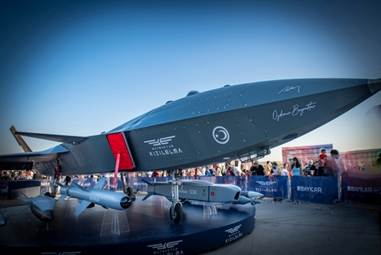
Türkiye’s Military Capacity And European Defence Integration
Abstract: As Europe confronts the return of high-intensity warfare and prolonged industrial attrition, longstanding assumptions about defence readiness are being reconsidered. This report examines Türkiye’s evolving role within the European security landscape, arguing that Ankara has emerged as a significant yet inherently limited contributor to addressing Europe’s structural shortfalls in manpower, munitions, and operational adaptability.… Read More
Written by
-
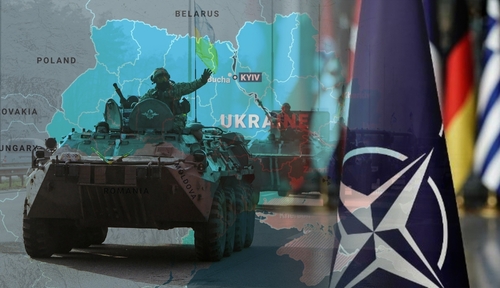
Putin’s Early NATO Discourse And The Myth Of Ignored Russian Security Interests
Abstract: This article challenges the post‑2014 Russian claim that NATO enlargement systematically ignored Russia’s legitimate security interests. Drawing on Vladimir Putin’s own speeches and interviews from 2000–2004, combined with primary documents such as the 1997 NATO–Russia Founding Act, it demonstrates that Moscow repeatedly accepted Alliance enlargement, deepened institutional cooperation, and even contemplated Russian membership. The… Read More
Written by
-
Missile-Induced Systemic Compression And Crisis Stability In South Asia
Abstract: Technological acceleration is compressing decision-making timelines between nuclear-armed adversaries in ways classical deterrence theory did not anticipate. This essay introduces the concept of “missile-induced systemic compression” to explain how supersonic velocity and dual-capable ambiguity—the inability to distinguish conventional from nuclear warheads—systematically reduce crisis decision windows below the threshold required for deliberative management. Examining the… Read More
Written by

-
Are You REDy? Using Red AI Tactics And The Defence Metaverse To Augment Future Force Design
Abstract: Force designers face demanding methodological challenges when considering how best to adapt concepts, successfully adopt new technologies, and overhaul existing structures and processes amid a fundamentally changing geostrategic environment. The Defence Metaverse, an ultra-realistic virtual twin of the battlefield, and powerful new red AI tactics offer sovereign European solutions to tackle these challenges by… Read More
Written by

-
Academic Education For Officers’ Training In A New Age Of Warfare
Abstract: This paper argues that (military) leaders need to develop four critical capabilities to succeed in a disruptive and ambiguous environment. It goes on to contrast these desiderata with the fundamental trade-off between readiness and quality that permeates all military training and education, including academic studies. To counter a specific threat within a given time… Read More
Written by

-
Competing Narratives In Media Framing Of U.S. Arms Sales To Taiwan
Abstract: This study examines how the People’s Republic of China and Taiwanese media frame United States-Taiwan arms sales using unsupervised text mining methods. It analyses English-language news coverage from 2019 to 2026, a period marked by delayed U.S. arms transfers and political debate over Taiwan’s defence spending. Drawing on articles from Taiwanese and PRC-affiliated media,… Read More
Written by

-
Bias Vs. Bots: Training Officers For Cognitive Warfare
Abstract: Emerging technologies increasingly accelerate intelligence and decision cycles, yet the officer as human-in-the-loop remains cognitively vulnerable within contested information environments. Artificial intelligence may both mitigate and amplify these vulnerabilities. This article conceptualises Cognitive Resilience as the systematic integration of cognitive control loops into military decision-making. It proposes a training framework—Countering Cognitive Warfare Training (CCW… Read More
Written by
